Growing up in the ‘70s I didn’t actually know any who ended their life – it was only strange faraway people who yer mam vaguely knew.
Fast forward 45 years and there’s a biblical plague forstered upon us.
I often read the ‘post this to show someone’s listening’ posts and feel that, while they are wholly worthy that they are a cry in the dark from those of us who are blighted and unable to respond to forces beyond our control.
My own view is that this plague has roots in things that we can help to heal if not cure.
The plague is overwhelmingly male, though not exclusively.
In my view it comes from alienation, pressure to conform and disassociation from modern life.
Some of it comes from the fact that we have stolen the futures of our young – where is the social housing? Why are they bankrupt on leaving University? Why are there no lifelong apprenticeships? Why has the state seemingly/abandoned this generation while it panders to the old with ideas like Brexit?
Some of it also comes from the portrayal of totally unreal ‘perfect’ lives and the pressure to conform to them on social media ? Irony alert, you say?
Some of it also comes from the alienation people feel. As we become more digitally ‘connected’ we are more socially separated in reality.
I don’t have answers here, only questions – we need to change but people keep voting for a continuance of the same thing – manipulated by the old media influences.
Maybe the ultimate irony is that they will die and we’ll all be saved by the new.
Opening in late 1989, Tin Pan was the first club in Glasgow to play the new sounds coming from Belgium and Detroit at the time. Split across three floors, the club was hidden away on Mitchell Lane and was Year Zero for techno in Glasgow. It launched the careers of Slam and established classic nights like UFO and The Orb. Negotiating all those stairs was a bit of a whitey though.
I was taken there by a good friend Frank Paterson in the late eighties I was an out-of-towner.
This was the first time I’d mainly heard beats only in a Club for the majority of the night. This wasn’t rave or house as such, more like electronic beats. This was also before any ecstasy scene had kicked off. It would be a Football Terrace clubbing crossover. A three floor dance club with a connecting staircase, you’d always meet a good section of clubbers
The crowd were cool, Glasgow always had the unique style of matching up between casual or tailored threads and of course a few permanent sun-tans. This was a place where you just wanted to dance, no chemicals apart from a Red Stripe or maybe a shlitz.
It was here I first heard dance tracks like White Horse – Laid Back, although the track was old I’d never heard it before especially in a club. Also Electrical Salsa by Off.
I was also introduced to some good pubs in the City which seemed to be the crowd that would later be at Tin Pan. Carnegie’s was a great little joint and again a good crowd, always on a good vibe. It was here I noticed remixes of Ten City also Joey Negro – Promised Land.
Tin Pan was a club that was hidden away in Mitchell Lane. Theres not many tributes or photos that justify it’s excistence, but it was certainly a catalyst to a lot of major clubs and DJ’s that came about in the 90s.
Holywell Street would like to pay tribute to Glasgow and it’s Night Clubs and of course Frank the legend.
Holywell Street would like to welcome Ste Carter in again for another contribution to the blog.
By Ste Carter 26th October 2019
Following on from the last article, ‘There is more that unites us than divides us’ I can only echo, in some small way, the thoughts and feelings expressed there by expanding slightly on some of the themes.
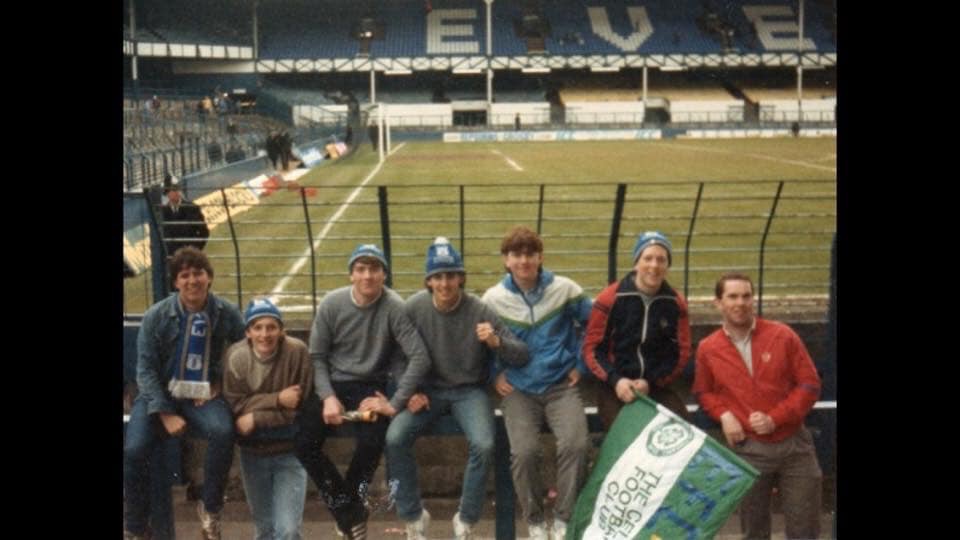
It’s really tough to love modern professional football. It’s tough to love your club, even when that’s all you know, and that’s all that you can do. But it’s really tough to love a club in the English Premiership League. This is a league that has aped so perfectly the global capitalised model of neo-liberalism that I totally despise. As an Evertonian growing up in the sixties, it was oh, so, different. I still remember (with fondness) our beloved winger, and working class legend, Johnny Morrissey, getting pinched for storing stolen ciggies, in what was an absolute world away from the multi-millionaire mercenaries that dominate my club today, and who live in constructed bubbles that see them with almost no social or emotional connection to the club they ‘play’ for. Now I know this blog is read by a mainly Celtic support so I’ll (by way of ingratiating myself) mention the great Lisbon Lions. No matter what side you see out on the park these days, it can’t, and never will, hold the place in the pantheon of greatness, that the 11 local lads who buried themselves for the shirt, immortalised themselves in the club’s history, and who lived the very dreams of the working class people who loved them, merit. These were your people and they did for you something that we all know can’t happen today.
So what’s my point?
As an Evertonian, I utterly despise Liverpool FC. Yet as a proud working class socialist there’s has never been a second when I have not been 100% behind the #jft96 campaign. Why? Because this is what unites us, not divides us. Hillsborough was nothing but an unprincipled establishment attack by Thatcherism, with its disgraceful attempt to cover up working class deaths at the hands of state sponsored tools, and as such, is much, much bigger, than any petty football rivalries. That’s why I applaud all attempts by fans united in their desires to reduce ticket prices; untied in their desires to promote community work to include young people in the future of our clubs; united in cross partisan attempts to stand up against all forms of terrace fascism- all of these actions are also valid attempts try to cling on to the working class coattails of our wonderful game, which is increasingly distant from its roots, which are our roots. My final point is work with working class Hibbies; work with working class Dons; work even with working class fans of clubs you despise if their motives are class based and always anti–fascist. As we’ve already been told correctly, there’s more unites us than divides us, and if we the working class fans are to have a future with and for our clubs, it’s now more important than ever.
The grudge was regional; Bradley was Hibs, we were Celtic; he was younger, but you couldn’t help but look up to him. During the 1985/86 season, Celtic faced Hibs six times—four matches in the league and one in each of the cup competitions. This likely intensified the feud between the two groups during the football casual era of the eighties
At the start of that season, I remember thinking that a smaller club like Hibernian (Hibs) couldn’t be much of a presence on the streets. This was a big mistake. Looking back now, it’s clear that they had the best firm in Scotland—a very organised group that also had a younger crew. Brad stood out from the rest; despite being only around 14 years old, he was capable of taking down guys who were five years older than him. I experienced this firsthand a few times, most notably during the League Cup match at Easter Road. He was a real nightmare!
I remember a well-known Celtic lad trying to confront him, but it backfired. The police stopped us and told us to “pick on someone your own size,” while my mate stood there with a broken nose. You could see that Bradley was a trained boxer; his eyes were unforgettable. He would stand on the opposite side of the terrace from us like a golden eagle sizing up its prey. While the other lads were shouting in conflict over the fence, Brad would watch and scan the away end. He always wore the most expensive and sometimes unique clothing and habitually analysed what others wore. Bradley would go on to become one of Hibs’ main figures when the CCS and BBC merged into one.
By around 1989 or 1990, many of us, including Brad, had moved on from this scene. It was during this time that I got to know him, and I considered him a friend ever since. However, he spent some years away and was quite a private person for many years.
I remember hearing him speak for the first time. Brad zoomed up to me on a mountain bike in Edinburgh, and although we had only known each other through our football rivalry, he was well cool. At that time, he was hosting some decent club nights. “Alright, ar kid?” he asked, which felt like both a greeting and an invitation to engage, as he quickly moved on to the next topic before I had time to absorb what he had just said. I found this amusing, considering he often came across as a man of few words. I initially thought he might hold a football grudge against me or perhaps look down on me, but that was never the case. He invited me to one of his club nights, and I arranged to meet him at the City Café. A few familiar faces from Hibs were also there, which felt a bit intimidating at first, but it was all good; I was Brad’s guest. Through him, I got to meet guys who I still consider friends today. That was his gift—he had a knack for bringing people together.
I still remember him as a charming and charismatic leader. He spoke with such philosophical insight that it seemed like he had swallowed a dictionary. While I drank beer, he would sip on bottles of water, promoting his ‘fit mind, fit body’ attitude. He pointed out that we were all just young guys fi the streets eh, comparing our experiences to ‘cowboys and Indians,’ right?
I wouldn’t see Bradley again until 1995 when he and a few friends came to London for the weekend to attend a famous boxing match. I arranged to meet him at a pub in Knightsbridge so he could visit Harvey Nichols. When I arrived, I noticed him and a couple of others standing on the central island of the road, leaning against the railings—his golden eagle eyes were back! Old habits die hard, and he was checking out who was walking by. He mentioned that Chelsea sometimes moved around that area, but honestly, he was just posturing; he had moved on from that scene. He still exuded confidence and, true to form, he wasn’t a drinker—his drink of choice was water. After visiting Harvey Nichols, we headed to the Armani store. Armani was the brand for him, and in true working-class spirit, he would always look for ways to get his label as cheaply as possible—and, of course, he did. We spent the day with him and his small group from Edinburgh, hopping between a few pubs; I could have listened to his old stories and vibrant spirit all day. Eventually, I left, and they went on to the boxing.
Working Class Hero
As John Lennon said, being a working-class hero is something to be. In later years, I had the privilege of working with Brad on several projects embodying the spirit of solidarity; these were primarily joint ventures between the Celtic and Hibs fans. His leadership skills shone brightly throughout these initiatives. Two of his many memorable quotes are, “It’s easier to be a good gadgie than a c*nt,” and “There is more that unites us than divides us.”
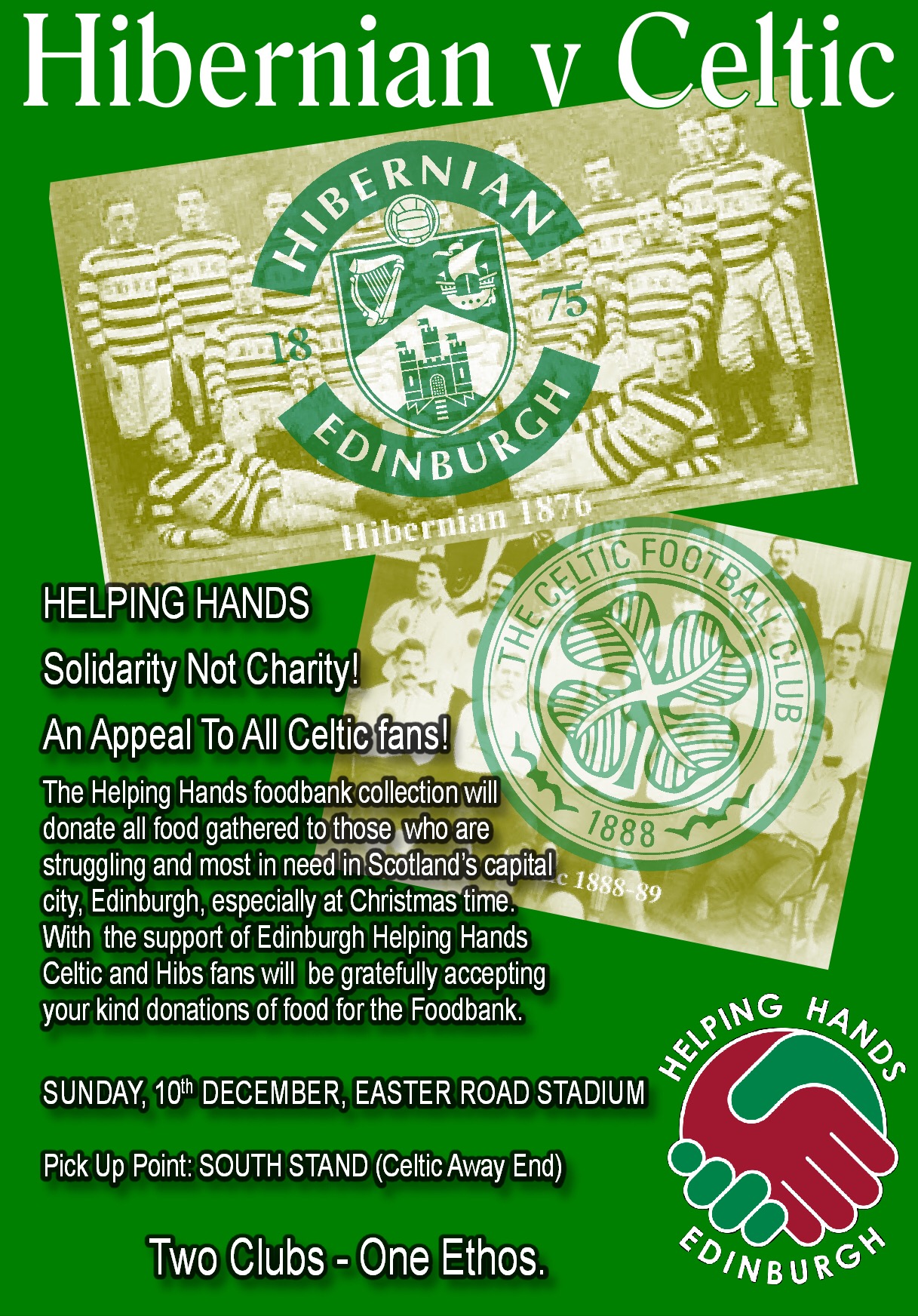
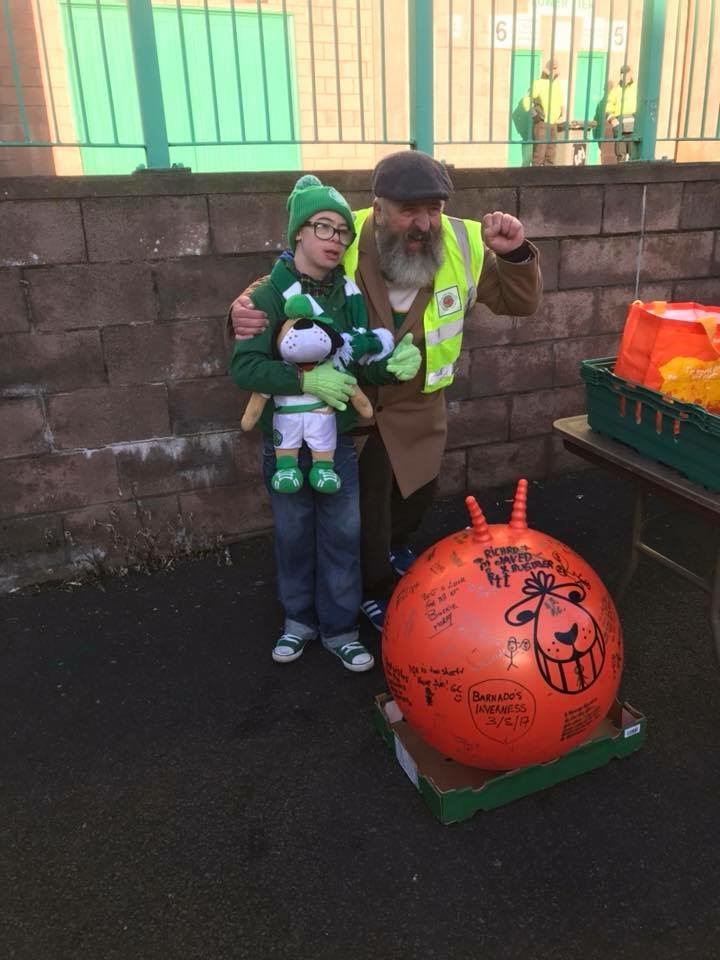
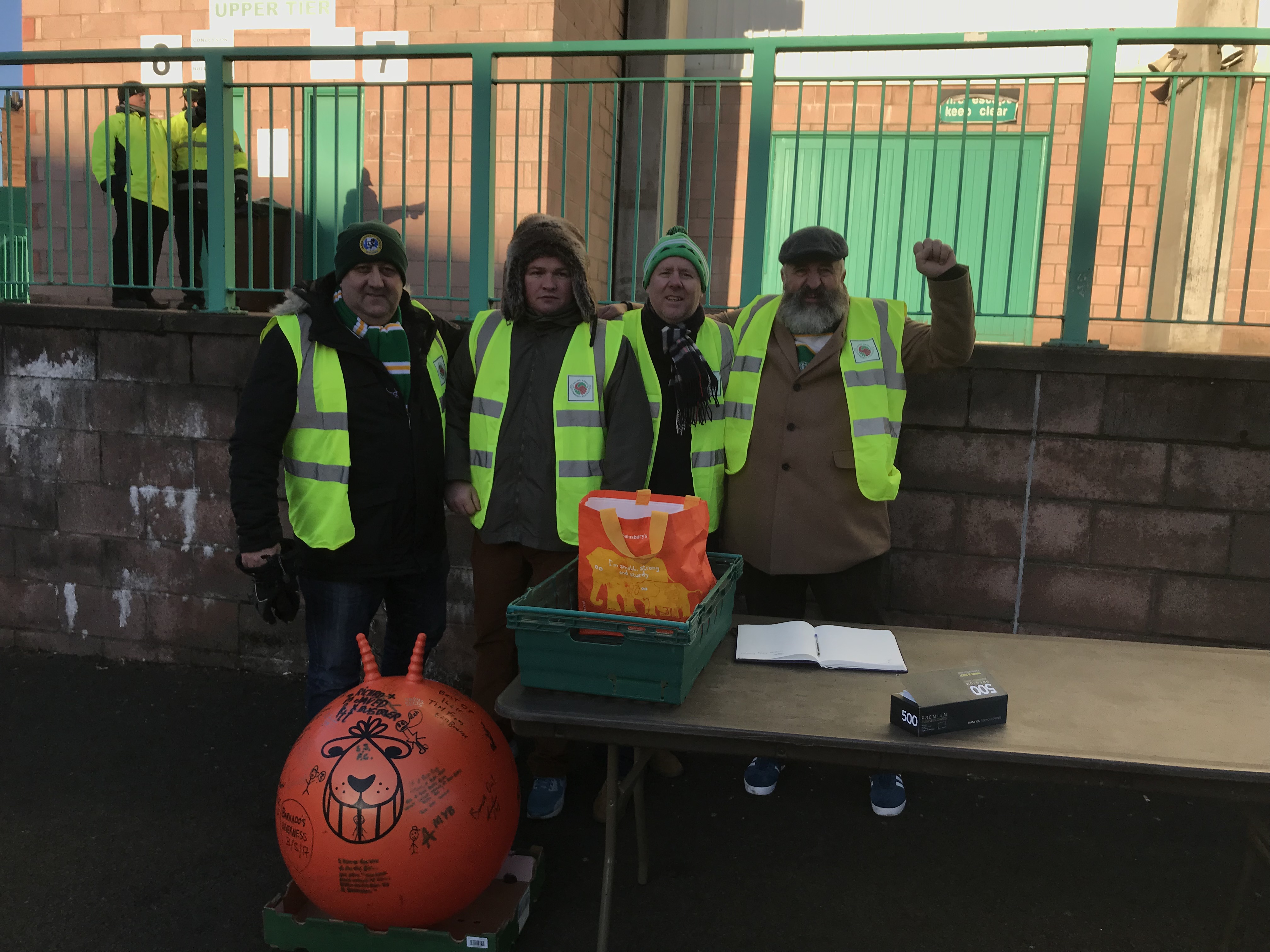
Bradley approached us at HWS to discuss possibly organising a joint food bank collection at Easter Road during the upcoming Hibs vs Celtic match. I thought it was a cracking idea, and the Celtic fans embraced it immediately. Through Helping Hands, which was his initiative for solidarity, we began to put the plan into action. With the support of former casuals from both Celtic and Hibs, we arranged for Celtic fans to bring their usual food bank supplies as they approached the away section at Easter Road. There would be tables set up to collect the donations. We also received cash donations from fans who couldn’t bring food bags. Wee Jay Beattie and his dad came with bags, and Wee Jay helped us for a while, which was outstanding. He even requested a Helping Hands vest to wear. The team that Brad and Jim Slavin had assembled understood the plan; it felt like a military operation. Vans were already on-site to move the bags as soon as the kick-off began. This effort was relatively easy to organise, thanks largely to connections and the spirit, energy, and respect that Brad contributed, which was essential in making it a significant success. The Celtic fans were exceptional in their willingness to help the disadvantaged people of Edinburgh.
Boxing.
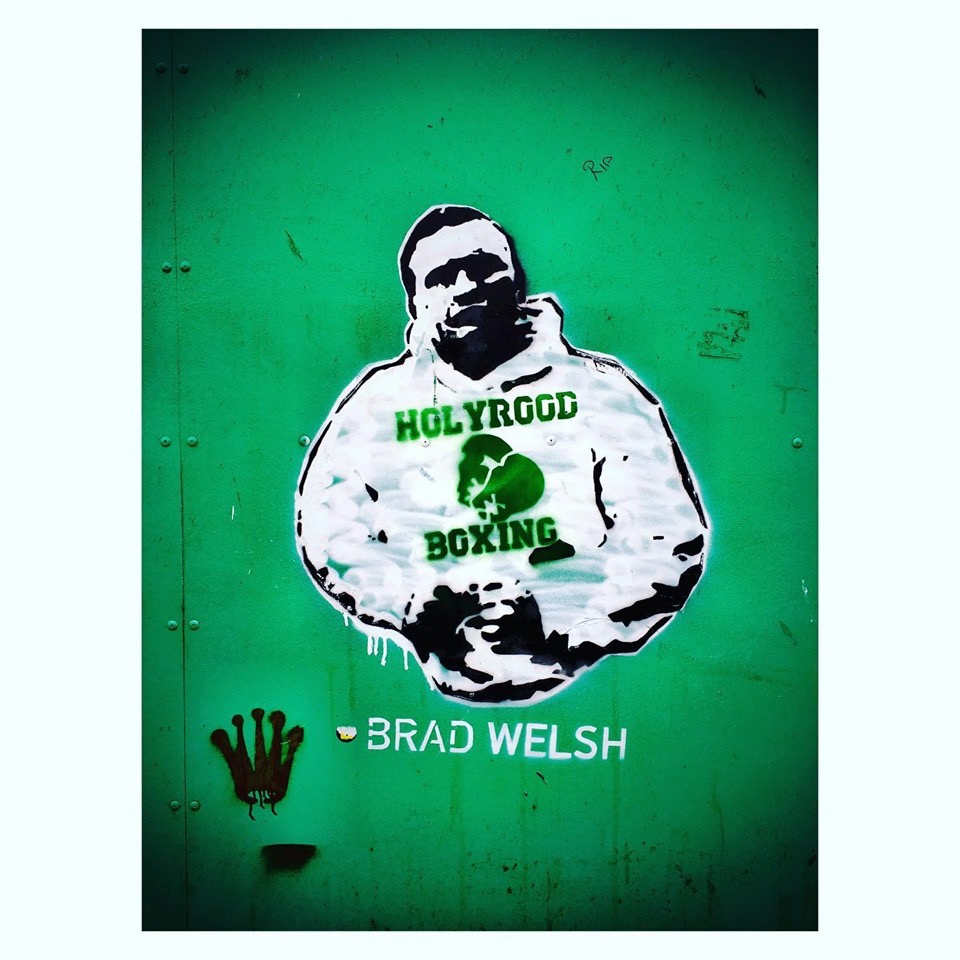
I visited Holyrood Boxing Gym only once. It was a weekday, and I had just popped in to see my friend. I regret not going there for him to put me through my paces on a Sunday morning, but I believe Jake is stepping in to carry on the tradition, so I will be visiting for that reason.
It has been difficult for us here at HWS to write this article, as his loss is still fresh and painful even as I type. The gym was Brad’s place, and I witnessed his ethos firsthand. He was a leader who provided immense encouragement. Everyone who walked through the gym door was treated equally; there were no heroes, or perhaps they were all heroes in their own right. By the time they left, they felt that way. He built people up, instilling the confidence they needed, whether it was for weight loss or, just as importantly, providing a proper outlet for mental health issues. His presence worked in tandem with this mission.
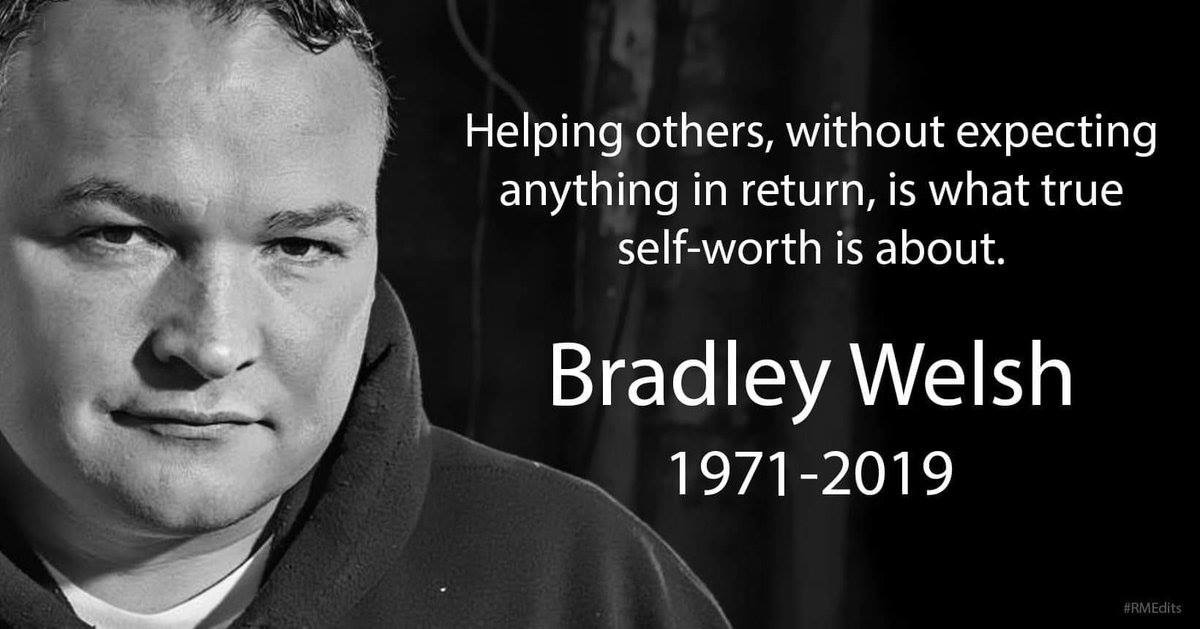
Brad had a unique ability to offer a few words of encouragement that could lift anyone’s spirits. He made me a better person; I know he did the same for hundreds of others. He would go the extra mile to help a friend without expecting anything in return. One has to wonder, did this guy ever sleep? It seemed hardly ever, especially after he completed a Guinness World Record by doing pad work for 24 hours straight. If you haven’t seen it yet, check out the documentary “Bradley Welsh Tough Times.”
Leigh Griffiths
When Leigh Griffiths went through a tough time last year, Brad stepped in to help and set a few people straight. Brad knew Leigh as one of the many footballers who came down to assist with the kids through Helping Hands. He contacted me, and I couldn’t get him to calm down on the phone. Brad was reading online comments from people mocking Leigh and his mental health—two things that are simply unacceptable. He said, “Leigh’s a guy from the streets with magic at his feet who’s just going through a rough patch. He’s just a lad from the scheme.” He was rightly calling people out on Leigh’s behalf to explain their comments. I believe Leigh (LG) phoned Brad to thank him for his support.
After that, it was time to get to work. Brad emphasised the need to support Leigh and wanted us to come together again. I completely agreed, as he said, “He’s one of our own, mate.” Ironically, another Hibs vs. Celtic match was coming up at Easter Road, so we put out the message.
I was on the phone with Brad most days; he took on a lot but never stopped helping where needed and always focused on what we could do next, using his connections and mine. Our next joint venture was with the Green Brigade at Celtic. We had arranged to meet them and work on a solidarity banner supporting the working class and highlighting disingenuous charities. We also planned for members of the Green Brigade to receive free boxing sessions at the club during the next Hibs vs. Celtic game, which unfortunately did not happen in the end.
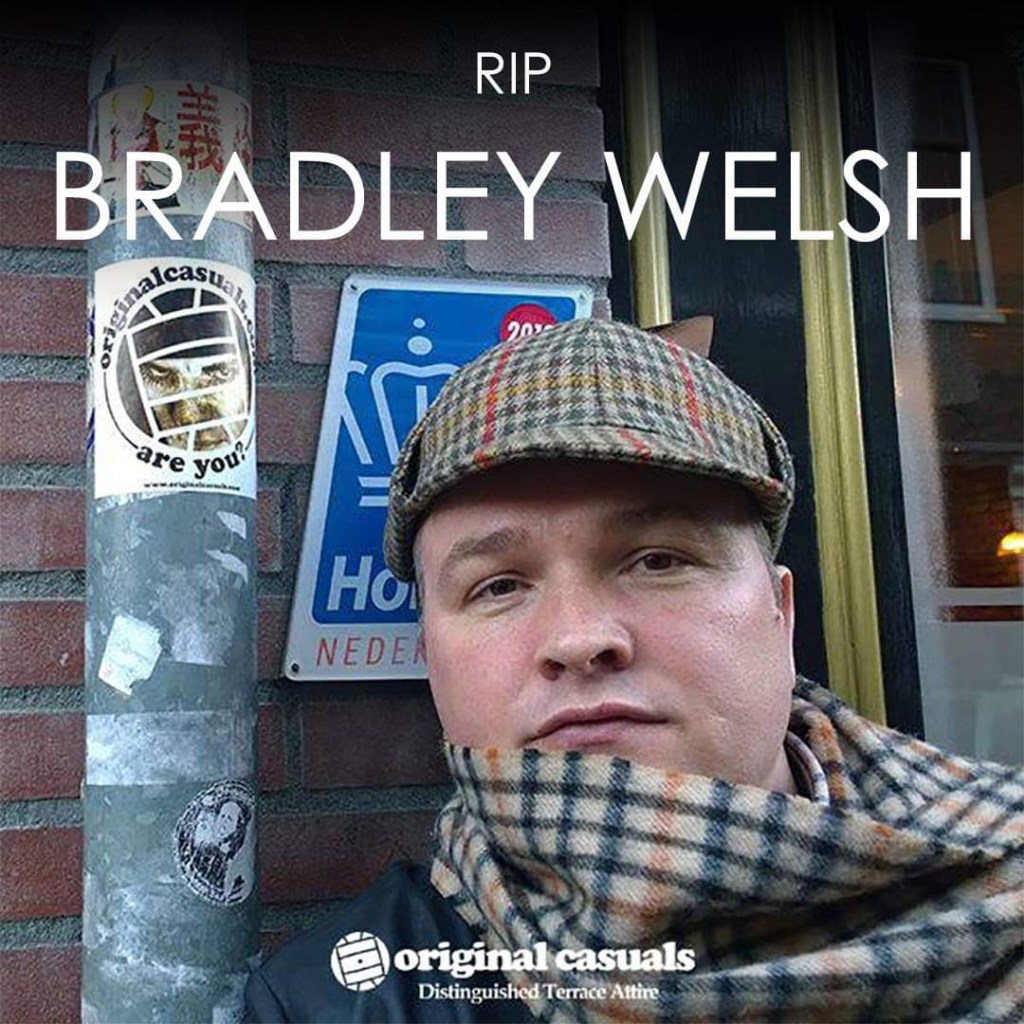
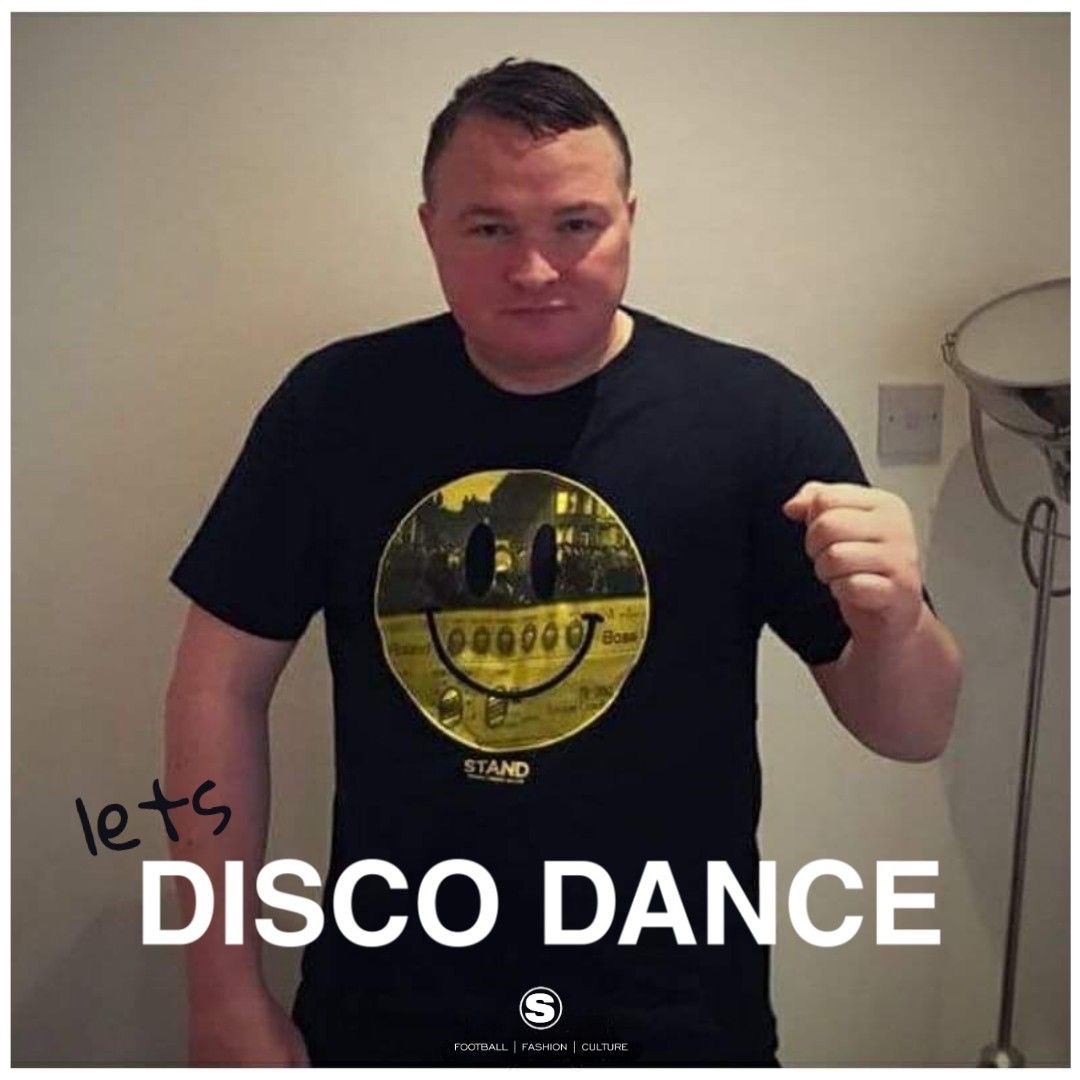
Later that night, we received the news that Brad was no longer with us. Everyone has their own story to tell about Bradley Welsh, and it seems to follow a similar theme: friend, inspiration, coach, life-changer, charming, gifted, and faithful. I think it was Irvine Welsh who said you would only meet a few guys like Brad in your lifetime. That may be true, but I’m still waiting to meet a second one.
Ironically, just after his passing, the next game at Easter Road was against Celtic. We had been told that the Hibs fans were having a minute of applause at the 48th minute, and in his spirit, I felt it was only right that HWS should do one last thing for a friend. It was pretty easy, and everyone agreed … https://wordpress.com/post/holywellst.com/336
Both sets of fans were incredible, and in the 48th minute, we shared a collective applause for Bradley Welsh. Once again, the Celtic supporters stood in respect for this working-class hero.
Among his parting words, should he ever be taken at a young age, was …
‘Ye see, Now try to be me. Me … me … me. Go and never forget.’
We can only try to be him. If you get halfway there, you’ll be doing more than alright.
A lifelong sufferer of Depression has had their life turned around after being advised to ‘cheer up’.
As yesterday was Mental Health Awareness day. There was a ground breaking moment.
“It was my new line manager,” confirmed Archie C Young
“He’d spent a week mucking about with a spreadsheet and had run out of things to do so he called me into his office to ‘get to the bottom of this depression thing’.”
Mr Richard Head (Dickie) joined him and received his revolutionary treatment within minutes.
“Yeah, I told him about my condition, and he just leant back in his chair, folded his hands behind his head and went ‘you want to just cheer up a bit’.
“It’s changed my life. I mean, I’ve had nearly twenty years of CBT, anti-depressants and psychotherapy. If only someone had told me to cheer up all those years ago.
“He also mentioned that I should ‘snap out of it’.”
Richard Dickie Head, the line-manager, went on to explain the theory behind his treatment.
“Well, it’s just common sense isn’t it?” He told us.
“I mean, it’s fair enough to be depressed if, you know, your wife’s left you or you’ve lost your job or something, but if you’re just depressed for no good reason, then you just need to cheer up.”
He also mentioned that people with anxiety disorders should probably just chill out.
Health Secretary Jeremy Hunt has seized on the new developments in depression treatment, cancelling all finance for current treatments of Depression and issuing guidelines for Doctors to just tell sufferers to ‘just try and cheer up a bit’.