It was late 1984 at Central Station in Glasgow. Celtic was playing away against St Mirren. My friend and I walked onto the concourse, and it was still early, so fellow Celtic fans were acknowledging each other. We noticed a strawberry blonde girl wearing a Celtic flat cap and a green and white scarf adorned with a patch of the Pope. She was also dressed in jeans and white trainers. She nodded at us and initiated a conversation. Accompanied by her young nephew, she began sharing stories about rival fans giving her a hard time.
It had become clear that our Kate did not suffer fools gladly. She had a big heart but you don’t disrespect her or cross her. She had these blue eyes that showed no fear and would back you to the hilt.
She suggests to us: “Let’s go to the Chippie below Central Station” So we go down. We get our food and go back up the escalator but we notice two lads sitting with tracksuit tops on and bleached jeans. We know these to be casuals. One shouts up ‘UVF’ giving us a semi stiff arm. Our new pal Katie turns round and gives the m ‘IRA ya twat’ the two casuals do not respond.
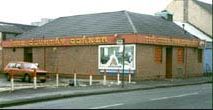
Country Corner Pub
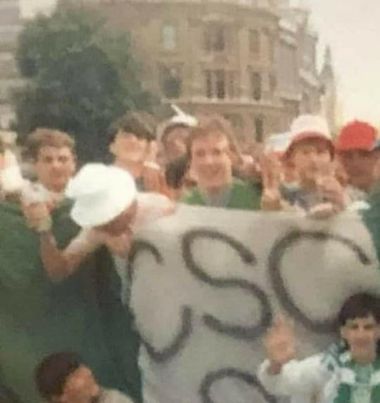
I would see her at a few matches after this and she would always acknowledge you. It was over a year later that Celtic had organised themselves into a a crew of casuals. Firstly Roman Catholic Casuals (RCC) onto Celtic Soccer Trendies (CST). It was settled on Celtic Soccer Crew (CSC).
As we were gathering in town one afternoon at the Country Corner pub around 1985, I recognise a face. She’s wearing a leather patch work top and carrying a black umbrella, it’s Katie. I thought ‘oh no’ but then my thoughts go to how I remember her and why she’s there.
Fearless still she would always stand her ground. Katie became like a big sister to us as our accents were slightly off centre we were initially treated with a bit of suspicion.
I recall Celtic were playing Man United in a testimonial around 1985. About 10 of us were standing in the jungle whist the rest of the crew were standing at the top of the Celtic end. The Celtic support in the jungle decided to turn into their usual song of “Casuals get to fuck” we stayed quiet due to being outnumbered by thousands. However, Kate was not having it and decided to let the fans know! A few liberty takers within the support took a swipe at her. She doesn’t back down and we ended up in a scrap. She doesn’t back down and to this day has the same minerals.
Her strength and spirit continued into later life despite many adversities. I don’t think I’ve ever met anyone stronger. The fear and anxiety she did have she managed to suppress it and used it to her advantage.
Katie was Celtic to the core on and off the pitch.
Whenever Kate was unwell, she would let you know, but her concern always extended to others—family and friends alike. Until the very end, she was reaching out through messages and calls to see how others were doing.
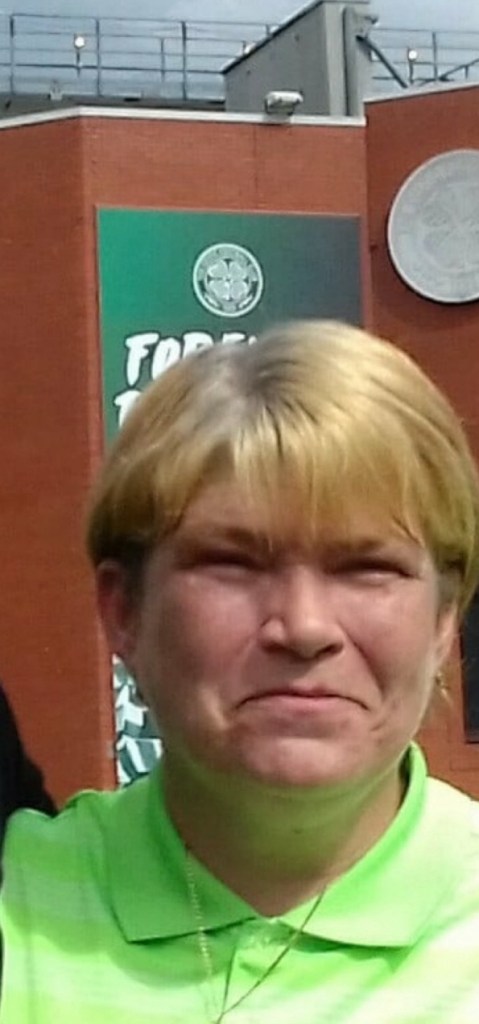
Last night, we mourn the loss of a true Celtic legend.
When the suits lost the map and the ship hit the swell, when the club drifted hard under boardroom spells, they didn’t call prophets or kids chasing fame, they called a humble man who remembers the name.
Third time back, no nonsense, no show, just scars on his hands and a fire burning slow.
He knows this club’s built on hunger and fight, not by balance sheets or power and might.
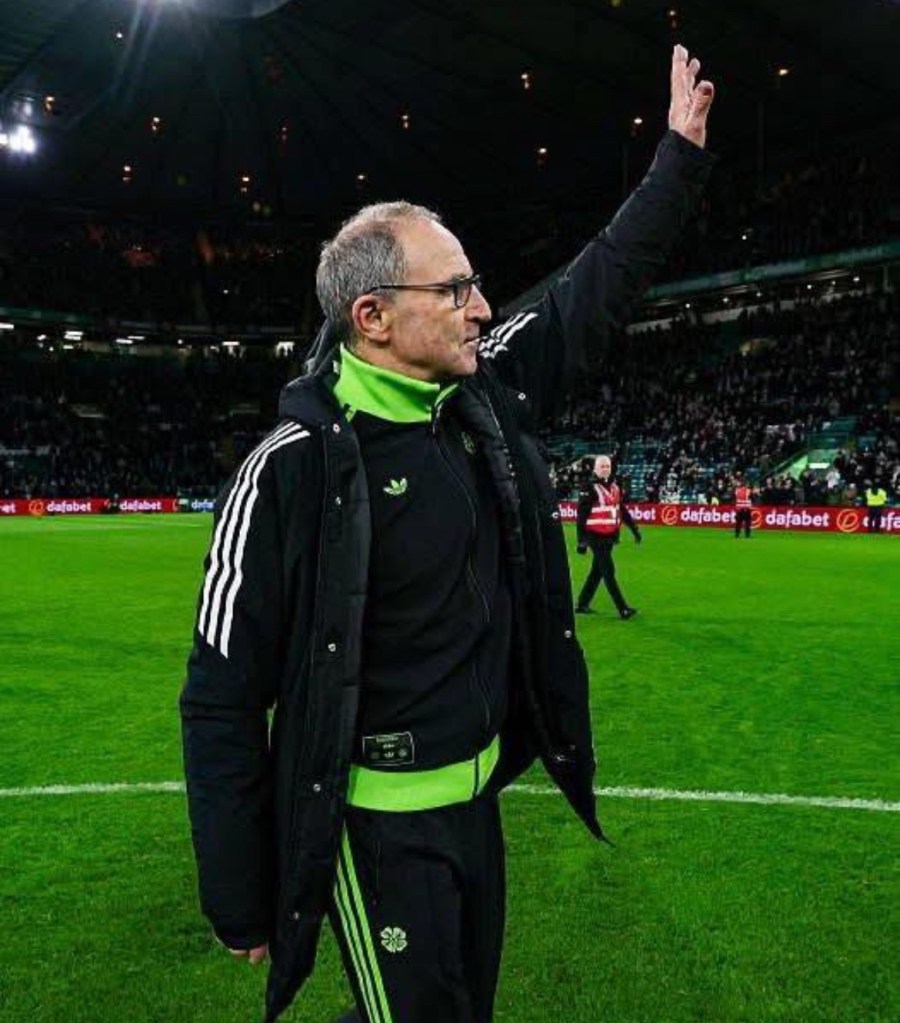
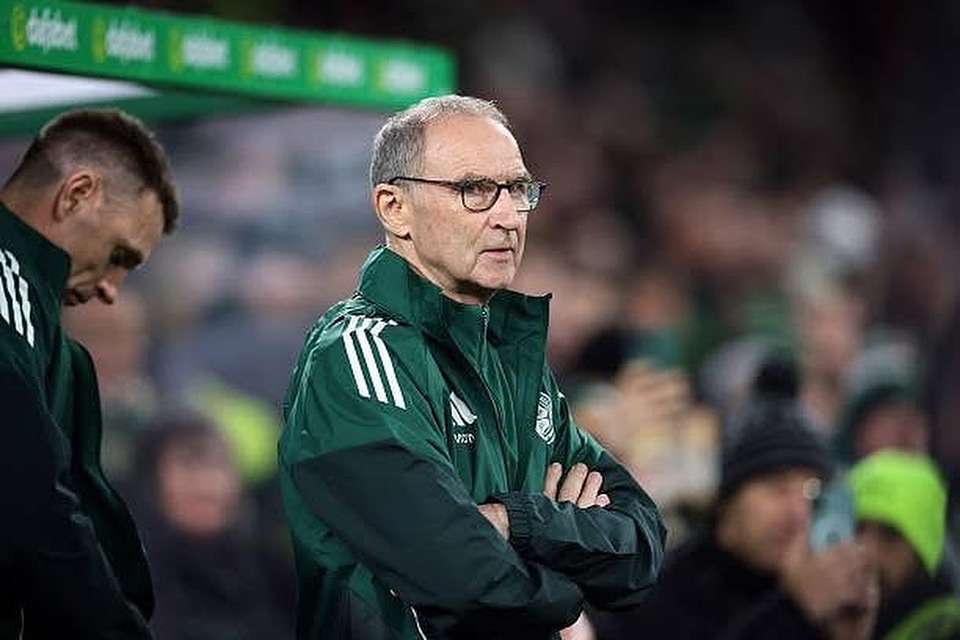
MON and Hoody
Let the storm rage on, let the critics squeal, Celtic fans around the world will march with O’Neill.
Shona arrived in the Glasgow Western A+E (aptly named) with a sprained ankle after losing an argument with a staircase earlier that day. As she limped to the reception desk and gave her details, she glanced up at the triage board.
Estimated waiting time “four hours”.
She sighed, but the ankle had blown up like a balloon animal at a children’s party, so home wasn’t an option. She took a seat and settled in.
The triage area soon turned feral. Ambulances screamed in one after another, trolley wheels rattling like skeleton bones. Nurses barked instructions, as people screamed, while porters weaved through the chaos with grim efficiency. Cuts, breaks, burns every ailment known to man seemed to arrive in bulk.
But this was Glasgow city centre on a Friday night, and the drunks had come out in force like an incoherent army.
There were lads leaking claret from bottle wounds, heroes with stab marks who “didnae feel a thing,” and one man arguing loudly with a vending machine that had clearly wronged him. Blood spattered trainers, ripped shirts, and the unmistakable aroma of cheap wine and lager and regret hung in the air.
Arguments broke out over chairs. A woman screamed that she was bleeding internally while scrolling her phone. Somewhere, a couple were breaking up loudly, complete with tears, accusations, and a crutch cracked over the mans head.
Shona sat back, ankle throbbing, watching it all unfold like a live soap opera. Casualty, but with worse acting and strong Glasgow accents. Every so often, a paramedic would rush past, reminding everyone that beneath the madness, real emergencies were happening.
Still, the night was only beginning.
And Shona, in no particular hurry and mildly medicated on painkillers and people-watching, found herself perversely entertained by the frivolities of other people’s misfortunes knowing fine well that before the night was out, she’d have her own tale to add to the horror show of Fright Night in A+E.
By the time the clock crept past midnight, the waiting room had developed its own ecosystem. Shona’s ankle had reached a new level of swelling, no longer a balloon, more like a novelty beach ball and she’d given up pretending it might deflate.
The army arrived in platoons, chests puffed out despite obvious injuries, each one insisting they were fine. One had a blood-soaked towel pressed to his head and kept announcing to anyone who’d listen that he’d “won the fight,” despite the fact he was swaying like a fiver in the wind.
Another strutted in with a deep gash in his arm, claiming it was “only a scratch,” while leaving a Hansel-and-Gretel trail of blood across the linoleum. He refused to sit down, pacing instead, shadow-boxing an invisible opponent and muttering about respect and the Queensberry Rules.
“Ah’ve been stabbed before,” he told the room proudly, as if listing previous league titles.
Across from Shona sat a wee guy with a split lip who flinched every time someone coughed. He kept glaring at the hard men, clearly desperate to prove he belonged in their ranks but knowing fine well he’d faint if he stood up too fast.
An inebriated woman in leopard print who had went oot awe brammed up trying tae get lucky and ventured back looking like the bride of Chucky. Mascara streaked like war paint and laddered tights, screaming at the receptionist because she’d been waiting twenty minutes and had places to be. A man loudly declared he was allergic to hospitals while drinking from a can of cheap cider he’d smuggled in his jacket. Someone started snoring and farting. Someone else started crying. No one knew why.
The nurses, meanwhile, were operating on pure rage and caffeine.
One marched out from behind the desk, eyes dead, clipboard clutched like a weapon.
“If ye can shout, ye can breathe,” she barked, silencing half the room instantly. “And if ye can breathe, ye can wait.”
A drunk tried flirting with her and was dispatched with a single look that could’ve stopped a heart. Another nurse confiscated a man’s phone mid Facebook Live rant with the efficiency of a prison guard.
Doctors drifted through like ghosts creases etched into their faces, shirts splattered with things best not identified. One young doctor stared at the triage screen, rubbed his temples, and whispered, “It’s only Friday,” as if realising the weekend had barely begun.
At one point, a full-scale argument erupted over a charging socket. Voices rose, insults flew, and a hard man with a bandaged hand offered to “sort it outside,” before being reminded firmly that outside was how he’d ended up here in the first place.
Through it all, Shona watched, ankle pulsing like something from a Tom and Jerry cartoon, pain ebbing and flowing with each fresh wave of madness. She shared a knowing glance with an older woman clutching her ribs, both of them silently agreeing that this was better than telly.
When Shona’s name was finally called, she almost felt disappointed.
She rose, limped forward, and took one last look at the battlefield of broken egos, bloodied pride, and heroic stupidity. Behind her, the waiting room roared on another Friday night in the Western A+E, where everyone had a story, most of them unbelievable, and none of them going home any time soon. How the West was won.
Time in the Western A+E didn’t move forward, it circled and mocked the situations that arose. Simply a case of rinse and repeat every weekend.
Shona was convinced she had landed in the set of One Flew Over The Cuckoo’s Nest, the waiting room had reached peak lunacy. The air was thick with antiseptic, sweat, stale alcohol and regret. Somewhere, a child cried. Somewhere else, a grown man howled because he’d been asked to remove his own sock.
The hard men had evolved.
One now lay flat on the floor, arm in a sling, loudly announcing he was “bleeding oot internally” while eating crisps. Another, shirtless for reasons no one could explain, was giving an emotional talk about loyalty, betrayal, and why he definitely wisnae drunk.
A third tried to smoke a cigarette under the NO SMOKING sign and was stunned, to be told this was frowned upon, to which he pulled out a vape much to the nurses anger, who sternly glared until he returned it to his pocket.
The nurses were no longer human. They had crossed into legends and pacifiers.
One glided past like a battle-hardened general, snapping gloves on with a sound that struck fear into the soul, and you seen the men wince at the thought of where she was going with those gloves. Another nurse, powered entirely by coffee and spite, shut down a near-riot with five words.
“Sit doon. Or go hame.”
Silence fell.
A handsome junior doctor attempted small talk with Shona while examining her ankle, then apologised for existing with a bright red face and disappeared into the chaos, never to be seen again. A consultant swept through, issuing orders like a man extinguishing fires with a teaspoon.
At one point, a stretcher burst through the doors at speed, followed by a parade of professionals accompanied by two policemen who looked like they’d already lived several lifetimes that night. The room sobered instantly just for a moment, before returning to madness as if on cue.
Shona’s ankle was finally X-rayed, prodded, poked, and discussed in hushed tones as though it had committed a crime. She was informed it wasn’t broken, which felt deeply unfair after everything she’d been through.
Then came the boot.
A nurse emerged carrying it like a holy relic. Thick. Black. Industrial. The kind of thing you could kick down a door with.
“This’ll dae ye,” she said, strapping Shona’s left leg in with ruthless efficiency.
Shona stood, wobbling slightly, feeling like a deep sea diver. She was handed discharge papers, painkillers, and a look that said don’t you dare come back tonight.
As she hobbled towards the exit, she passed the same hard men still arguing, still bleeding, still undefeated in their own minds. A new ambulance screeched in blue lights flashing. Fresh chaos poured through the doors.
Outside, the night air hit her like freedom.
She stood for a moment, booted, battered, and utterly exhausted, listening to the sirens fade behind her. Four hours older. One industrial-strength boot wiser.
Shona limped home victorious, strapped up, sent on her way, and grateful to escape Fright Night in A+E alive. An experience Shona will never forget.
Danny was a well-educated lad, the kind folk pointed to and said, he’ll do well, that one.His parents were hard-working, working-class people who had grafted and studied their way into respectable professions, his father a doctor, his mother an accountant. They carried their success lightly though, never letting it turn into airs and graces.
Danny and his sister were raised on good manners and better morals. Their dad, in particular, was fierce on that. No matter how well things went, he’d wag a finger and say, “Never forget yer auld arse.” It was his way of saying remember where you came from,saying remember the schemes, the hand-me-downs, the neighbours who helped when money was tight.
Danny went to private school, but he never quite fitted the mould. He got up to the same daftness any teenage boy did, drinking in parks, sneaking fags, dabbling in whatever was going about at the time, nothing wild, nothing that rang alarm bells. Just enough mischief to prove he wasn’t made of porcelain.
What really grabbed him, though, was cars.
From a young age he was forever in his mates’ dads’ garages, sleeves rolled up, hands black with oil, head buried in an engine bay. While other lads talked football or girls, Danny talked torque, gear ratios, exhaust notes. He didn’t just drive cars, he listened to them, felt them, understood them.
On his eighteenth birthday, after passing his test at seventeen, his parents bought him a Ford Fiesta. Nothing flashy, just sensible and solid. Danny was over the moon. He washed it twice a week, polished it like a prized medal, knew every scratch and rattle as if the car were alive.
Against his parents’ wishes, he chose mechanics as a trade. They wanted university, degrees, letters after his name. Danny wanted spanners, engines, and the smell of petrol. Speed fascinated him, the pull of acceleration, the way the world blurred when you pushed just a little harder.
Speed, unfortunately, didn’t fascinate the law.
Danny and the traffic police never quite saw eye to eye. Points stacked up on his licence like warnings he half-ignored. To Danny, speed wasn’t recklessness it was freedom, control, proof he was good at something. To everyone else, it was a problem waiting to happen.
And like most problems you refuse to look straight at, it wasn’t going away.
Here’s a tightened, flowing continuation, keeping the grit, the love of machinery, and the near-miss with death clear and human, without over-sentimentality.
Danny then bought himself an old Ford Escort Mk2, a rust bucket on the surface, but hiding a Mexico engine that made his heart race the minute he heard it turn over. Most folk would’ve seen scrap. Danny saw potential.
He worked on that car day and night, rebuilding it piece by piece. Weekends were spent tramping scrap yards across Scotland, fingers numb from cold, pockets light but spirits high, hunting down parts like a man on a mission. First came the engine, stripped, rebuilt, tuned until it purred like a contented kitten. Then the bodywork, panels straightened, rust cut out and replaced. The interior followed, stitched and sourced back to original condition. Nothing half-done. Nothing rushed. This wasn’t just a car it was a labour of love.
In the meantime, his daily driver was now a Ford Escort XR3, souped up beyond belief. Lowered, louder, faster than it ever had a right to be. Danny was speed-mad, always chasing that extra edge, that next tweak that shaved seconds and raised pulses.
One night, Danny and two mates from the garage took the XR3 out for a spin. What started as a laugh turned into a high-speed race, engines screaming, bravado thick in the air. Danny pushed too hard, just a fraction too far. The back end went, tyres lost their grip, and the car spun off the road, slamming into a tree with a violence that silenced everything.
His two mates escaped with cuts and bruises, shaken but alive. Danny wasn’t so lucky.
The paramedics worked frantically at the roadside, fighting to bring him back. They lost him twice. Later, Danny would tell the story of what he saw, a white light, calm and warm, and his grandfather standing there, hand outstretched, telling him everything would be alright.
Against the odds, they got him to hospital.
He came round with a few broken bones, a body held together with painkillers and metal pins and an ego badly bruised. The speed that once felt like freedom had nearly cost him everything.
For the first time, Danny had to lie still and think.
Here is a careful, grounded telling, restrained, tragic, and human, without sensationalising the violence, letting the weight sit where it should.
The completion of the Mk2 was nearing, and Danny was buzzing. The car had just come back from the paint shop, gleaming like it had rolled straight out of a showroom floor. Every line was perfect, every panel sat right. It was everything he’d imagined during those cold nights in scrap yards and long hours under strip lights.
It was his pride and joy.
Danny drove about grinning like a Cheshire cat, reving the throttle, blasting the horn at his pals, soaking up the looks and the boost to his ego. For once, the speed wasn’t about recklessness, it was about achievement. I built this,he thought. Every bolt, every inch.
Then came the works Christmas party.
Danny drank that night, properly drank, something that was totally out of character for him. Laughing louder than usual, glass after glass, the sense of invincibility creeping back in. When it came time to leave, he brushed off offers of a lift. He’d driven faster sober, he told himself. He’d be fine.
He wasn’t.
The road was quiet, too quiet, and Danny did what Danny always did he pushed. The engine screamed as he flew through a 30mph zone at more than twice the limit. Then came the thud. Sudden. Sickening. Final.
A man appeared out of the dark and disappeared just as quickly, pulled under the car in a fraction of a second. Danny slammed the brakes, heart hammering, mind screaming. Panic took over. He didn’t stop. He couldn’t. He drove on, shaking, breath ragged, hands slick on the wheel.
He hid the car in his dad’s garage and scrubbed it clean, washing away blood, wiping away guilt he knew wouldn’t lift. By morning, police were everywhere. Blue lights. Tape. Questions. The man had died at the scene from catastrophic head injuries.
They never found the car.
They never knocked Danny’s door.
But Danny was never free.
The guilt ate away at him like a cancer, stealing a piece of him everyday.
Sleep deserted him. The grin vanished. The pride in the Mk2 curdled into something he couldn’t look at. He started drinking to drown the images, to silence the sound of the impact that replayed every night. Drink led to pills. Pills led to more drink. The careful mechanic who rebuilt engines with patience and precision unravelled quietly, behind closed doors.
A year later, Danny was found dead in his flat. Guilt got him in the end no matter what they put on the death certificate.
Overconsumption of alcohol and prescription drugs, the report said. No note. No explanations. Just a room heavy with silence and a life that had burned too fast.
The Mk2 sat unused, dust settling on its flawless paintwork.
A perfect car.
And a man who never learned how to stop gone to the big scrapyard in the sky.
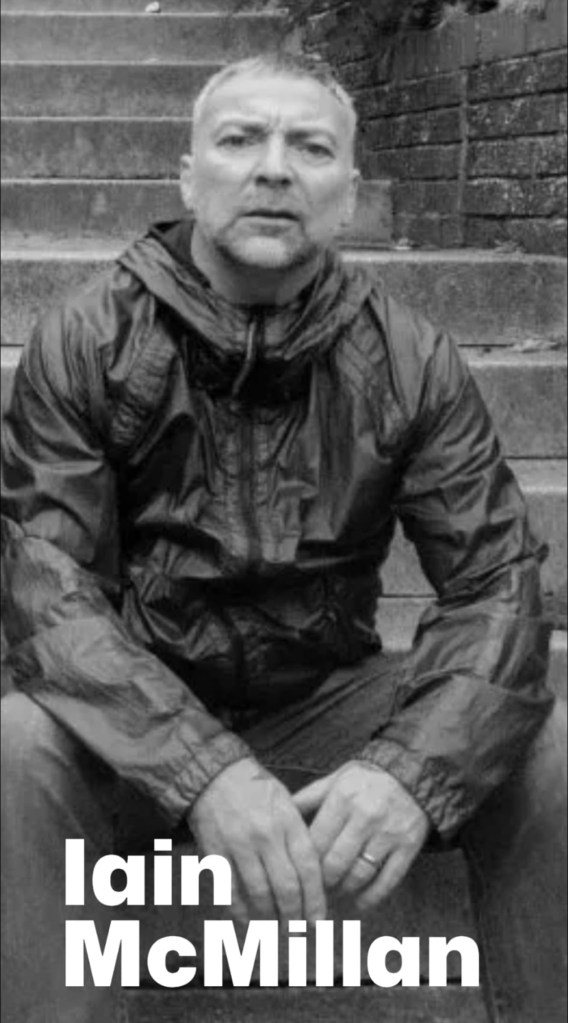
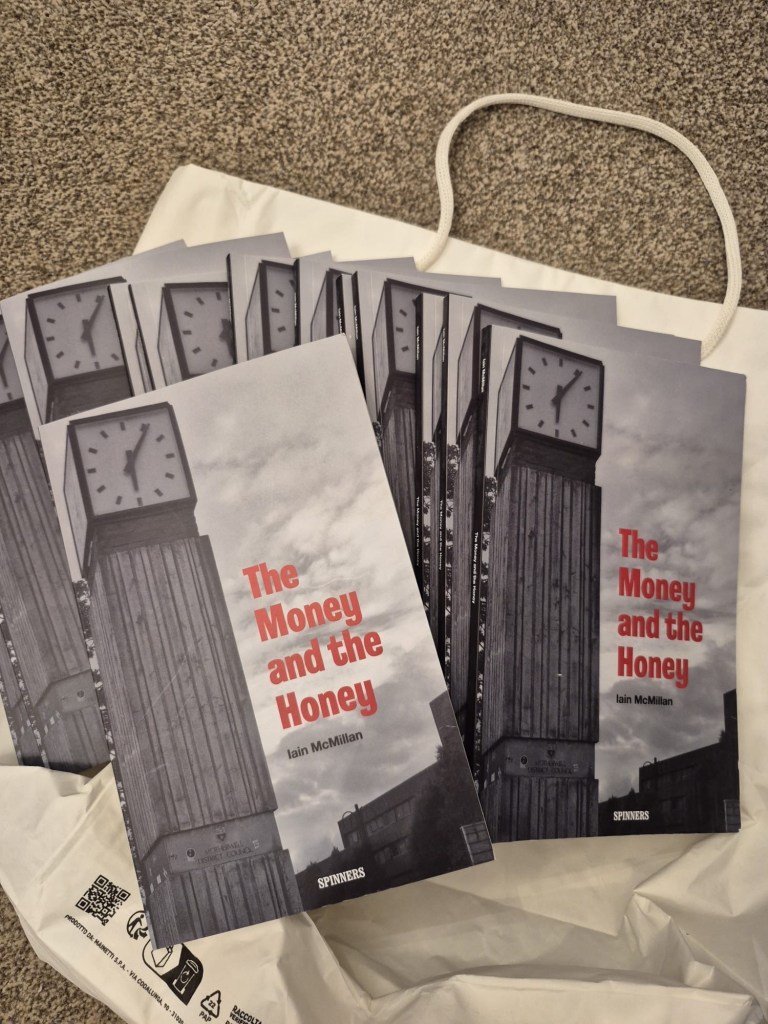
HWS recently caught up again with our good friend Iain McMillan, which is always interesting. Iain has just finished his latest novel, *The Money and the Honey*. This is his second book, and it has piqued our interest once again.
Thanks for meeting us again, mate. How’s things?
I am very well mate, mega busy with the book recently published but it’s all positive stuff.
The first thing I need to ask is where the title of the book came from, and is there a meaning to it?
I’m glad you asked that question! There is a meaning behind the title. Back in 2002, I admitted defeat and made some lifestyle changes, which included knocking the drink on the head. It was the start of a new way of life for me. I was fortunate enough to have met a few guys who had walked the path before me and had many years of walking the path of sobriety under their belt. I was given a bit of strong advice that always stuck with me and that was the two things that will mess up your sobriety is the “Money and the Honey”. With Romance and greed by such a central part to the story I felt the title very fitting.
The character in the book, Chris, is fascinating. I’m sure a few will relate to him. Also, a sign of the times, living in a Northern town during the nineties, where status was more important than anything else.
I think given the age I was during the 90s it was prime time for me. I left school in 1989 with the world at my feet. Your late teens and early twenties are generally a carefree time before any real responsibility comes along. I’m grateful that I grew up in the era I did, as we had great music through the 80s and some great times at football, etc. Then when the 90s come along the rave scene was groundbreaking and gave us some of the best years of our lives. I think like any young man you’re trying to find your place in the world and belonging to your tribe gives you a certain status. That is before you get through your twenties and you need to choose responsibility before anything else and the whole game changes again.
Much the same as in your last book, the central character, Chris, comes across as a street-tough romantic who is also a deep thinker.
It is important for me not to write a character as one dimensional and hopefully I’m able to show a bit of depth in each character I write about. I think with the main characters being in their early twenties it is still a decade in your life where you are shaped by your peers and your upbringing before you work life out a bit. Chris spends a lot of time in his own head navigating his way through the trials of love and friendship. You can hopefully see where he is becoming truer to himself and working out his strengths and weaknesses and becomes more of an individual rather than playing somebody he’s not.
Did you feel the new book was easier to write now that you are an established writer?
I feel I gained a great deal of experience writing the first book and the other bits of work I have had published since. That experience gives you a better idea of where I could have improved in the first book though, so I wanted to write a something that was an improvement on my first effort. I had a much better idea on how to structure the story and develop characters. I had also overcome any self-doubt about publishing my work and I was more comfortable seeing myself as a writer as unfortunately it’s not a title the working classes tend to resonate with.
I admire the way the book touches on the terrace-casual overlap with the clubbing scene. This has always been an interesting topic, with some lads unable to mix the two. How did you see it?
It was definitely a clashing of two completely different worlds. I always compared it to the mods in the sixties becoming hippies and growing their hair long. We had that too from the football terraces to the dance floors. The numbers at football dropped rapidly as the clothes got baggier. Despite the mood enhancers and how big rave culture was in Motherwell the football thing never completely died out. I always simmered away in the background. With Motherwell winning the Scottish Cup in 1991 it gave the town a real boost and we kept the football thing going to a degree. Just on a smaller scale as most couldn’t be bothered with turning up after dancing until 6am and the penalties for getting arrested at the match became to severe.
Motherwell is an interesting town. I have always felt that, even though it suffered a lot of hardship, and it is predominantly a working-class town, it has always had its creative side. I am glad it states that in the book.
In an era where there was no real work about and a generation who wanted designer clothes and four-day weekends it seemed to spark a creativity and entrepreneurship within many. When your days midweek are tough people want to make the most of the weekends. I still see that legacy in Motherwell to this day with a new generation of DJ’s and bands who have been inspired by the older lads they once looked up to as kids. The attitude that anything is possible is still prevalent and Motherwell has always punched well above its weight…..just no on the football field.
I agree that this town was one of the first to embrace certain trends, including the early casual scene. Additionally, Street Rave had a significant impact on the Scottish club scene. Was this just a natural progression?
I think so, yeah. With Motherwell knee-deep in the casual thing throughout the eighties, it created a generation of young people who were very aware of fashion and music and were always hungry for the next big thing. Part of culture when you’re young is about staying ahead of the game, and as football faded onto the dance floor, Motherwell were there when the starting pistol went off.
I know we touched on this in your last Q&A, but was dance music your thing, or did you prefer bands?
I have always been heavily into music, but guitar music has always been my passion. I loved some of the early house music, and you wouldn’t want to listen to anything else when you’re in a club, but for me it’s always been indie, Britpop and sixties type bands. I would never listen to dance music out with a club, and I listen to a lot of music and travel all over to attend gigs. A good guitar riff is what makes the hair on the back of my neck stand on end. I get the same feeling of unity in the barras as a clubber would in the sub club.
I see that you’ve been writing short stories for the Spinners Fanzine. I’m a big admirer of the magazine, and I think there are some talented writers involved. Does contributing to the fanzine help keep your creativity flowing while you work on your next book?
Writing for Spinners has been great for creativity, as it allows me to indulge in a subject I wouldn’t be able to turn into a whole book, but maybe turn an idea into a short story. It gives you a lot more freedom, as a novel can have a section where you’re struggling to find the groove of the story. That doesn’t really happen when you only have three or four thousand words. The Fanzine also gives you a deadline to submit your piece, so it forces you to get typing and stop procrastinating. It’s like anything in life: if you want to get good at something, you need to keep doing it.
Can you give us an IN and an OUT for this week?
IN – Has to be the Stone Roses with the recent passing of Mani. Not very often I’m touched by the death of a celebrity, but Mani was different.
OUT – Moustaches and Mullets. Get a grip lad, this not Australia.
And finally, what are the next steps for Iain McMillan?
I plan on promoting The Money and the Honey as much as I can going into 2026 to try and get a bit of exposure before I move on to my next project. I have quite a few short stories written so I might release a book of short stories before I tackle my next novel. I think when you find a creative spark in you, it gives you a certain drive to do better, so I don’t plan on stopping anytime soon.
Thanks for your time again mate.
No problem.
The Money and the Honey can be purchased here at the links below …
Sandy was never born for kneeling and praying to God. Naw. He came into the world fists first, a stubborn wee Irish/Scotch man with fire in his lungs and trouble always a step behind him. And yet the thing that finally broke him wasn’t a man, or the polis or a judge… It was a bloody bottle of supermarket whisky with a screw cap that clicked like a handcuff and its contents smelt like expensive perfume.
A rebellion killer. A soul thief. A dictator in amber.
And Sandy proud, loud, built like a brick shithouse fell to it like a slave.
Lucy saw it before he ever admitted it. She loved the dafty, aye, but she wasn’t fooled. She saw the lies, the shakes, the late-night creeping about the flat like a burglar hunting his next secret stash. She watched the life drain from his face every time he opened that bottle like it was “mass for sinners”.
Rain battering the windows, Glasgow night howling like a banshee. Sandy barges in, soaked, steaming drunk, half-singing rebel songs, half-crying like a wean who’d lost his ma.
Lucy’s standing there still, cracked, done.
“Pick one,” she says, voice cold as the Clyde. “Me… or that poison controlling your life.”
He tries to laugh it off, swagger, act the big man, but even in his drunken haze he hears the truth in her tone, this is the line, and he’s standing one toe in front.
He stares at the bottle on the table. That familiar amber glare. The devil he danced with more than he ever danced with Lucy.
Whispers rise from it, old pals from pubs, dead relatives, the ghosts of nights he couldn’t remember.
Come on Sandy boy. One last swally. One wee comfort to soften the blow. Don’t listen tae her, John Barleycorn’s got ye. The bottle gently whispers.
His hands are trembling, heart thumping like a bodhrán in a rebel march.
He lifts the bottle.
And for a second, Lucy thinks she’s lost him.
Then CRASH! He smashes it off the edge of the sink, roaring like a man tearing chains off his wrists.
Amber runs down the tiles like spilled sin.
“It’s me and you now,” he gasps. “No more masters. No more surrender.”
Lucy bursts into tears not the weak kind the relief kind.
Day 1. Withdrawals kick in. His body shakes like a battery hen. Sweat pouring off him as if his skin is wringing out the lies. Lucy wraps him in blankets, whispering, “You’re fighting. You’re no’ beaten.”
Day 2. The Heebie Jeebies have kicked in. He clings to her hand like a man lost He’s pacing the hall like rebels before a riot. Peeking through curtains. Jumping at silence. Seeing shadows that don’t exist.
“Lucy… someone’s watching us.” “There’s nobody there, Sandy.” “Aye there is, I saw movement.” “That’s the washing line.” “The washing line disnae walk!”
Day 3. This is where the bottle fights dirty. He sees folk he wronged standing in the doorway. He apologises to thin air. He argues with himself. He sobs into his palms because he’s convinced the walls are closing in.
Lucy holds him, whispering steady like a priest giving last rites.
That night he wakes screaming about spiders on the duvet, flames licking the carpet, and a hooded figure in the hallway.
Lucy checks. Nothing. Only shadows. Only fear.
Day 4. He drops to the floor. Shaking. Pale. Broken. A shattered rebel soldier.
Lucy stays up all night, wiping his brow, whispering his name, daring death itself to try her.
At sunrise… he stirs.
The colour returns. The shaking calms. The demons retreat.
He looks at her, eyes clear for the first time in years.
“I thought I was done, Lucy.” “You’re harder than the drink,” she says. “And twice as stubborn.”
Weeks pass. He eats again. He laughs again. He walks taller, like a man who’s been to hell and spat in the devil’s pint glass.
He joins A.A. meetings. He tells his story not polished, not saintly just truth.
Folk listen. Some cry. Some nod like they’ve walked the same burning road.
Lucy watches him with pride fierce enough to crack stone.
One night, months later, Lucy and him walk past a pub. The old Sandy, the drunk Sandy would’ve drifted toward the door like iron to a magnet.
But this Sandy stops. Looks in. Then smirks.
“Naw,” he mutters. “I’ve served my time for that tyrant.”
Lucy smiles.
“You beat it, Sandy.”
He shakes his head.
“I didn’t beat the bottle… I overthrew it, One Day at a Time”.
Sandy never fancied himself a hero. He wasn’t polished, wasn’t holy, wasn’t the poster boy for recovery. He still swore like a builder, still had scars on his knuckles, still woke up some mornings with ghosts biting at his heels.
But he was alive, and for the first time in his life he’d found a fight he wanted to stay in.
It started with a lad called Wee Jay.
Skinny wee thing, face the colour of cold porridge, shaking like wet washing in the wind. Sandy found him outside the church hall before the AA meeting, smoking a fag like it was the only thing keeping him tethered to earth.
“You going in?” Sandy asked.
“Naw. They’ll judge me.”
“Son… if judging folk was allowed, they’d have thrown me out years ago.”
Jay snorted. It was the first laugh he’d had in days. And that laugh was the first rope thrown down the hole.
Sandy didn’t know it yet, but this was the start.
Sandy didn’t preach. Didn’t quote scripture. Didn’t tell people to “think positive” like some polished guru who’d never smelt the gutter.
He told the truth ugly, raw, hilarious, heartbreaking truth.
His Message Was Simple: You’re no weak You’re no’ deed, you’re wounded The drink’s a liar, not a cure. And if I can crawl back, broken as I was… you can sprint. Folk listened because Sandy spoke like a man who’d walked through fire and still had the scorch marks. He’d say. I’ll no’ lead ye. I’ll just walk beside ye until you can walk ahead of me.”And he meant it. Jay got sober. Then big Archie, tough as nails but drowning inside. Then Dougie, who’d lost his licence, job, and nearly his family. One by one they clung to Sandy’s armour until they built some of their own.
He became the guy people phoned at 3am. The guy who’d answer with a muttered, “Right, stay where yer are I’m coming.” The guy who’d sit on kerbsides, hospital chairs, and cold flat floors talking people back into their own bodies.
Lucy would wake and find the other half of the bed empty, muttering,
“He’s away saving another soul.”
And she wouldn’t complain. She was proud dangerously proud.
But some battles cut deep.
There was Malky brilliant when sober, violent when drunk. Sandy nearly gave up on him until one night Malky sobbed into Sandy’s chest like a wean, choking out, “I don’t want tae die, big man.”
Sandy held him steady.
“You won’t. Not while I’m breathing.”
And Malky rose. Slowly. Painfully. But he rose.
Then there was the wee Irish girl Roisin, beautiful, fiery, lost in a haze of trauma and vodka. Sandy didn’t try to be her saviour just her mirror. When she finally faced herself, she wept. Then she fought. And she won by the help of Clare her sponsor that Sandy had put her on to.
Word spread.
“Sandy helped me.” “Sandy pulled me back.” “Sandy answered the phone.” “Sandy listens.” “Sandy gets it.”
Soon he was sponsoring three, then five, then eight lost souls. Not because he wanted recognition but because he couldn’t watch another person drown the way he had.
One night he passed that same pub the one that once held him like a jail.
A group of drunk lads spilled out, singing rebel songs badly.
One of them pointed at Sandy.
“Fancy a wee haulf big man?”
Sandy smiled a calm, steady, hard-earned smile.
“Naw boys, I’m fighting a different rebellion now.”
And he walked on.
Lucy linked her arm through his.
“You’re becoming a right guardian angel.”
He laughed.
“Angel? Me? Naw. Just a daft Glesga alky wae his faced washed who refuses to let the drink take another bloody soldier.”
He didn’t just save folk he built a wee army of people who now saved others.
A ripple became a wave.
A wave became a tide.
And Sandy? He stayed humble. Stayed sober. Stayed in the fight every day, every hour.
Because he knew the truth.
A man who beats the bottle once is lucky. A man who beats it twice is gifted. But a man who helps others beat it? He becomes unstoppable.
Malky had just left The Balmore Bar and was heading hame through the dark dismal grey streets of Possil when the effects of the 10 pints of lager he had previously consumed started to work on his bladder. His back teeth were floating and he needed a pish urgently. He decides his only option is to go into the old London telephone box on Saracen Street to relieve himself before he pished his troosers. He opened the door of the manky sticker lined box and was hit by a combination o’ stale pish, damp newspapers, and that warm, vinegary smell that every auld phone box in Glasgow seemed to breed like mould.
“Jesus wept,” Malky muttered, near wretching as he squeezed himself inside. The door creaked shut behind him, shutting out the streetlights and plungin’ him into that nicotine-yellow gloom that used tae shine doon on a million dodgy drug deals, affairs and drunken confessions.
He fumbled with his zip, swayin’ like a man on the Millport ferry caught in a storm, the ten pints still dancin’ a rave in his bloodstream.
Just as he let go and felt the blessed relief flowin’ through him, he heard it.
A voice.
A whisper, thin as smoke.
“Malky…”
He froze. Looked roon. Only the graffiti stared back at him, hearts, phone numbers, and the usual “Tammy is a cow” scratched into the metal.
Then it came again, clearer this time.
“Malkyyyy… ye shouldnae be daein’ that in here…”
Malky’s stream cut off mid-flow as terror grabbed his spine.
“Who’s there?” he slurred, eyes dartin’ about, tryin’ tae focus in the piss-perfumed haze.
The voice sighed, long and mournful.
“It’s me… the last poor bastard that went fur a pish in this box. And noo I’m stuck here… forever.”
Malky’s jaw dropped. “A ghost? In Possil? Away ye go.” He’d seen many people in the street wae haunted, gaunt looking faces but a ghost in Possil?
“Aye,” the voice replied, “and if ye keep pishin’ in here, you’ll end up hauntin’ the place anaw. This box disnae forgive, son.”
Malky didn’t wait tae hear the rest. Zip half-closed, heart batterin’ his ribs, he burst out the door and charged doon the street like a man being chased by every hawker in the Barras.
Behind him, the phone box creaked.
And from deep inside, the voice whispered again.
“Always look oer yer shoulder ya Dirty wee scudbook…”
By the time Malky reached the end of the street, his heart had calmed jist enough for him tae realise two things.
He’d still needed a pish, badly.
He’d left the zip on his troosers sittin’ at a squinty half-mast, blowin’ in the wind like a sad wee flag of shame and his nuts were freezin aff him.
But there was nae time to fix it proper, because as he staggered onto Hawthorn Street, three shadows peeled themselves off a close-mouth like hungry wolves. Hoodies up, faces covered, swaggerin’ with that pure Possil confidence wae a swagger that wid dry a washin, that comes from bein’ eighteen, bored, and full o’ Buckfast, and anything else they could get a high fae.
“Awright, big man,” the tallest yin said, steppin’ in front o’ him. It wasnae a question really, it was a demand.
Malky stopped dead, stomach churnin’. “Listen lads, I’ve nae money, nae wallet, nae watch, nae dignity left, I spent it aw in the The Balmore”.
“Aye?” the boy smirked, flickin’ oot a knife that glinted under the orange streetlight. “We’ll take what ye’ve goat anyway.”
“That’ll be ma last half a pish and a half packet o’ Polo mints then,” Malky muttered, hands up, knees bucklin’. His bladder gave a treacherous throb.
The second boy stepped behind him. “Empty yer pockets, ya prick.”
But before Malky could even raise a shaky hand, the street fell silent… colder… as if something unseen had slithered into the space between them.
And from somewhere behind him far too close came a whisper he recognised instantly.
“Malkyyyy… telt ye ye’d regret leavin’ that box…”
The gang froze. Malky froze. The hair on everyone’s neck shot up like they’d been plugged into the mains.
The tallest boy gulped. “Whit the fuck wis that?” “Hiv you came team handed ya tosser”.
The tallest boy took a step back, eyes dartin’ left and right. “Seriously, who’s talkin’? Which one o’ youse is tryin’ tae be funny?”
But none of them were laughin’. The second lad had gone as white as a sheet, and the one behind Malky was already inchin’ backward toward the close, knife lowered.
Then the voice came again, louder, more aggresive, like it was crawlin’ up fae the drains.
“Ye should’ve stayed in the box, Malkyyyy… I’m comin’ tae find ye…”
And with that, a freezing gust whipped doon the street, rattlin’ bins, twisting’ up wrappers, and plungin’ the gang into full-blown panic.
The lad behind Malky screamed, “NAW, I’M NO DEALIN’ WI’ GHOSTS,” and bolted, droppin’ the knife with a clatter that echoed right through the scheme.
The other two turned as if tae chase after him but they didn’t get far.
Because at that exact second, the ghost, if it was a ghost decided tae introduce itself properly.
The smashed phone box light from up the street suddenly burst intae life behind them with a harsh electric neon light lighting up the street like the sun, even though it was half a mile away. And from somewhere between the pavement cracks, a low gurgling groan rose up like the drains themsel’s had learned tae speak.
The boys bolted into the night screamin’, shoutin’ every swear word known tae Glasgow, and a few new ones invented on the spot.
Which left Malky standin’ there, shiverin’, bladder hangin’ by a thread, tryin’ tae make sense o’ the worst night he’d had since the time he woke up in Drumchapel wearin’ a pair of lassies knickers and his eyebrows shaved aff.
He exhaled shakily. “Thanks… I think?”
But the ghost wasn’t done.
The voice leaned in close, cold as winter standing at a gravestone.
“Malky… that wis only the beginning. We’ve places tae go, son.”
Malky staggered back, haun on his chest, feelin’ his heart pound like a drum Cozy Powell was beating.“Whit d’ye mean, places tae go? I’m no gaun anywhere except hame tae ma bed.”
“Aye,” the voice replied, deepening tae a slow, echoing rumble, “hame… eventually. But first, we’ve business. Ye’ve already met me the Ghost o’ Pishmas Present.”
Malky blinked. “Ghost o’ whit?”
“Present!” the spirit barked, as if insulted. “The spirit o’ the here and now! The consequences! The chaos ye cause every time ye stumble roon steamin’, makin’ an arse o’ yersel’. Tonight’s wee encounter? That wis me… showin’ ye how the world reacts tae yer carry-on.”
Malky swallowed. “So… yer like that ghost in the film A Christmas Carol?”
“Aye. But ma version’s mair… Possil-specific.”
Before Malky could respond, the street went silent again. Too silent. Not even a distant siren, not a single dog bark, just a cold hum in the air, like the world was holdin’ its breath.
A sharp wind ran right through him like someone had yanked open every memory he’d ever tried tae forget. The pavement beneath his feet blurred and twisted. The streetlight stretched like melted plastic. And with a horrible thump, he found himself standin’ outside his auld haunt The Balmore Bar but different.
The signs were brighter. The pavement wasn’t cracked. And the folk comin’ out the door were younger HIMSELF included.
Young Malky staggered oot the pub wae his Doctor Martin boots and Harrington on, laughing, carryin’ a guitar he couldnae play, braggin’ tae anyone who’d listen about how he’d “charm the knickers aff any lassie in the room” despite spillin’ half his pint down his white skinners.
Malky stared, mortified. “Aw naw don’t show me this. I wis an arsehole and an eejit.”
“Aye,” the ghost said, hoverin’ somewhere behind him, “and ye got worse.”
Young Malky turned, tripped over a kerb, landed in a puddle, and shouted at the sky, “WHO PUT THAT THERE?!” before tryin’ tae start a fight wi’ a bin.
“Why are ye showin’ me this?” the real Malky groaned.
Because ye keep insistin’ that yer just unlucky. That trouble follows ye. But naw you cause it, like an eejit chasin’ pigeons in George Square.
Malky forced his eyes shut. “Right. Fine. I get it. I’m an embarrassment. Can we move on?”
“Aye,” the ghost said. “One mair tae go.”
A chill settled into Malky’s bones a cold, crawling dread.
“The last spirit,” the voice whispered, “is the one ye should fear the maist.”
A huge shadow fell over him tall, silent, faceless.
“The Ghost o’ Pishmas Future.”
Malky gulped. “Is… is it bad?”
The ghost didn’t speak.
It just pointed.
And far ahead, in the shifting fog, Malky could just make out… a phone box.
A newer one. Shinier. Empty. Waiting.
“Aw Jesus,” he whispered. “It’s no me stuck in there, is it?”
But the shadow said Nothing.
Malky stared at the new phone box glimmerin’ in the mist like some cursed shrine, his stomach knotting tighter than the time he ate a dodgy pakora in a taxi office in Barmulloch and vomited all the way home, much to the drivers dismay.
He shook his head. “Naw. Ah’m no daein’ this. I’m no spendin’ eternity smellin’ like stale pish and broken promises.”
The Ghost o’ Pishmas Future stayed silent, long arm still pointin’, its shadowy finger accusin’ him like a judge who’d heard enough excuses for one lifetime.
Then the Present spirit, still a disembodied voice floatin’ around him like a sarcastic cold breeze whispered.
“This is the path ye’re headin’ doon, Malky. The one where ye keep staggerin’ hame blootered, causin’ mayhem, and ignorin’ the warnings. One day, ye’ll end up stuck in that box… forever.”
Malky felt his throat tighten. “But whit can I dae? I’m just tryin’ tae get hame. I’m no a bad lad. I’m jist… a bit unlucky.” If you had only listened and took heed ae whit Teetotal Tam hid telt ye all those years ago. Guys like you never learn and always know better. Truth is you only get worse.
But the past version of himself already vanished into the mist had said it clearly with his actions.
And that was when the twist came.
From behind him, the real world suddenly snapped back with the sound of screechin’ tyres and shouts. A stolen car tore round the corner in the present day, some boy racers, music blastin’, headlights blindin’.
Malky stepped back on instinct.
The Ghost o’ Pishmas Future stepped forward on instinct.
The car roared straight through the shadowy figure like it wisnae there and ploughed into the exact spot Malky had been standin’ moments earlier.
There was a horrible crunch as it skidded, mounted the kerb, and smashed into the new phone box, obliteratin’ it into twisted metal and the safety glass that rained doon like hailstones, as the boys escaped the wreckage and ran off into the darkness.
Silence.
The fog evaporated. The shadows shrank. The future ghost dissolved like cigarette smoke in the wind.
Only the Present spirit’s voice remained, low and weary.
“See? That could’ve been you. Ye’re no cursed, Malky, ye’re just one daft decision away from real disaster every night ye stumble hame pished.” If only you had listened tae Teetotal Tam.
Malky swallowed, legs shakin’, heart thumpin’ like a bass drum.
“So… ah’m saved?”
“Aye. For noo. But if ye keep gaun the way ye’re gaun? Next time, there’ll be nae ghost. Just bad luck catchin’ up.”
Malky nodded, breathin’ deep, feelin’ a strange mix of fear and relief flood through him.
Then his eyes lit up.
“Wait… does that mean…?” “Aye,” the spirit sighed. “Yer free tae go.”
Malky bolted behind the nearest hedge, fumblin’ wi’ his zip, finally lettin’ out the longest, most relieved, most emotional pish in the history of Glasgow. Birds scattered. Windows vibrated. Somewhere, a car alarm went aff.
He exhaled like a man reborn.
The Present ghost muttered, “For the love o’ God, Malky… try a toilet next time.”
And then it was gone.
Leaving Malky lighter, shaken… and wi’ a story nae bastard would ever believe.
Malky, now several pounds lighter and spiritually traumatised, shuffled the last stretch toward his close. Every step felt like a miracle. Every streetlamp looked less like a threat and more like a wee beacon sayin’, nearly there ya hopeless bastard.
When he finally reached his close-mouth, he stopped, leaned against the brickwork, and took a deep, shaky breath.
“That’s it,” he muttered aloud. “Ah’m done. Finished. Nae mair drink. Nae mair ten-pint Tuesdays, nae mair after-work ‘quick ones’ that turn into carnage. Ah swear on ma last brain cell… never again. Teetotal Tam was right”.
A pigeon above him cooed as if tae say “aye right big man”but Malky ignored it. He meant it this time he felt it. The ghosts had terrified the drink clean oot his system.
He stumbled up the stairs, clingin’ tae the bannister like an old man clingin’ tae life. Every step creaked. His knees threatened mutiny. His vision wobbled like a dodgy satellite dish in the wind.
When he reached his flat, he fumbled for his keys for a full minute before finally gettin’ them in the lock on the fourth attempt.
Inside, the warmth hit him like a cuddle fae Miss World.
He threw off his shoes one landin’ in the hall, the other somehow makin’ it into the kitchen and trudged into the bedroom.
The mattress welcomed him like an auld friend he’d no’ appreciated in years.
He flopped face-first onto the bed, half-on, half-off, arms sprawled like a starfish that had given up on life.
“Tomorrow…” he mumbled into the duvet, “starts the new Malky. Healthier Malky. Responsible Malky.”
Then, as sleep dragged him under, he added faintly.
“And if ah ever see another phone box… I’m raising it tae the grun.”
With that, Malky drifted off, still half-dressed, still buzzin’ wae adrenaline, but alive, saved by a ghost, a near miss, and the most cathartic pish in Glasgow’s history.
I have followed Celtic since I was seven years of age and watched some fantastic footballers grace the slopes of Paradise, the likes of Johnstone, Lennox, Dalgliesh, McStay and McGrain, hail, rain sleet or snow I’m there.
Although all through the eighties and nineties we were dire, we did get a bit of respite in ‘88 when we scooped the double in our centenary year. We had watched that other mob dominate Scottish Football with big name signings while we were stuck with a draconian board with biscuit tin mentality when it came to buying players. Their time was running out and so was their money.
Celtic Park stood quiet, too quiet for comfort as the crowds attendances dwindled. A sleeping giant, they called it, though by the early 1990s it felt more like a dying man. The paint was peeling, the terraces cracked and cold, and the old boardroom clung to its power like moths to a flickering bulb. The soul was still there, buried deep under the rust and the debt, but it was fading. You could feel it in the crowd, in the sighs of the faithful who still came through the turnstiles more out of loyalty than hope. I was one of these hopeful fans.
Every man and woman who wore the green and white back then knew the truth, our club was on its knees.
The Bank of Scotland had called time. March 1994, that’s the date burned into memory. The club owed more than five million, maybe seven, depending on who you asked. The board was finished, the coffers were empty, and the wolves were at the door. Celtic, the people’s club, born in the East End to feed the poor, was staring down receivership.
The shame of it.
I remember standing in the pub that night, the same place we always met before a match, even when there was nothing to celebrate. The talk was dark, angry, hopeless. “They’ve run it into the ground,” someone said. “The Kellys and the Whites, they’ve bled it dry.” Nobody disagreed. There was talk of extinction, of the unthinkable Celtic Football Club gone forever.
Then, out of nowhere, came a whisper. A name. Fergus McCann, he had been linked with club previously but was told in no uncertain terms to take his money and ideas and bolt, (how wrong were they) only because he would have found out the truth behind the crooked board.
I’ll be honest, most of us didn’t know who he was at first. Some Canadian businessman, they said. A Celtic man from Croy who’d gone abroad and made his fortune. A wee fella in a bunnet with a stubborn streak. Nobody took it too seriously at the start we’d heard promises before. But something about McCann was different. He wasn’t there to beg or borrow. He came with a plan.
When he landed in Glasgow that cold March week, the whole city seemed to stop and stare. The press laughed at him. The old board tried to block him. Even some fans doubted. But he stood there, straight-backed, calm, no nonsense and told them all “I will save Celtic”
And by God, he did.
On the 4th of March 1994, after days of fighting and negotiating, Fergus McCann and his backers took control of the club. Fifty-one percent. That was the moment the tide turned. He walked into that boardroom like a man on a mission, tore up the old rulebook, and told the bank Celtic was no longer for closing. He guaranteed the debts himself, took on the burden, and promised to rebuild the club from the foundations up.
You could almost hear the sigh from Paradise that day, as if the old ground itself had taken a breath.
Of course, not everyone saw it that way. McCann wasn’t there for handshakes and flattery. He was blunt, practical, business-minded. He didn’t pander to the press or the politicians or the ex-players. He wasn’t there to be loved he was there to do the job.
He turned Celtic into a public company, opened the doors to the ordinary fans, and said“If you want to save your club, buy a piece of it.”Thousands did. I remember queuing outside to get the forms ordinary working-class folk, buying shares not for profit but for pride. It wasn’t just money we were giving him it was trust.
That share issue, early 1995, raised millions. The heart of the club was beating again.
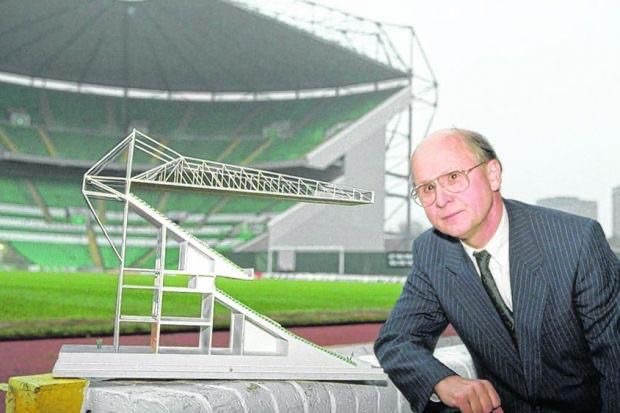
Then came the rebuilding. Fergus tore down the crumbling terraces and built a new Paradise, stand by stand. Concrete and steel rising where the old jungle once stood, every brick a promise kept. People moaned about the mess, the noise, the inconvenience of having to move to the hell hole Hampden for a season but we could see what he was doing. He was laying down the future.
The press called him a dictator. Some fans booed him. Even at the opening of the new stand, he was jeered by those who didn’t understand. But those of us who watched from the start knew the truth: he was the only man who had the courage to drag Celtic out of the grave.
We didn’t need a showman we needed a saviour.
And Fergus McCann, the wee man from Croy, was exactly that.
Five years he gave us. That was the promise. Five years to steady the ship, rebuild the stadium, and set Celtic up to compete again. He stuck to every word. While others talked about passion, he talked about structure. While they chased headlines, he chased balance sheets. And in the end, he was right.
By the late 1990s, Celtic were back on their feet. The stadium was magnificent 60,000 strong, roaring once more. The team was reborn. And when Tom Boyd lifted the league trophy in 1998, stopping Rangers’ bid for ten in a row, every Celtic fan in the world knew who’d made it possible and I stood there a grown man with tears running down my face.
Not the suits, not the pundits, not the fair-weather fans but Fergus.
He didn’t take a bow. He didn’t ask for glory. He simply kept his word. By September 1999, he stepped aside, selling his shares and walking away. The club was safe, stable, and proud again.
And yet, even in his departure, the bitterness lingered from some corners. People said he was too cold, too strict, too businesslike. They wanted romance. But the truth is, when your house is burning, you don’t need poetry you need a builder. Fergus McCann was that builder.
Looking back now, three decades later, I think of that time often. The fear, the anger, the disbelief and then the slow rise, the hope, the rebirth. What we owe that man can’t be measured in money or trophies. He didn’t just save our football club, he saved a part of who we are.
Because Celtic was never just a team. It was the heart of a people, the voice of the underdog, the pride of those who came with nothing and built a life from the ground up. Fergus understood that maybe better than anyone.
He never hid his roots. Born in Croy, raised among miners and grafters, he knew what struggle looked like. And maybe that’s why he fought so hard when others gave up. He wasn’t saving a business he was saving a legacy.
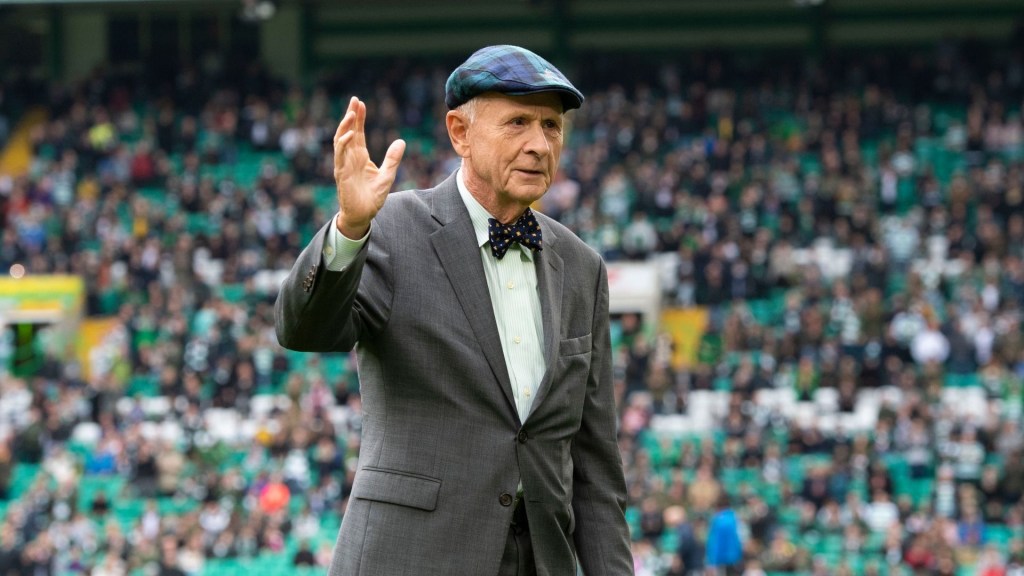
I’ll never forget the sight of him that day at Celtic Park, standing proud in his bunnet, surrounded by the noise and the colour, and the fans still unsure whether to cheer or jeer. But time has done him justice. We see it clearly now.
Every cheer that rises in Paradise, every flag that waves in green and white, carries a bit of his spirit.
The wee man from Croy who stared down the bank, the board even the SFA and all the doubters and won.
The saviour we didn’t deserve but will never forget.
So when people talk about legends, about Larsson, O’Neill, or even Jock Stein, I nod along but deep down I always think of another name. Not a player or a manager, but the man who gave them a stage to shine on.
Fergus McCann. The saviour from Croy
THE CROY CRUSADER
He hailed from Canada With an ambitious plan To save Glasgow Celtic Mr. Ferguson McCann
A club on the brink And nearing the mire In stepped Fergus Modern day messiah
They laughed and they scoffed At this odd looking chap Determined little fellow Who wore a cloth cap?
Could have shut us down And started again But his love for Celtic Meant our history remained
He stumped up the cash With a five year plan An all seated stadium With 60,000 fans
Had a mighty task In his quest for power Battled the authorities Like a lion, he did devour
The legacy he left Hard act to follow A profitable club No financial sorrow
20 years have passed Now we gaze in awe At this house of steel He built for us all
The man they call The Bunnet A legend of Celtic Park Shall go down in history As a fine Patriarch…
We had Brendan in him we’d trust. As Ange left to our disgust Now Saint Martin’s called once more, To lead the Bhoys through bigoted war.
Through turmoil’s storm we’ll stand as one, For Celtics fight is never done. From Seville’s light to Paradise roar, Saint Martin’s here to guide us once more.
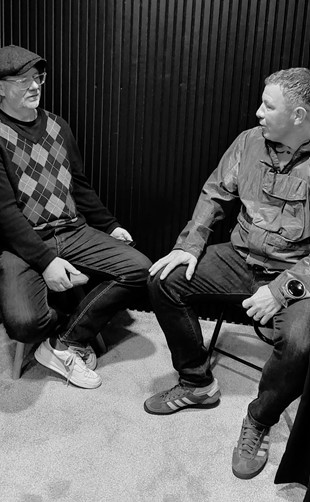
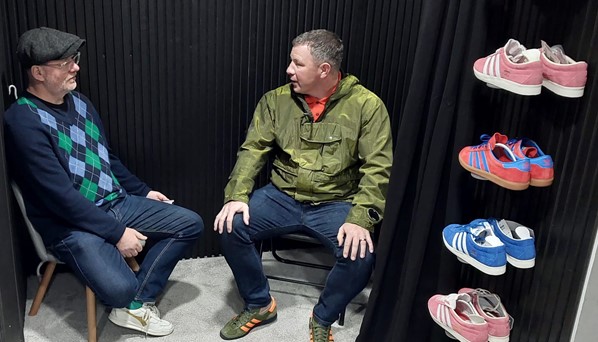
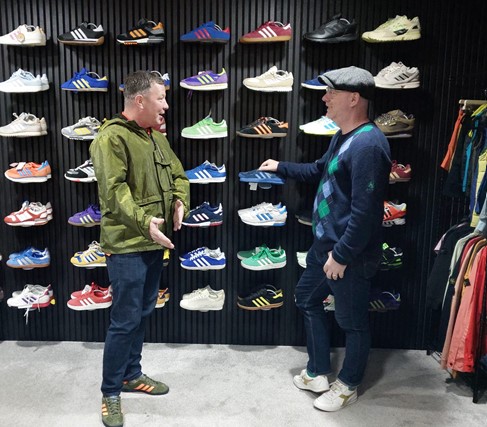
HWS recently embarked on a short tour to meet Baz Paterson, the owner of the Turnstyles Casual Clothing shop in Rosyth. This cool store, filled with some unique styles and quality apparel, has been on our radar for quite a while, making it an ideal addition to our terrace and subculture section. Baz is a genuinely cool guy and invites a warm spirit. The shop showcases an impressive collection of second hand terrace clothing, all expertly curated to reflect the essence of the subculture.
Hello mate, thanks for having us in. How’s things?
I’m good mate thanks.
I’ve visited the shop several times, and each visit reveals something new and intriguing or an item that catches my eye. Would you say your shop functions as a buy-and-sell shop?
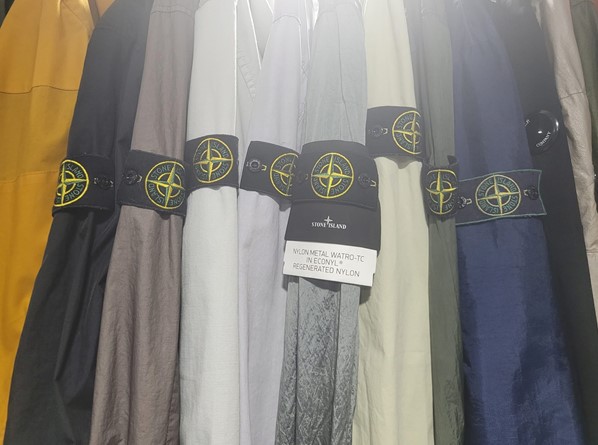
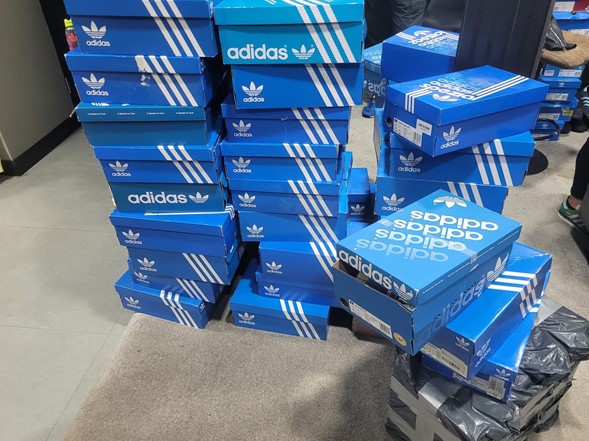
Yes, absolutely, it is something we have always kinda done since we ran it from my garage conversion but that was more so with the kids clothing. For example the kids would grow out of a size 12 and trade it for a size 14. If I am being entirely honest when you first came through the door you mentioned this was an great concept it’s a hub where people can come and buy stuff, trade stuff and show each other stuff. It kind of evolved from there. However, with the amount of clothes and trainers we are going through we can’t restock it without buying from people. So, it has evolved from buying individual items to entire trainer collections or between 10 to 15 CP or Stone Island jackets at once. We are now working with a few wholesalers from whom we also purchase brand-new stock, so it is working very well.
So, when did your love of the labels start?
I would say I properly got into in the early ’90s around the Indie scene and I was also admiring the casuals that were still going about at that time. I was following what they were wearing and wanted a bit of it. I always remember probing my Dad for the gear and he telling me, ”Baz if you want this stuff, you will need to go and get it yourself by getting a job”. So, I got myself a job on the milk rounds which I did until I left school. I would earn and save up what I had to gain certain labels and a lot of the time the item would be out of fashion by the time I had saved up [laughter]. I suppose that’s how it worked though, the older casuals who hung about the pubs or the streets knew my Dad and would often hand things down to myself and my brother. We were by no means well off but my Dad was a contractor and he always tried to get us a holiday at least once or twice a year. So, on holiday where kids were perhaps buying plastic swords or cars that turned into robots and stuff, my brother and I would save our money up and get taken to the local sports shops which might be the Lacoste one, a tennis shop or a shop that sold Sergio Tacchini and spend our money. I always remember when we come back some of the young lads were always wanting to buy our stuff or swap things with us. That’s where the love of it grew as we did get some very decent stuff from our holidays some of it you couldn’t get in the UK.
As things have evolved, I remain the same person. I am a firefighter. Unfortunately, firefighters do not earn a high salary, so spending £700 or £800 on a jacket is not easy for me. As a result, I began exploring options for swapping, trading, and purchasing second-hand items. This allowed me to get what I wanted at a fraction of the price. I decided to bring this concept into my shop to make it accessible for everyone else.
Initially, I planned for this to be a local thing, but it quickly spread, and now we have customers coming from all over. Our social media platform still needs some work, but we’re making progress. I truly enjoy running the shop and appreciate the one-on-one engagement with customers. My two sons have also helped out; one of them is very interested, although he tends to dress more like an “Ultra” these days, always in black.
I believe you started this wee empire from your garage at home. How did the idea come about?
I have always been involved in buying and selling clothes and other items to fund my own habit of purchasing garments. However, when my young boy, Jasper, started going to the football, he also began wearing designer clothing, which was around the time he was about 9 or 10 years old. Like myself, he would go around the department stores and look at the prices, but then try to find it cheaper online. So, he would buy it from online platforms, even if it didn’t fit him, and then sell it to his mates and others. So, I kind of looked at the concept and thought it was a great idea. He was going around in the best of gear from an early age. I would say we kind of jumped into it together, and I gave him a fund to start and push it forward, and he gave me a decent return on it. Then I started looking into why I don’t take this any further. It was then his idea to start forming a group from lads from the football. He would zip about on his scooter, dropping things off for his mates, but then we decided to create a Facebook page, this is the page that we still have today. So, as much as I would love to take credit for something that seems to be an excellent idea, I would have to say it was stolen from my nine-year-old lad, Jasper. He has left me in the lurch, though, and he’s at the match dressed in black. I am standing here most weekends, making other people look smart [laughter].
As we mentioned earlier, what I truly appreciate about this place is it that it feels like a hub as much as a retail shop, people come here not only to browse but to connect. Conversations seem to spark among like-minded strangers. This is a refreshing contrast to the trend we often see today, where shopping is dominated by large chain stores or impersonal online purchases.
Yeah, that was the idea. I won’t mention any past retailers, but here, you can come in, have a chat, browse, and try things on without being followed around. Recently, some younger kids came in and tried on a £1,000 Stone Island jacket just to take photos. Rosyth has been great to me over the years, and since I’ve grown up here, I want to give something back to the community. Establishing a store like this in an area that has never had one before is completely different and exciting. There’s a similar concept in a nearby city, but this region hasn’t seen anything like it until now. That’s why we’re attracting so many customers from outside the town
Again, when you mention a “Hub” I genuinely don’t think that was really in my thoughts initially. I think it was during the first couple of weeks and you came in and we had a long discussion about clothes, football and music and you called it a Hub, I now totally agree. That has evolved and it has actually brought me out of my shell. I have a close network of friends, the fire service – I have a shift of 12 people and I have my family. At work, I am basically with the same people at all times and I can switch off whereas here it can be constant. I saw you come in my first couple of weeks and I felt a bit out of my depth, but over time, I evolved and started to think, “I can manage this; I can consistently talk to people.” I don’t go out as much as I used to, so through this process, I have made many new like-minded friends from buying and selling. Additionally, I’ve absorbed a lot more knowledge on the topics. I agree, you will see lads outside that give each other a nod because of what they are wearing and even then it can spark up a conversation, it’s like that trainspotting hobby [laughter]. Yeah, funnily enough we had one of the camera men from Trainspotting in here the other week buying stuff, he was a interesting chap.
The other thing I didn’t realise until recently is that it is good conversations when you are chatting to folk, but you are also helping them. It may sound strange, but it’s sometimes like a form of counselling. A few people might be struggling and they’ll come in and just sound off and then reminisce about old labels they used to wear and certain years they were about. Perhaps the kind of chat that might not be accepted in other places. Nobody would get frowned upon here if they were talking about past addictions or going through a tough time. I suppose most folk that come in are mainly working class so we relate to that, you get that personal touch as well.
If you look at many high street retailers, you’ll find rows of colours. However, here you can choose a chrome overshirt, which is a recent release, or a 1986 Stone Island jacket that costs £1,000. I often feel nostalgic when I see some of these items, and I find it hard to let them go. But Ewen reminds me that I need to think like a business owner and make the decision to sell. Just like yourself, who has come in, bought items, and sold things as well.
We always do this one, can you give us your top three trainers?
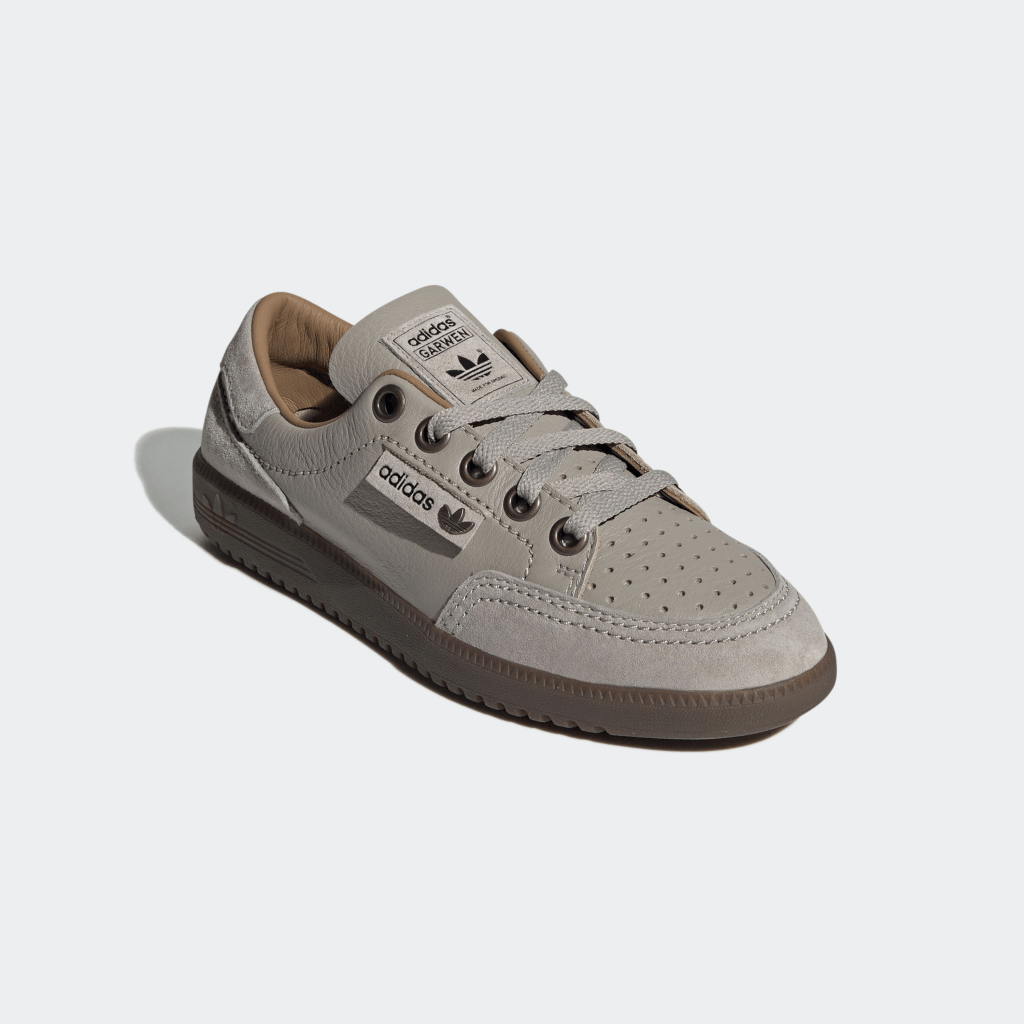
This is obviously quite tricky. As you know I like a leisure touring shoe, so I would go with …
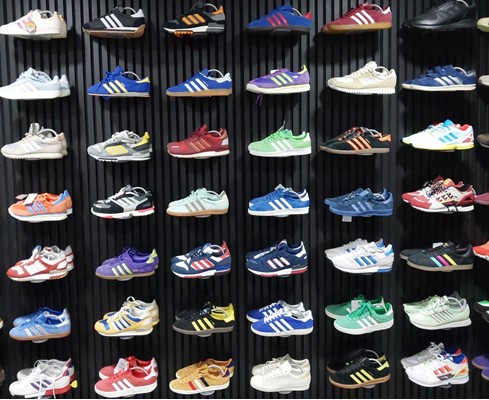
Garwen Specials
The other two would be …
New York Carlos
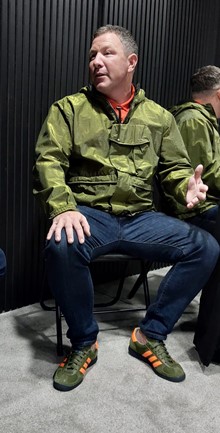
Adidas Green & Orange colourway Barrowland Specials.
I believe the shop is a win-win situation for yourself at times with lads coming into sell an item that you admire yourself and would perhaps not make it onto your racks?
There has been a lot of great stuff coming in lately, and I’ve really loved it. I told myself that some of it isn’t going to sit on the shelf. I’ve found clothes I haven’t seen in years, and they’re still in good condition. However, we do have rent to pay, so we need to stay business-minded. If we’ve done well—kind of like earning overtime at work—then I treat myself. I’ve even picked up some nice Burberry tops for my partner to keep her happy. We’re also noticing that a lot of girls are coming in to buy brands that were previously considered men’s clothing. The kids shop here a lot too, so they can show off their outfits at school.
Do you have a favourite jacket of all time or a holy grail?
Well, this is another tough one. Recently a lovely gentleman came in here and I bought a load of stuff off him. He offered me a 10C jacket at very nice price. I have wore it quite a lot recently and then to add to that one certain Liam Gallagher wore a similar one a recent Oasis tour. Mine was a lighter version but his was a collaboration one with “Awake” which is a New York fashion designer. So, there has been various Stone Island jackets I have wanted over the years but never been able to afford but top of the list just now would probably be that 10C “Awake” one.
I have noticed you have had a load of the ZX600 yellow and grey original colour come into the shop, how quick do they sell?
Yeah, we actually have a pair on the shelf there from I think it was the 2006 release and they are in good condition. But the 2024 release come into the shop a lot and they go very quick to be honest they don’t make the shelves, I put them on the Facebook page. I even have a list of people wanting them and for me to contact them when they come in. To be honest, I don’t sell them at big prices. A brand new condition would be about £115 which isn’t much more than they originally came out at. Ebay tends to sell them a lot higher at around £160.
And does Baz Paterson have a favourite music album he would go to?
Aye! It might be not what you would think weirdly enough. I mean I loved the Stone Roses growing but my favourite album out the lot is the *Garage Flower* which was released in 1996 but originally recorded in 1985 but they didn’t think it was a good enough to make the market. I think that’s what I like about it, it is rough, raw, disorganised and perhaps a bit chaotic. It’s an album one that I will always play whether it’s at the Gym in the car it is a go to album for me. I like the beats, it is heavy on the drum it just feels a wee bit off centre. Folk might say you chose an album that they didn’t really want to release compared to the other ones. But that’s the fun of it for me, they weren’t happy with it, it was a bit raw and different.
Another one I like is “Hats Off to the Busker” from The View. I actually received a sample of it before it was officially released, which they sent around to record companies. I spoke with Mo, the drummer, to confirm that. Even after the album was released, I preferred the sample version because it had a rougher edge. It was similar to the album, but I always gravitated towards the sample. Perhaps that says a lot about me—I don’t really enjoy things being too perfect [laughter]. I appreciate a bit of chaos.
I also love B-sides, especially those from Oasis and Primal Scream; those hidden gems. Much like my taste in clothing, I don’t often change my preferences. When we were younger, we would go to the QMU, Barrowlands, King Tuts, The Venue, Liquid Rooms and check out bands that were still on the rise. We might have heard a couple of their tunes on the radio but not known much about them, and we’d buy £13 tickets. Then, we’d often discover some great tracks that would later become big hits.
Finally can you give HWS any INs and OUTs for this week?
INs:
Vintage Burberry
Rubicon Fruit Flavour Juice
Apologising when you have been out of order.
Smiling in a photo
Local Boozers
Acknowledgment of friends success
Standing out from the crowd
90s fit jackets
OUTs
Weight loss obsessives giving dally size updates.
Gym selfies
Lane cutters and no indication at roundabouts
Trusting politicians
Wearing black to the match!
Entering trainer raffles and extorting people by double pricing.
Thanks for having us Baz.
No worries, thanks for for visiting.
Thanks to Baz, Nadine and Derek Monaghan for the photos.
*Turnstyles Casual Clothing can be found at Parkgate Rosyth, Fife KY11 2JW. They can also be found on Facebook and Instagram*









 Holywell Street