
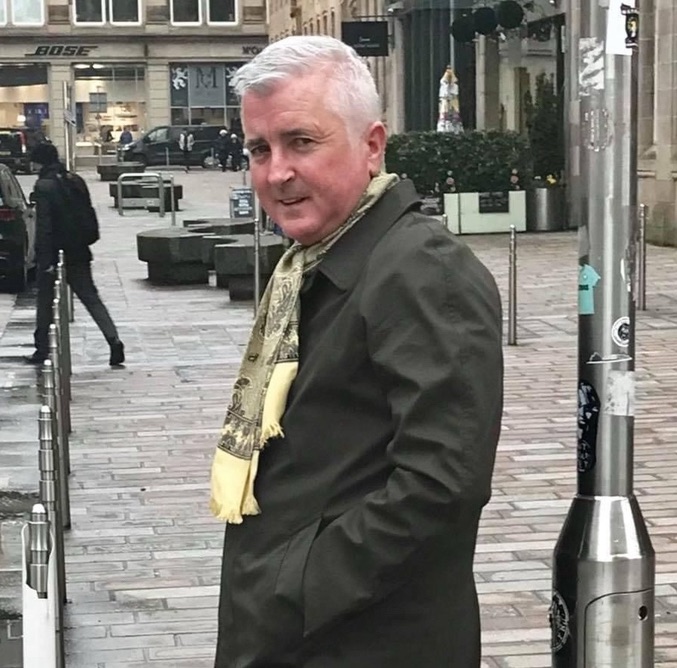
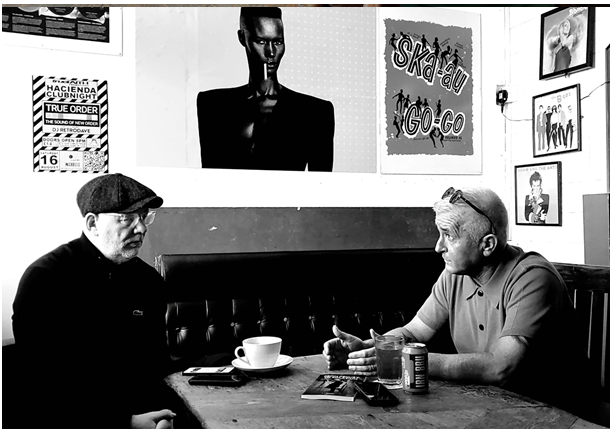
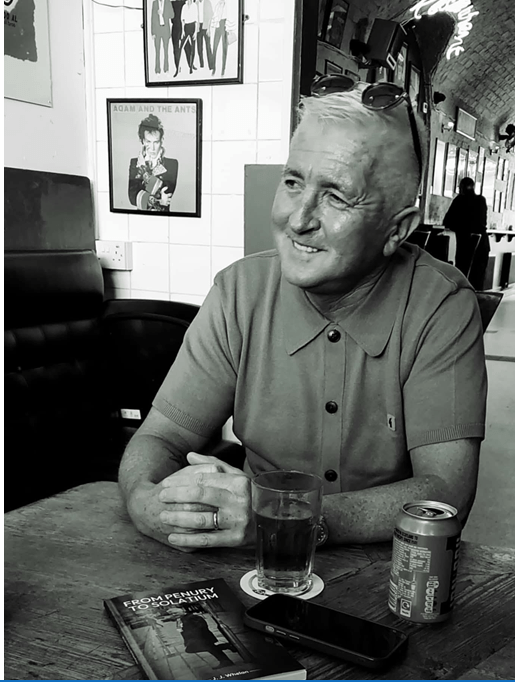
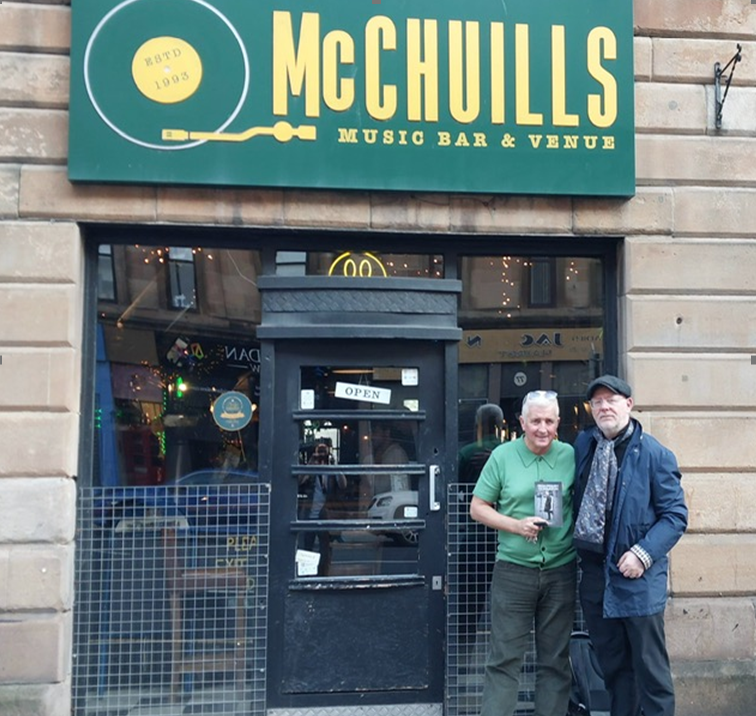
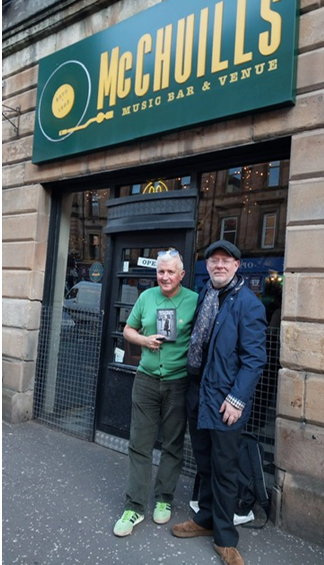
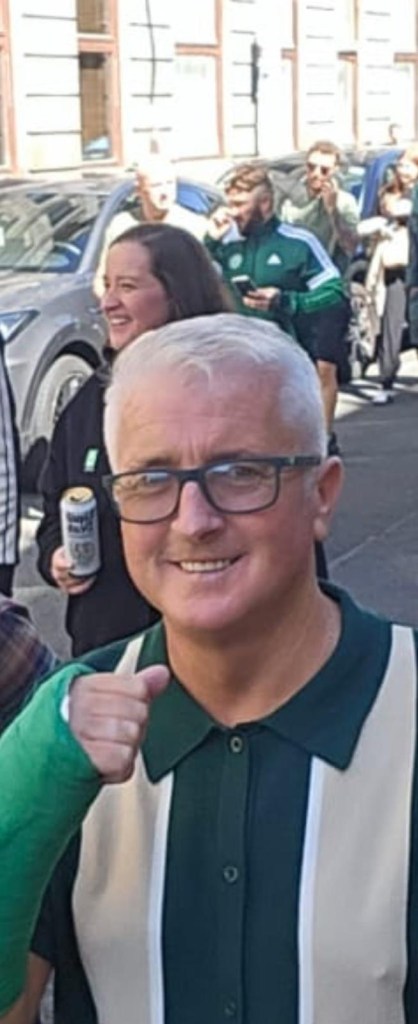
HWS recently had the pleasure of conducting an in-depth Q&A with Jimmy Whelan—an interview we had longed to arrange for quite some time. Jimmy is not only a talented author and poet but also a figure in the community of Blantyre. His influence extends to the renowned Blantyre Soccer Academy, where he, as chairman, has made significant contributions to nurturing young talent. I highly regard Jimmy as a true friend and mentor and admire his deep passion as a Celtic supporter. His latest publication, *From Penury to Solatium*, is a fascinating collection of his life stories—filled with moments of joy, laughter and adversity. Lately, he has been involved in creating a new football ground in Blantyre, which includes newly built changing rooms and an entirely new community hall. This large project has transformed the community of Blantyre significantly. We met in McCHuills Bar on High Street as we normally do.
Great to see you mate, how’s things? You are a busy man …
Aye, hunky-dory, can’t complain and yes I am a very busy man!
I wanted to kick off with the new Blantyre football ground project you have been putting together. What is the latest?
Well, we have now completed our first phase which is the Community Hall which we are giving back to the Community but we have spent in the region of £200,000 reinventing it. We are now in phase two side of it where we have the new changing facilities going in and the third phase is the actual football pitch which we are desperately seeking funding for just now. So, everything is happening all around it, it is just getting the pitch up and running by this time next year. We need in the region of £800,000 to do that. I have been funded in the past for the Blantrye Soccer Hub and now we require funding for a new football pitch and car park (please see Link below).

I’ve read many of your poems over the years. When did you start writing them?
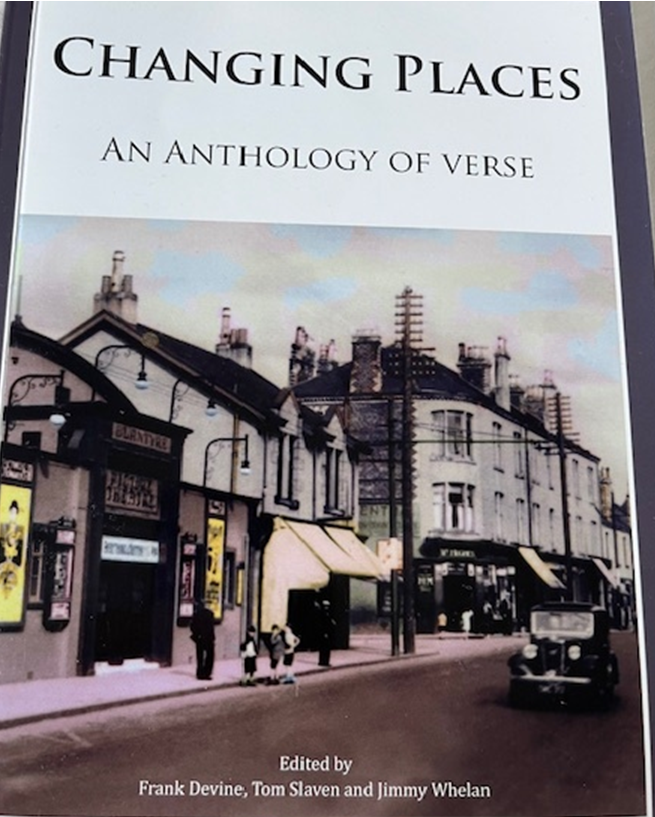
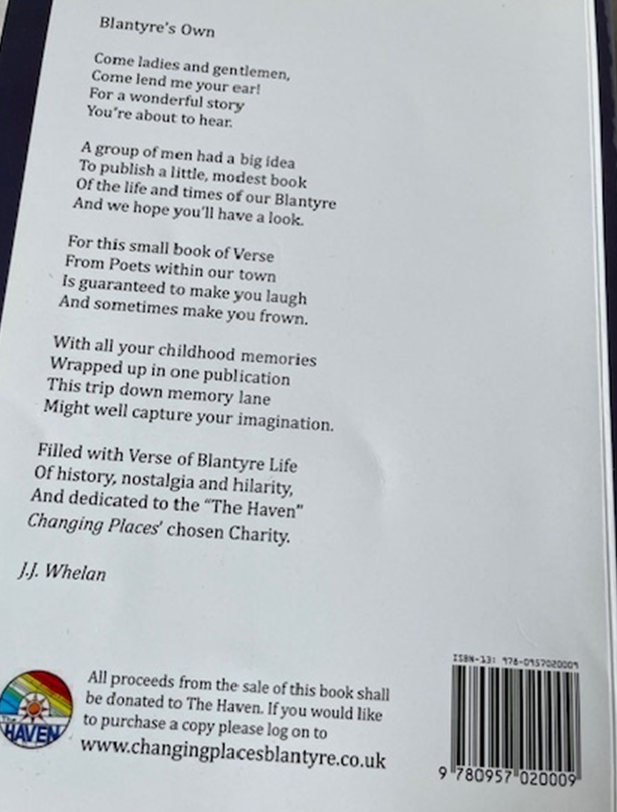
I started writing my poems around 2009 as a pastime. At the time, I was simply jotting down my thoughts and reading a lot of poetry. I particularly enjoyed the works of Robert Burns because my granddad was a fan of his poetry, as well as the poems of Robert Service. I wrote about my life and my family experiences, and over time, my writing became deeper. I believe my poetry has evolved since then. In 2011, along with Thomas Slaven and Francis Devine, I helped compile a poetry book titled Changing Places that was funded by the people of Blantyre. The books were sold for £10 each, and we raised approximately £15,000, which was donated to the Reamonn Gormley – Good Child Foundation.
Your genre has moved from poetry to prose and non-fiction. Your new book, “From Penury to Solatium”, appears to recount your life events, filled with many stories to share. I assume the inspiration comes from your colourful past?
Yes, believe it or not, the book actually originated from a conversation I had with my brother. We were driving back from a funeral in England, and my brother—who didn’t know much about my life in London and the various adventures my other brother and I had—was quite mesmerised by our stories, including the trouble we had gotten into. He suggested that I should write about it, and that’s exactly what I decided to do. I traced my writing back to my childhood and continued through to the present, including details about all my projects, such as “Keep the Heid,” which is a group we established for men’s emotional well-being. Aye and this is very true with writers, artists and musicians where ideas just fall from the sky at certain times … Yeah, and the book will make you laugh, it will make you cry and it has some heartfelt moments in there from me. It takes you through my addictions and how I recovered or I am in recovery from my addiction right up to this present day. Aye and you get that a lot when people go into recovery from their addictions they become very creative. Yeah, you need to be constantly working on yourself! A good friend of mine once said to me: ” If yer in the hoose yourself yer in the hoose wi and idiot” [laughter] he didn’t use those exact words but the quote has always stuck with me. That is not meaning being alone as such but it means keeping active and creative. For example I have been involved in the football project for over 15 years – as I am a founding member of the Blantyre Soccer Academy. I could probably commit around 40 hours a week to that, but I don’t, because I have delegated much of the work I used to do to three full-time staff members.
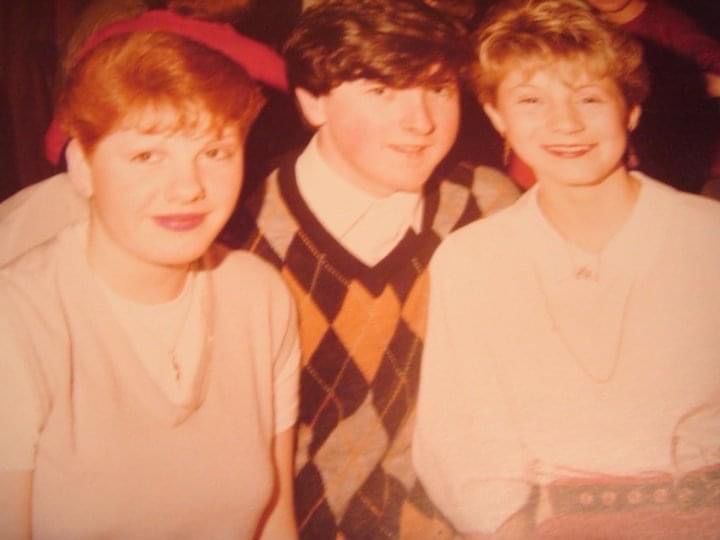
As you know, I have visited the Blantyre Soccer Academy Hub. I found it to be a social and therapeutic place. How did the Hub come to be?
Well what happened was, the way the club was formed was as a football club first and foremost but I was more interested in the Community of Blantyre. The town was actually the murder capital of Scotland at the time. The gang culture in our small town of 17,000 people was just out of hand, there was people getting stabbed everywhere. So, when we formed this, it was the community I was more involved in. To try and get the kids together and also the parents speaking, you know, and that’s what happened. On the Friday night we had an open night training and the kids would all come down and everyone would have on their training tops and then it was a form of cohesion with the kids and the parents and they would actually start speaking. So everywhere you went you would see Blantyre Soccer Academy. So, then we got that big, we needed somewhere we could call our own. From there, I approached the Council and through the community asset transfer, we bought Blantyre Soccer Academy Community Hub, which was an old drop-in centre initially for pensioners. From there we totally transformed and totally renovated it. We bought it from the Council for £1. We basically changed it into a working area, and we have three full-time members of staff who work out of there. We have a full community garden at the back with a COVID memorial garden where people can reflect. There are allotments opposite it, which are excellent for the community. It did take me a three-year battle with the Council to get this in place.
The Council was fully aware of the issues in Blantyre and the gang culture; you could see evidence of it everywhere, with spray-paint messages like “High Tyre, Low Tyre” scattered around. Tragically, young Reamonn was murdered outside the Parkville Hotel after a Celtic versus Aberdeen game. It was not a football-related incident but rather the consequence of a robbery that went wrong. In remembrance, we now hold an annual event called the Reamonn Gormley Festival, which includes a Sportsman’s Dinner. The festival attracts football teams from all over Scotland, England, and Ireland, and I believe it is the second largest festival in Scotland. Our club is ranked third among grassroots clubs, with Aberdeen taking first place. For a small town like Blantyre, we’re doing quite well in the rankings.
So, it’s time to share—what are your favourite clothing brands? I know we both dig Gabbici.
Well, right now, Gabicci is probably my favourite. The reason for that is I was very inclined to go with John Smedley for many years, and I still have a few Smedleys in the house, which I bought when I was 18. The quality of a John Smedley these days has gone very much downhill. So, once I started buy Gabicci I decided that is the new brand for me. What I love about it is, the quality and a very decent price. They are also bringing back a lot of the original stuff with the long colour which Smedley used to do.
Moving on, the other brand is Armani, although it can be a bit a tight fit. I’m not getting much slimmer, as they might say, and Armani tends to be a tight fit for those Italians who are built like a pencil. But I have always liked their stuff especially the trousers the original stuff with the eagle logo. These days I have started dressing more casual, I was never a casual person and I believe that’s because I was brought up with the early Mod and Ska scene.
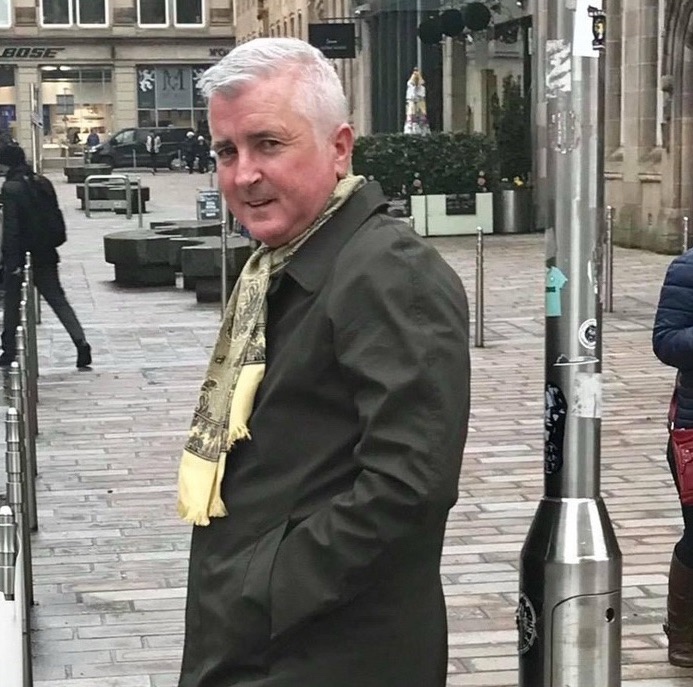
This part of town at Trongate was always a popular shopping and brands and prices didn’t really matter. What was important was the colour of your Sta-Press, Harrington, or Fred Perry. By the time I reached 16 or 17, I looked at my peers, especially my two brothers, who always dressed smartly, and wondered where they got their clothes. I remember Trongate being popular for shopping around 1980-83. There were shops like Jack the Lad, Chelsea Boy, and, of course, Dees. It was the era of ‘posers,’ and Charlie Nicholas was seen as the love God. Dees was definitely the go-to place for getting your sta-press, and I love that the shop has remained largely the same over the years. They still sell those cool scarves, including the Paisley ones that I like. Another place nearby was ‘Crazy House,’ which had about five floors and those mad mirrors as you walked in.
Every Saturday, my mates and I, who were around 15 or 16 years old, would hang out in Trongate. After that, we would stroll up to Queen Street and go to ‘Fixx’ or another spot. We’d also check out a second-hand shop on Queen Street called ‘Flip’, which had some fantastic finds. We often sat downstairs in ‘Fixx’; even though we were underage, they would let us in, and we’d just drink cans of Red Stripe. The Rock Garden was right across the street, but we couldn’t get in there because of the bouncer at the door.
Eventually I started shopping in Lesley G which was just as you came out of Central Station. They brought in lot of Italian imports and they used to use a tailor which was on Renfield Street called ‘Skint’ the shop would maybe send round six pairs of trousers and they would get altered and fitted. So, we then decided to cut out Lesley G and go straight to the tailor and get our gear done there. Sounds like proper detail went into this? Oh, aye definitely, we used to dictate what we wanted, if it was five pleats or three and it could be very unique. It’s quite cool and Jim Cameron and Gadger talked about the same type of thing with the tailors as well.
I still have my wedding suit made by Skint, and it hangs up in my wardrobe. I know it will never fit me again. It’s a wool suit, one of those from Talking Heads with the shoulder pads! When I got married, it was 120 degrees on the beach, and I was wearing this wool suit. But I looked good [laughter]. During my time in London, I enjoyed exploring places like Kensington Market and Camden, where you could find a mix of high-end items and unique pieces. The prices were decent, too. Camden was the go-to place for leather jackets. I loved my six years in London; we always knew where to find the things we wanted. I’ll never understand why I moved back.

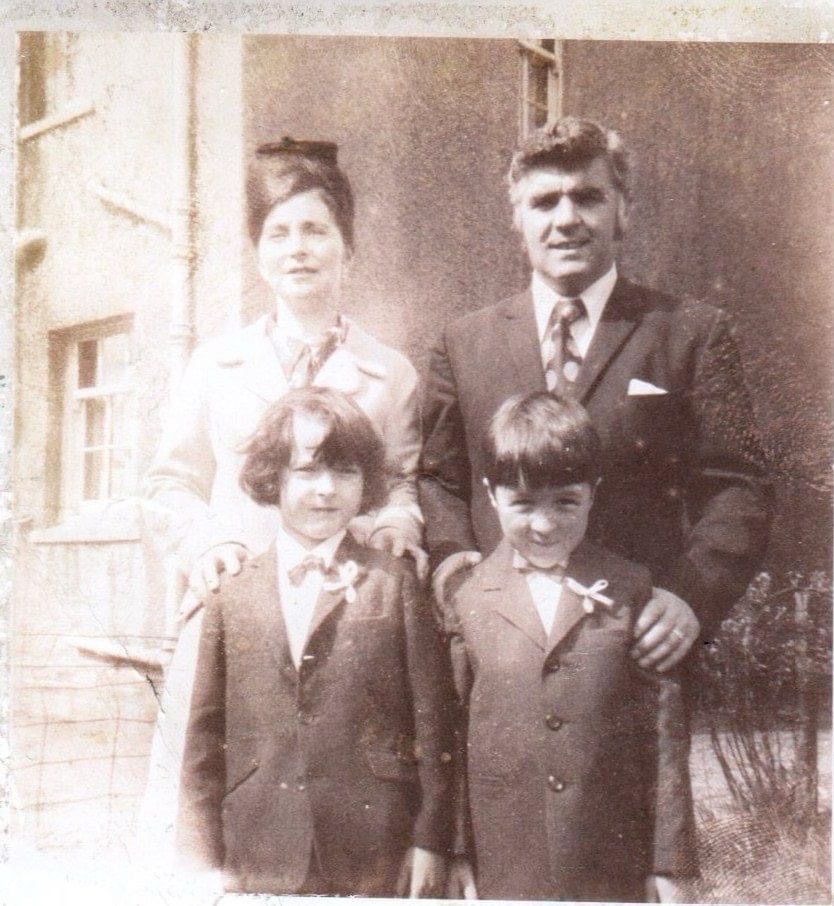
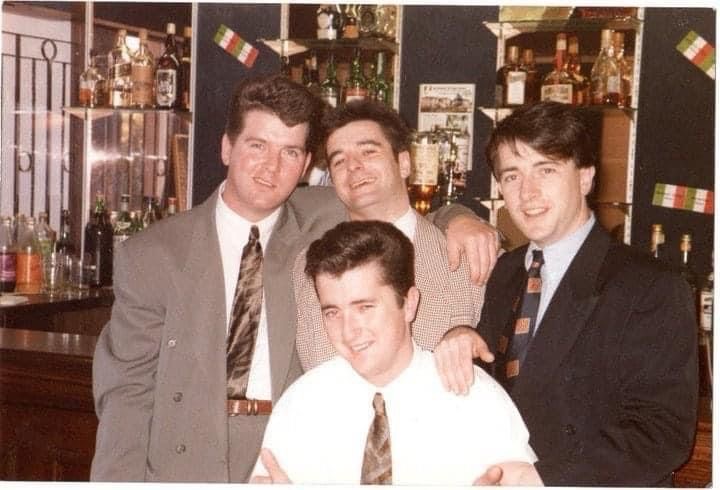
There’s a picture in the book of me wearing espadrilles, believe it or not, I’m sitting on the steps without socks, embracing that pure Charlie Nicholas style we mentioned, complete with Gatsby pants that have pleats. I mean, those shoes would only last one night since the soles would wear out quickly. I remember Charlie Nicholas showing up at Parkhead looking like that and getting fined by the club for not wearing socks! [laughter] I also recall seeing Charlie at a U2 concert at Tiffany’s at the end of Sauchiehall Street. He was standing right behind me when he became the Celtic idol; he always had the coolest wedge haircut. In fact, I saw both Simple Minds and U2 in the same week at Tiffany’s..
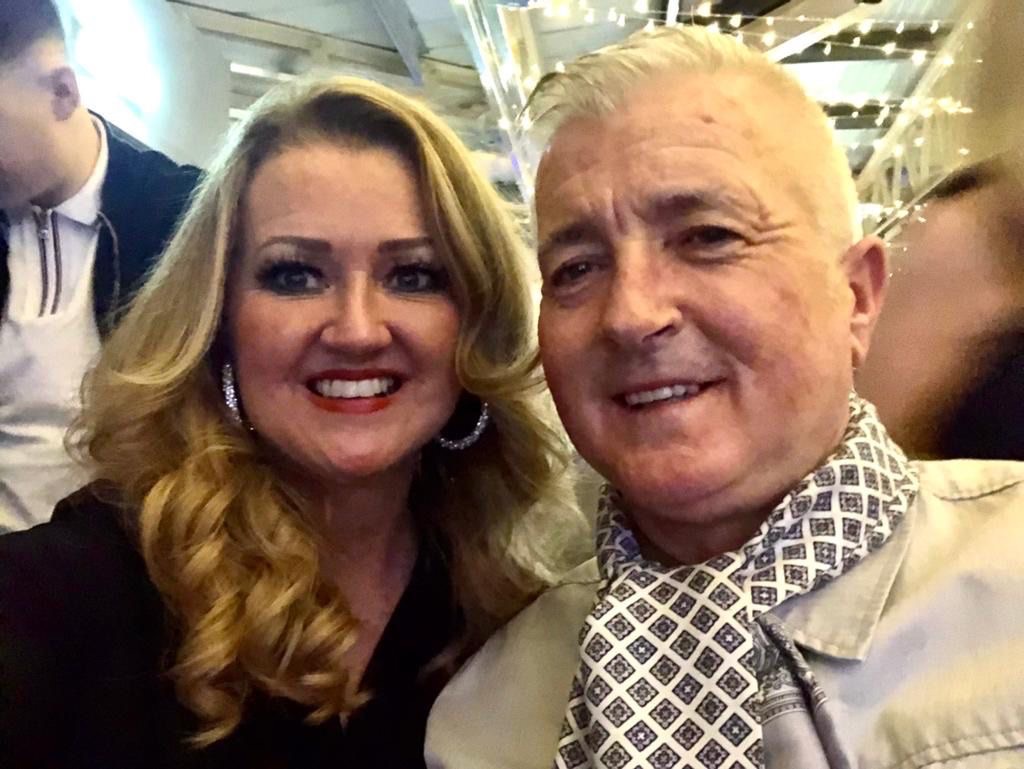

I was really into the second-generation Mod scene because they always looked dapper; they never appeared scruffy. I didn’t start wearing jeans until about seven years ago, and I’m not sure if it was the colour that held me back, but I always preferred chinos. When Lois reintroduced corduroys, I was pleased, especially since they revamped the fit to make them less tight. When Paul Malloy hosts his Mod nights here, you can just look around and see those original Mod styles everywhere.

And your favourite musical influences are …
Well, I would have to go with David Bowie, and that was probably since the age of about seven years old. I mean, this guy changed his genre so many times over the space of 50 years, and it worked for him every time. He was the first guy to have the wedge haircut, as seen on the front of the Low album. All the way from the laughing Gnome, that was the first song of his that I had heard, and I think because I was so young, I really took to that. My older brother was heavily into Bowie as well. I just took on from there, from Spiders to Station to Station, Aladdin Sane, Low and right through to Black Star.
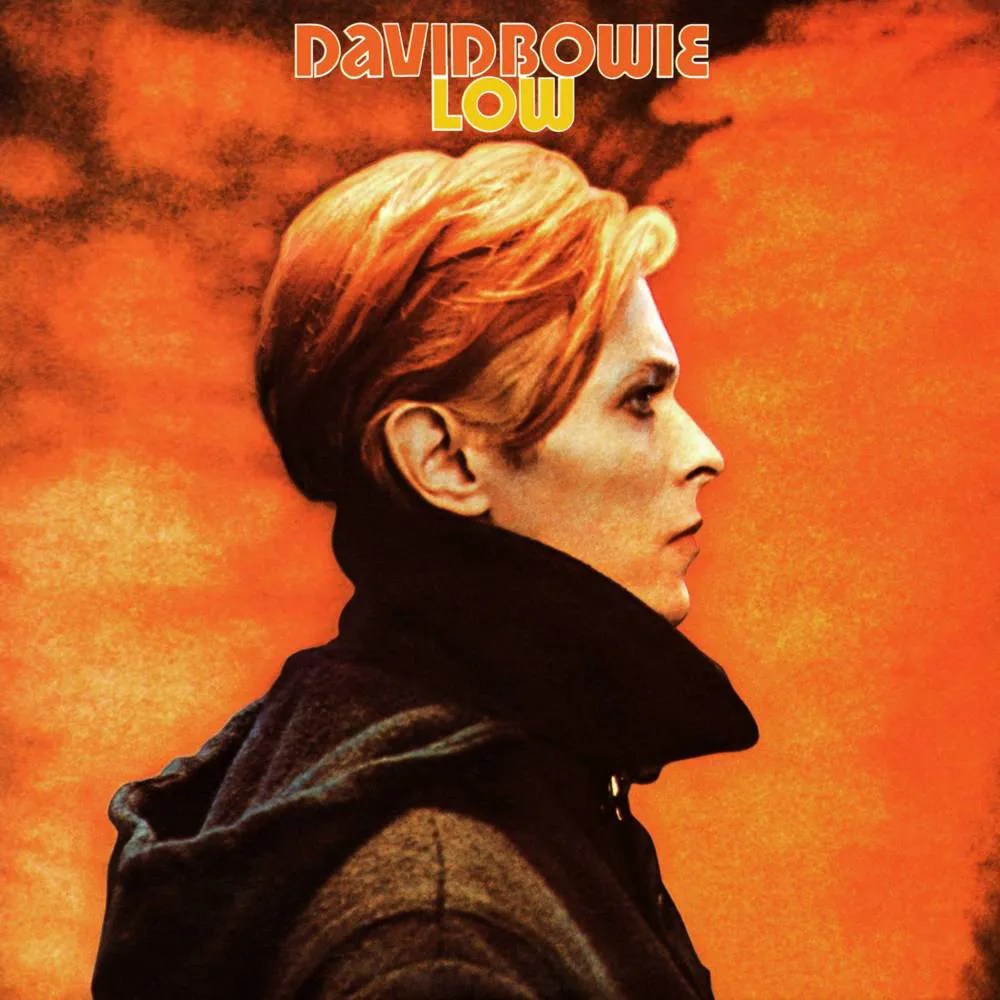
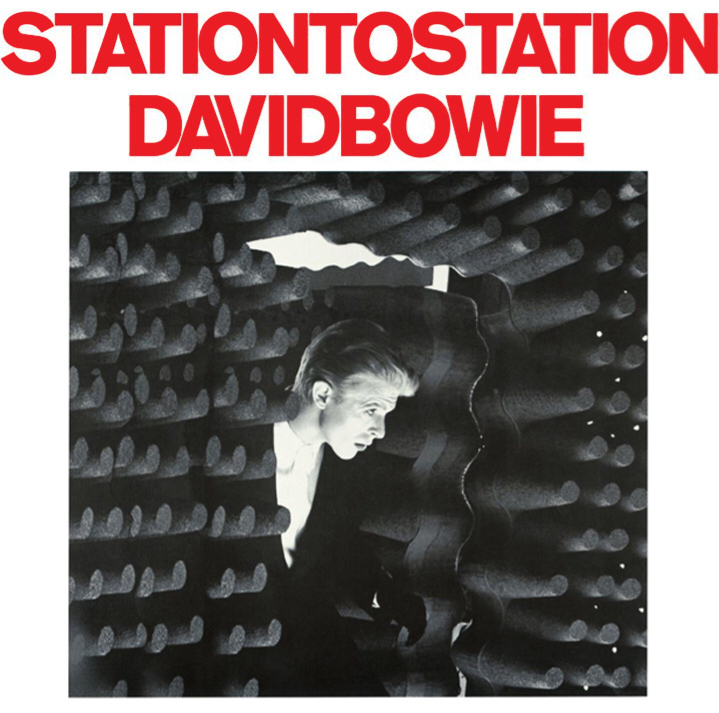
That last album, “Blackstar,” was so clever, filled with hidden messages that I really appreciated. I liked how cryptic his lyrics were concerning everything he did. For instance, in the video for his single “Lazarus,” he retreats backwards into a wardrobe before shutting the door.
Then there’s Mick Ronson, who played with Bowie during the Spiders from Mars era. No one really knows why Ronson was let go. He moved on to work on his solo projects, which unfortunately flopped, and Bowie never brought him back into the fold.
I actually enjoy a lot of his later dance music, like “Let’s Dance.” In the past, I would have dismissed it because I was so focused on his early work, such as “Ziggy Stardust” and “Diamond Dogs.” However, I’ve come to appreciate Bowie as the true genius he was. I love him also because he never sold out; he didn’t sell his rights until the very end.
Bowie is my favourite artist, and I would say my second favourite is Shane MacGowan. He is phenomenal and truly a poet; his lyrics are genius, I love lyrics, as I tend to think a lot about the meaning of a song. MacGowan is incredibly talented, and much of his work revolves around pubs and drinking. You mentioned earlier how some people’s creativity can flourish with sobriety, but in the case of MacGowan, much like Brendan Behan, his creativity came through alcohol.
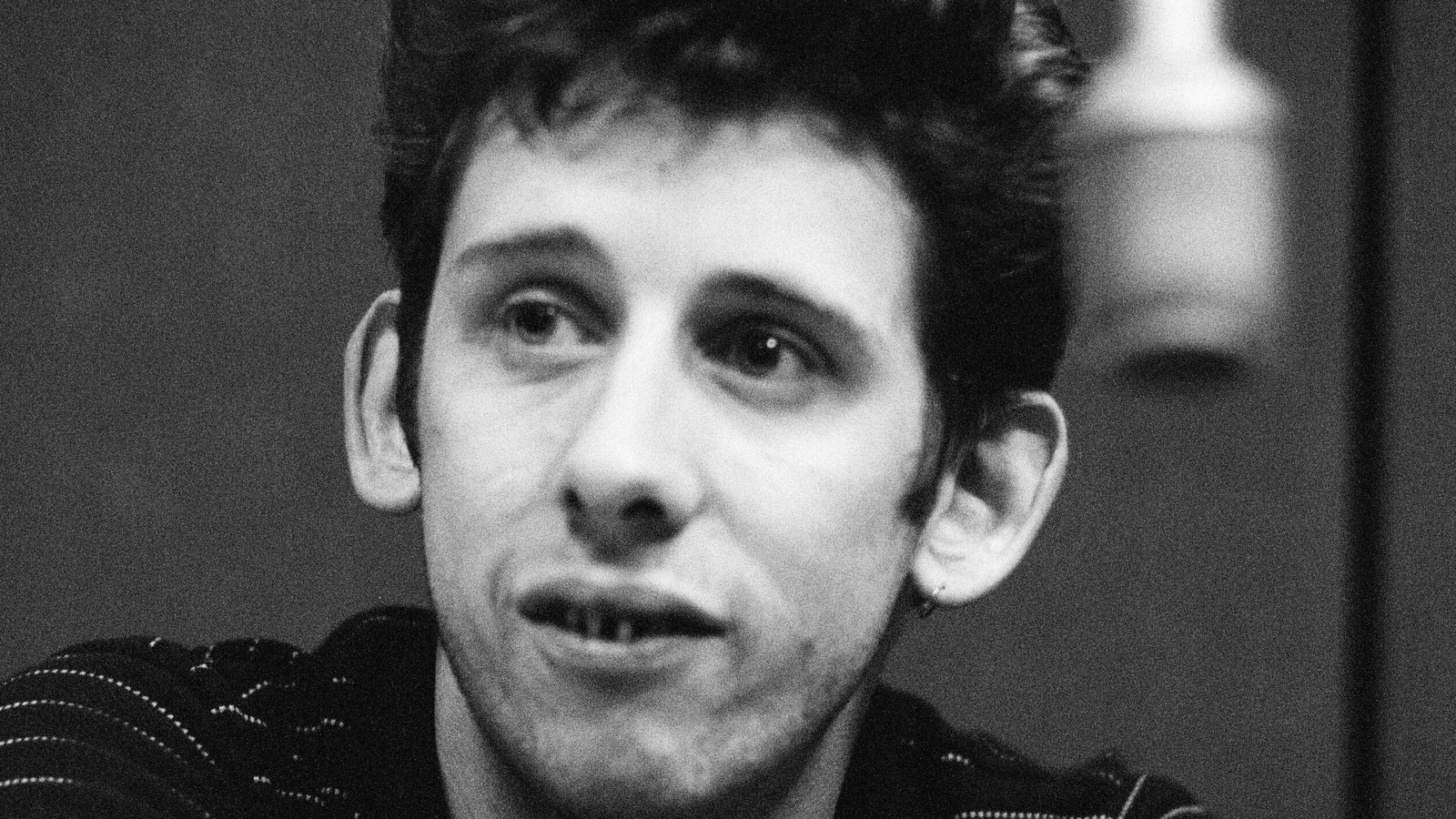
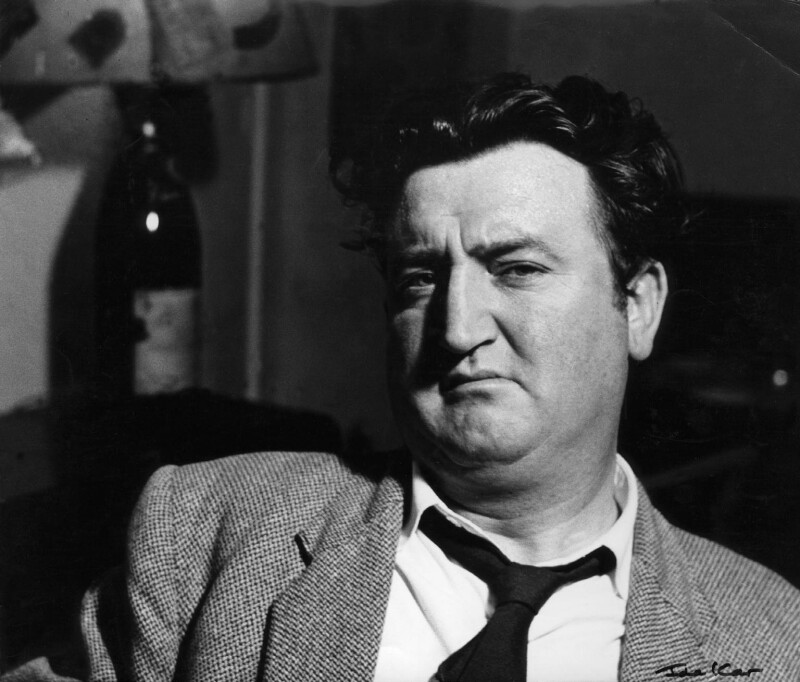
I was reading the book by Shane MacGowan’s girlfriend, and she mentioned that she would often find crumpled bits of paper with lyrics written on them beside a bottle of whisky in the morning. She would pick up these scraps of paper, and then two days later, a song would be created. Only he knew what he was thinking. I put him up there in the same bracket as Behan. Although Behan was never a singer but what a talent! My love for Irish music is phenomenal, and I don’t know if that was because I was brought up with it or because my Dad was Irish. They call it the land of saints and scholars. They bring their songs and their stories, and everything is deep. I was brought up with Father Sydney MacEwan and Joseph Locke. My Dad would put that on on a Sunday morning with a bit of rebellion on it.
Another singer I would like to throw into the mix, and you might be surprised, is Justin Currie from Del Amitri. A lot of my pals were also quite surprised, but I say, have you ever really listened to the lyrics of his songs? Not just like ‘Nothing Ever Happens’ and things like that. Listen to some of his songs, and it’s all about heartbreak or how good he was doing, or this happened, but you just hear the music. He’s still touring, and he does stuff himself.
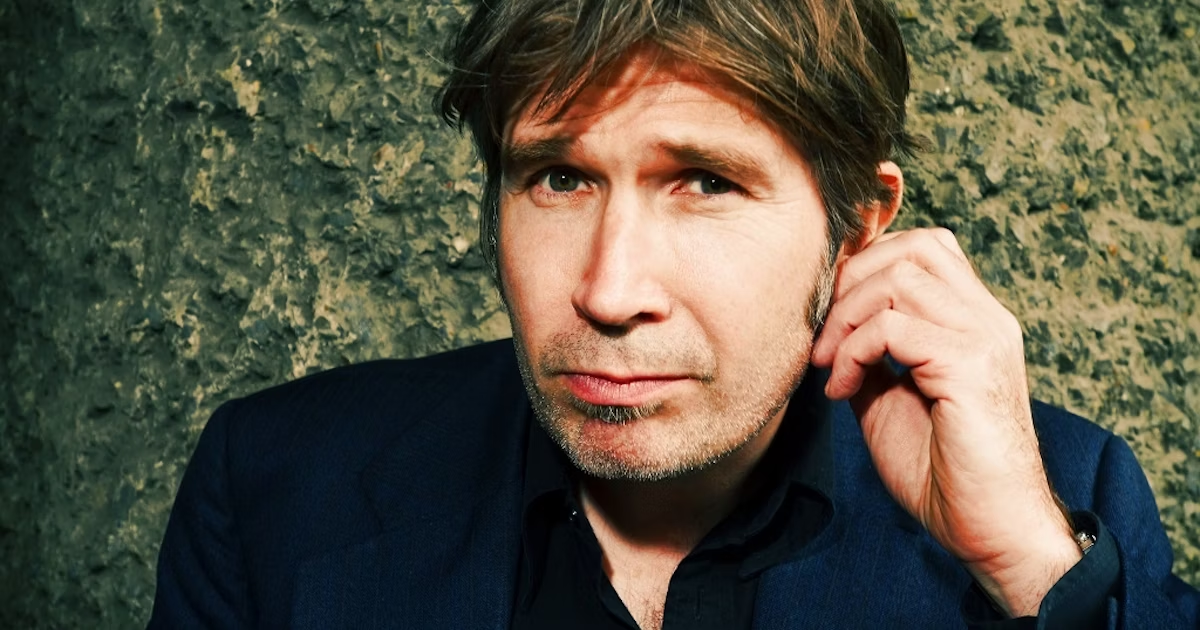
Justin Currie was going aboot the same time as Aztec Camera and the likes, but Roddy Frame, for me was a pop star. Then there’s Love & Money, and I believe James Grant himself on Love & Money is the talent. I like James as a person and songwriter, but he didn’t get enough credit for what he did with his first band, Friends Again. James wrote a lot of their stuff, but didn’t get the credit for it; he was a bass player. James wanted to be more, so he went out and formed Love & Money. But Roddy Frame made it; he went to America, from Westwood to Hollywood. Orange Juice were another Scottish band I liked. I thought Edwyn Collins was absolutely brilliant. I saw him just after his stroke, it was a gig with a few Scottish bands – The Bluebells also played, and Roddy Frame made an appearance.
Regarding our beloved football club, how are you feeling about Celtic right now?
Under Brendan Rodgers, I believe we are moving in the right direction, and we are managing our finances with great diligence. He has spent a lot of money on a couple of players that a lot of people might not agree wi, but I think he’s looking to take us another step forward next season in Europe. I mean, we have good funds, but the club aren’t going to be frugal. Things need to be done properly.
Can you recall your first Celtic match?
Yes, well, I can recall one of my first Celtic matches. I was nine years old, and it was 1976. I went to the Jimmy Johnstone and Bobby Lennox testimonial against Manchester United. Celtic won 4-0 on the night. Jimmy Johnstone threw his boots into the jungle.

That was my first recollection of attending a game, and I was taken by my brother and my cousin. That night, I also bought a Manchester United scarf. I was drawn to the team because of Tommy Docherty, who was the manager at the time, and Lou Macari, who had also moved there. The previous season, Manchester United had been relegated to the old second division, but now they were back in the first division
From then on, I was there at Celtic matches whenever I could. So, by the time I was 10 years old, I was actually going by myself. My dad would take me down to John Fallon’s pub, we would have to stand outside, then the supporters bus would come along, my Dad would come out and give me 50 pence and send me onto the bus and tell me not to tell my mum that he had sent me to the match yersel. All the boys were on the bus anyway, I would get a lift over the turnstiles, then come back and get my dad at the pub who pissed and we would go home and tell my mum we had been at the match [laughter]. But that went on with a lot of us. I wasnae caring because I was getting to the game. I actually wrote a poem about it and Big Fallon’s pub.
As time progressed I had my season ticket and I have basically had that for 32 years. Even when I was in London where I was there from 1987 to 1993. I would come home every two weeks to go come up for the matches. We formed a Celtic Supporters Club down in London which was the Kent CSC. We travelled up for most home games even midweek ones.
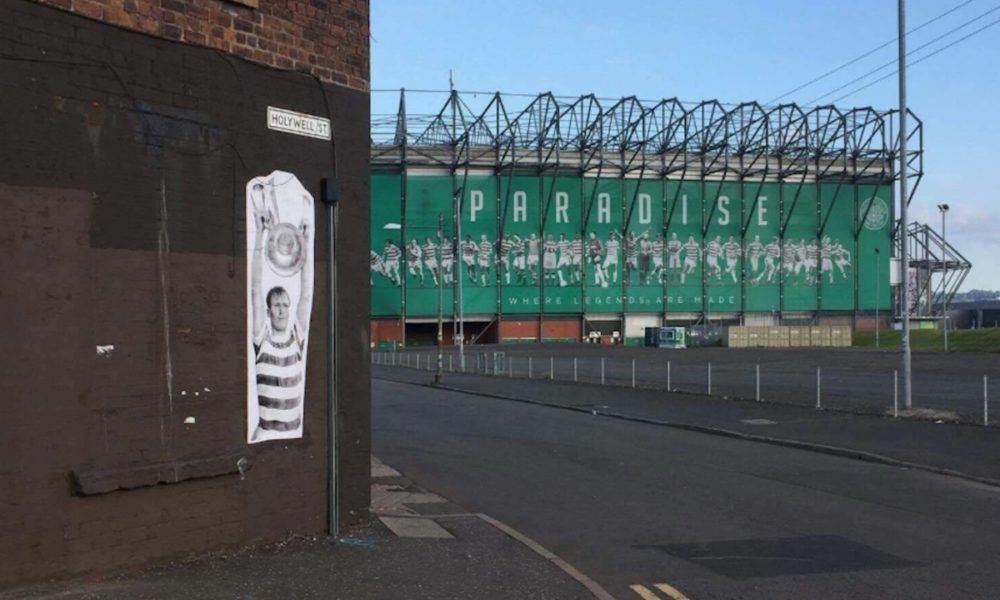
We came up when Celtic played Cologne for a Wednesday night european tie. The fortnight before we played Cologne in the away tie and I disappeared from work and jumped the train to go there.
Did you follow a team down there?
Aye, well, I lived about two miles from Selhurst Park, which is home to Crystal Palace so I went there. I had a couple of friends in the in London: one was a Manchester United fan, and the other supported Spurs. So, I followed Spurs down there, I enjoyed going to White Hart Lane and loved the area.
And the best Celtic player of all time is?
Well, in my time, it’s got to be Henrik Larsson, I’ve not seen anyone like him. Then I would go for Paul McStay and, in recent times, I would say Callum McGregor. I must also mention Tom Boyd, he was a good servant to Celtic, I got on quite well with Boydy, and of course, he stopped 10 in a row, he’s a legend in my eyes.


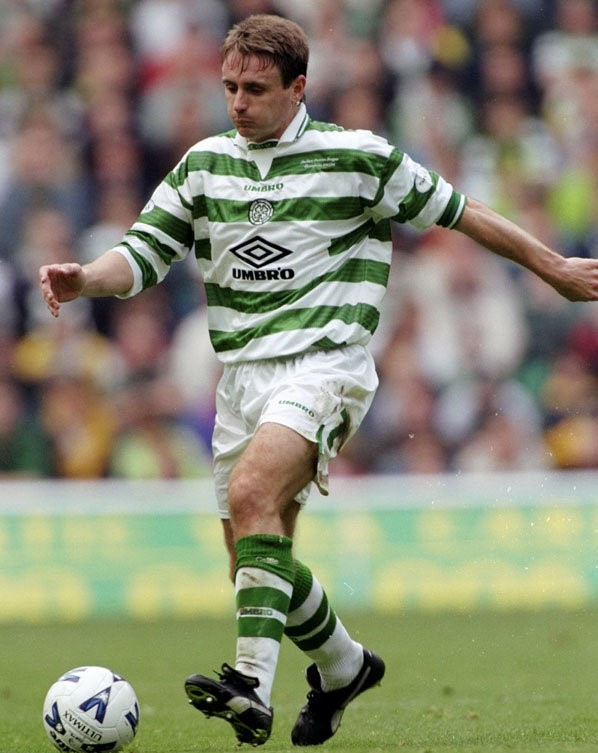
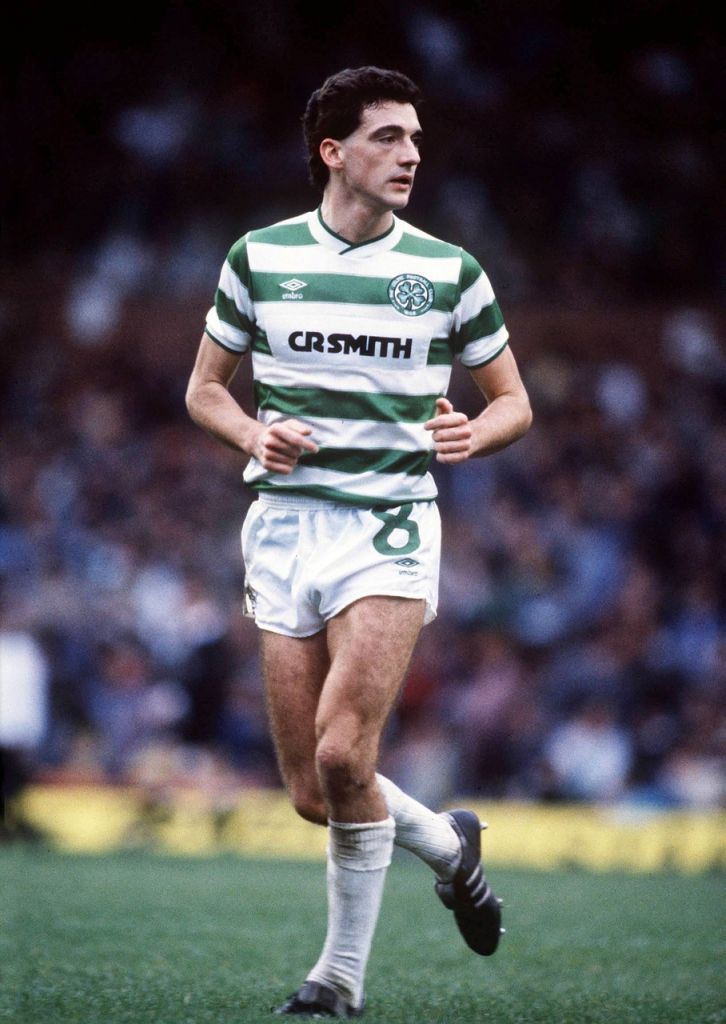
Returning to McStay, he had the chance to leave Celtic many times, but he stayed with us. McGregor is like a linchpin; you can see what happens when he is not in the team.
How’s life and health for Jimmy Whelan these days?
Aye, everything’s fine. My health has been good in the last six months. As you know, I have diabetes, and I was diagnosed with that just before I stopped drinking, and it was really taking its toll on me, but thankfully, with the medication these days, it’s good. I go for a liver check every three months, and it is repairing itself all the time. It will never be 100%, but it is a lot better than it was four years ago. I have reigned things in and reflected on my life. Did I enjoy my life? Yes, totally, I thoroughly enjoyed it. My only regret in life was watching my brother die. I couldn’t get him off the booze. He had to do it himself, and that was the sad thing.
How have your meetings been going, and how are you feeling about your sobriety?
I’m doing great! I attend two or three meetings a week, and I really enjoy them because it’s a good way to offload. I recently went on holiday, where I took long walks while the people I was with drank most days. People have stopped asking me why I’m not drinking now; I would sometimes respond with, “What’s it got ae dae wi you?” When I wrote this book and shared my truth at the end, I received a lot of messages from people expressing their disbelief at my honesty. For me, being open about my experiences is important. If I hadn’t gone through what I did, I wouldn’t be where I am today. If I can help someone with this book, that’s even better. There may be someone who thinks, “If he can do it, I can too.” My story could serve as someone else’s survival guide.
Thanks for talking to us mate.
My pleasure,
Many thanks to Jimmy, Derek Monaghan for his input and photography and Nick Stewart at McCHuills as always.
Penury to Solatium can be purchased here at Amazon: FROM PENURY TO SOLATIUM: Amazon.co.uk: Whelan, J J: 9798319146625: Books
 Holywell Street