
I have followed Celtic since I was seven years of age and watched some fantastic footballers grace the slopes of Paradise, the likes of Johnstone, Lennox, Dalgliesh, McStay and McGrain, hail, rain sleet or snow I’m there.
Although all through the eighties and nineties we were dire, we did get a bit of respite in ‘88 when we scooped the double in our centenary year. We had watched that other mob dominate Scottish Football with big name signings while we were stuck with a draconian board with biscuit tin mentality when it came to buying players. Their time was running out and so was their money.
Celtic Park stood quiet, too quiet for comfort as the crowds attendances dwindled.
A sleeping giant, they called it, though by the early 1990s it felt more like a dying man. The paint was peeling, the terraces cracked and cold, and the old boardroom clung to its power like moths to a flickering bulb. The soul was still there, buried deep under the rust and the debt, but it was fading. You could feel it in the crowd, in the sighs of the faithful who still came through the turnstiles more out of loyalty than hope. I was one of these hopeful fans.
Every man and woman who wore the green and white back then knew the truth, our club was on its knees.
The Bank of Scotland had called time. March 1994, that’s the date burned into memory. The club owed more than five million, maybe seven, depending on who you asked. The board was finished, the coffers were empty, and the wolves were at the door. Celtic, the people’s club, born in the East End to feed the poor, was staring down receivership.
The shame of it.
I remember standing in the pub that night, the same place we always met before a match, even when there was nothing to celebrate. The talk was dark, angry, hopeless. “They’ve run it into the ground,” someone said. “The Kellys and the Whites, they’ve bled it dry.” Nobody disagreed. There was talk of extinction, of the unthinkable Celtic Football Club gone forever.
Then, out of nowhere, came a whisper. A name. Fergus McCann, he had been linked with club previously but was told in no uncertain terms to take his money and ideas and bolt, (how wrong were they) only because he would have found out the truth behind the crooked board.
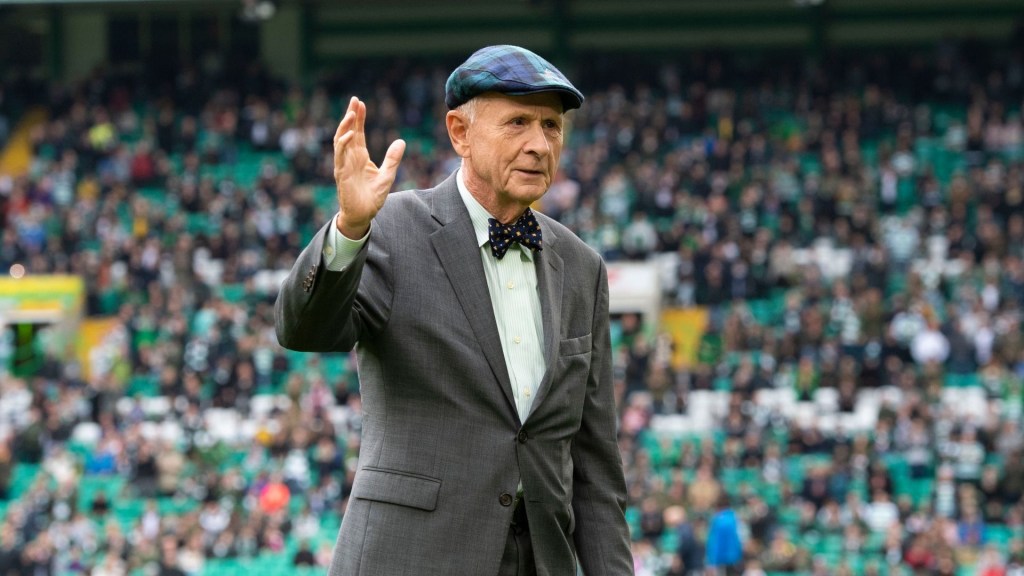
I’ll be honest, most of us didn’t know who he was at first. Some Canadian businessman, they said. A Celtic man from Croy who’d gone abroad and made his fortune. A wee fella in a bunnet with a stubborn streak. Nobody took it too seriously at the start we’d heard promises before. But something about McCann was different. He wasn’t there to beg or borrow. He came with a plan.
When he landed in Glasgow that cold March week, the whole city seemed to stop and stare. The press laughed at him. The old board tried to block him. Even some fans doubted. But he stood there, straight-backed, calm, no nonsense and told them all “I will save Celtic”
And by God, he did.
On the 4th of March 1994, after days of fighting and negotiating, Fergus McCann and his backers took control of the club. Fifty-one percent. That was the moment the tide turned. He walked into that boardroom like a man on a mission, tore up the old rulebook, and told the bank Celtic was no longer for closing. He guaranteed the debts himself, took on the burden, and promised to rebuild the club from the foundations up.
You could almost hear the sigh from Paradise that day, as if the old ground itself had taken a breath.
Of course, not everyone saw it that way. McCann wasn’t there for handshakes and flattery. He was blunt, practical, business-minded. He didn’t pander to the press or the politicians or the ex-players. He wasn’t there to be loved he was there to do the job.
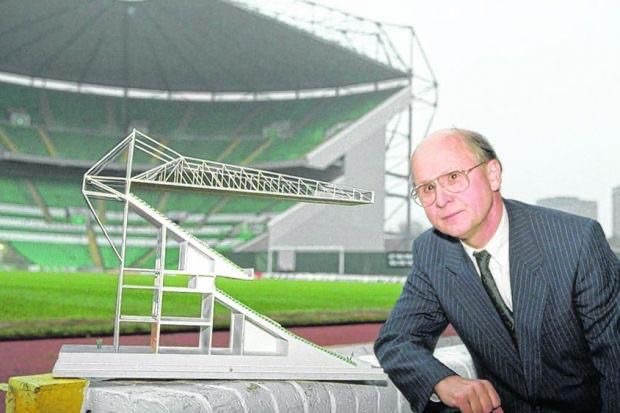
He turned Celtic into a public company, opened the doors to the ordinary fans, and said“If you want to save your club, buy a piece of it.”Thousands did. I remember queuing outside to get the forms ordinary working-class folk, buying shares not for profit but for pride. It wasn’t just money we were giving him it was trust.
That share issue, early 1995, raised millions. The heart of the club was beating again.
Then came the rebuilding. Fergus tore down the crumbling terraces and built a new Paradise, stand by stand. Concrete and steel rising where the old jungle once stood, every brick a promise kept. People moaned about the mess, the noise, the inconvenience of having to move to the hell hole Hampden for a season but we could see what he was doing. He was laying down the future.
The press called him a dictator. Some fans booed him. Even at the opening of the new stand, he was jeered by those who didn’t understand. But those of us who watched from the start knew the truth: he was the only man who had the courage to drag Celtic out of the grave.
We didn’t need a showman we needed a saviour.
And Fergus McCann, the wee man from Croy, was exactly that.
Five years he gave us. That was the promise. Five years to steady the ship, rebuild the stadium, and set Celtic up to compete again. He stuck to every word. While others talked about passion, he talked about structure. While they chased headlines, he chased balance sheets. And in the end, he was right.
By the late 1990s, Celtic were back on their feet. The stadium was magnificent 60,000 strong, roaring once more. The team was reborn. And when Tom Boyd lifted the league trophy in 1998, stopping Rangers’ bid for ten in a row, every Celtic fan in the world knew who’d made it possible and I stood there a grown man with tears running down my face.
Not the suits, not the pundits, not the fair-weather fans but Fergus.
He didn’t take a bow. He didn’t ask for glory. He simply kept his word. By September 1999, he stepped aside, selling his shares and walking away. The club was safe, stable, and proud again.
And yet, even in his departure, the bitterness lingered from some corners. People said he was too cold, too strict, too businesslike. They wanted romance. But the truth is, when your house is burning, you don’t need poetry you need a builder. Fergus McCann was that builder.
Looking back now, three decades later, I think of that time often. The fear, the anger, the disbelief and then the slow rise, the hope, the rebirth. What we owe that man can’t be measured in money or trophies. He didn’t just save our football club, he saved a part of who we are.
Because Celtic was never just a team. It was the heart of a people, the voice of the underdog, the pride of those who came with nothing and built a life from the ground up. Fergus understood that maybe better than anyone.
He never hid his roots. Born in Croy, raised among miners and grafters, he knew what struggle looked like. And maybe that’s why he fought so hard when others gave up. He wasn’t saving a business he was saving a legacy.
I’ll never forget the sight of him that day at Celtic Park, standing proud in his bunnet, surrounded by the noise and the colour, and the fans still unsure whether to cheer or jeer. But time has done him justice. We see it clearly now.
Every cheer that rises in Paradise, every flag that waves in green and white, carries a bit of his spirit.
The wee man from Croy who stared down the bank, the board even the SFA and all the doubters and won.
The saviour we didn’t deserve but will never forget.
So when people talk about legends, about Larsson, O’Neill, or even Jock Stein, I nod along but deep down I always think of another name. Not a player or a manager, but the man who gave them a stage to shine on.
Fergus McCann.
The saviour from Croy
THE CROY CRUSADER
He hailed from Canada
With an ambitious plan
To save Glasgow Celtic
Mr. Ferguson McCann
A club on the brink
And nearing the mire
In stepped Fergus
Modern day messiah
They laughed and they scoffed
At this odd looking chap
Determined little fellow
Who wore a cloth cap?
Could have shut us down
And started again
But his love for Celtic
Meant our history remained
He stumped up the cash
With a five year plan
An all seated stadium
With 60,000 fans
Had a mighty task
In his quest for power
Battled the authorities
Like a lion, he did devour
The legacy he left
Hard act to follow
A profitable club
No financial sorrow
20 years have passed
Now we gaze in awe
At this house of steel
He built for us all
The man they call The Bunnet
A legend of Celtic Park
Shall go down in history
As a fine Patriarch…
J.J. Whelan
 Holywell Street
Leave a comment