
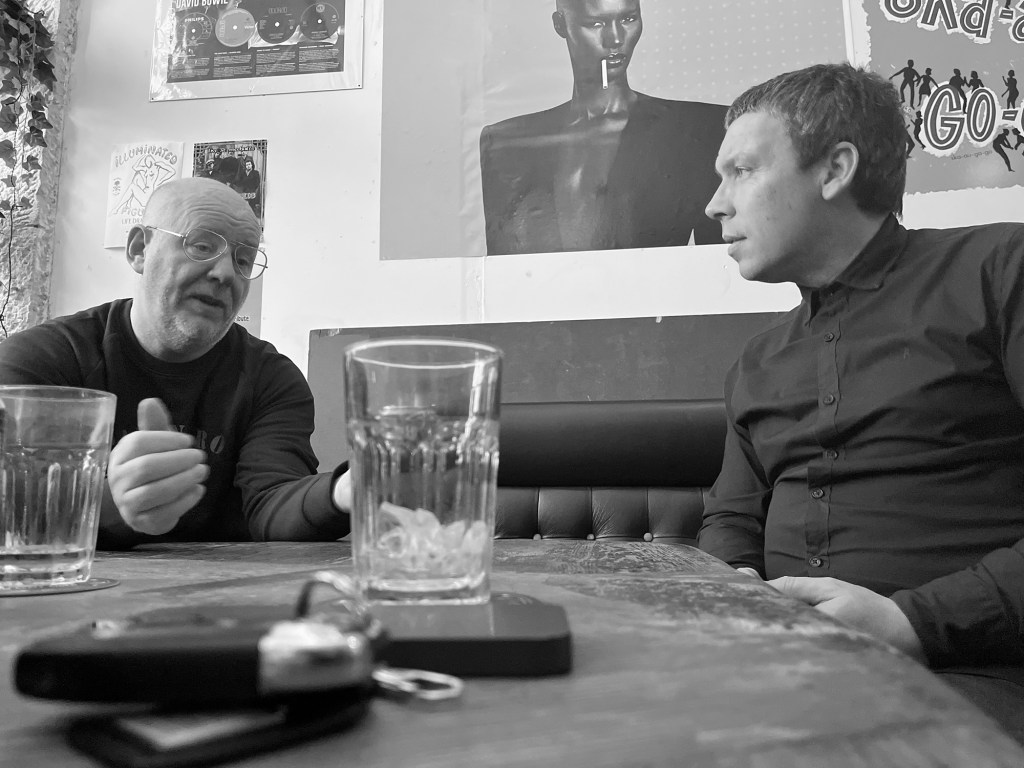
Holywell Street recently connected with Eddie Clarke at McChuills Bar in Glasgow, as we often do. Eddie has been a friend of our team for quite some time; he’s a great guy with a deep love of music and Celtic. He is a former member of the Decadent Movement and has produced some excellent tracks. More recently, he has been working on screenplays, including one titled “Backdater,” which we look forward to seeing.
Starting with the band the Decadent Movement, which we rated highly, I would also say they were an underrated band. How did the band come about?
Well, the band started during the lockdown period with me, Paul Byrne from the Quadrofenians, and a few guys in recovery. We had a friend named Jazz who had a home studio, so it all came together quite well. I am a songwriter, and I don’t feel I am so confident at singing, but I have recorded songs. I wrote a track named “Glasgow’s Burning.”
I wanted to mention “Glasgow’s Burning,” which is one of the best tracks I’ve heard. It truly captures the city’s essence, and I love the lyric, “She’s like an east-end sky.” It tells a story for me.
Yeah, I agree. Paul would send me a guitar tune and ask me to add lyrics, which I find comes naturally to me. The track was written during the lockdown when we couldn’t go to Glasgow, and I had so many thoughts swirling in my head. It felt natural to express those thoughts; during that time, we experienced a surge of creativity, but we couldn’t act on it. The theme of the track reflects the contradictions within the city itself. You can turn a corner and encounter a completely different vibe depending on the area. One moment, you might be in an affluent neighbourhood; the next, you could find yourself in a less prosperous one. The opening line, “She’s a dirty old city, but she’s a work of art!” encapsulates that sentiment perfectly.
If we go back before the bands, were you also into the clubbing scene?
Absolutely! I originally came from Saltcoats, where we had the Metro. Hanger 13 was also along the coast. We would go clubbing and raving from Thursday to Sunday nights. There was a chill-out club in Clydebank on Sunday nights, but I can’t remember its name. We visited it most weekends in the ’90s. I loved those times; Saltcoats was a very different town back then. There were raves right on our doorstep, and busloads of people would arrive in town, making it bustling every weekend. The town and the pubs became very vibrant during that time.
Were you going to Celtic matches at the same time or before all this?
Aye, very much so! I have a long journey with Celtic, as I grew up following them. My dad actually signed with the club on the same day as Lou Macari; both joined from St. Michaels in Kilwinning around 1966. They were part of the team during the era of the Lisbon Lions and contributed to what became known as the Quality Street Kids. My dad was signed by Jock Stein, but unfortunately, he was only at the club for a couple of years because he broke his leg. After that, he moved down to Cambridge. He then ended up with Kilmarnock and Morton. His nickname was”Bootsy,” he used to go to the football pitches in Salcoates with his boots wrapped around his neck. .
Being able to say you were signed by Stein is something not many folk could say?
Aye very true. My dad was obsessed with football; it was his life. I inherited that passion and started playing at a very young age. I was heavily influenced by my uncle Eddie and, of course, my cousin Stevie, who is now the Scotland manager. I played for a few teams and was very decent but much like yourself I was taken in by going to Celtic Park and crowd watching, looking at certain styles and of course the terrace tribes. Then the ’90s came along and the product on the pitch wasn’t ideal so that kinda justified that. But these things never leave you.
Thinking about other bands that have Celtic links, we were talking about it the other day on the birthday of Celtic …
Aye, yesterday was Celtic’s birthday, and I also thought of “The Wakes” and that piece about the Barrowlands. The song “Glasgow Cross” captures the essence of Celtic with the line “romance was born under an East End sky,” which reflects our creative spirit. Another example is “Acid Ultras and the Lost Subcultures Found.” I believe Celtic embodies that romance, just like the pub we are in right now.

What was your first Celtic game?
That would be the 1985 Cup Final against Dundee United, where we won 2-1. I was with my Dad, Uncle Eddie and my cousin Michael. That was a superb final, and these things never leave you. … Aye, a Frank McGarvey diving curling header; I always wondered how he managed that. We were in the main stand that day, I actually wrote a poem about it called the “first cup is the deepest”.
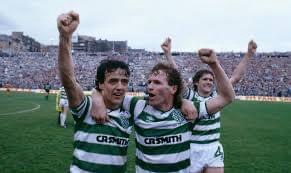
I particularly loved the Centenary season in ’88 and the match we clinched the league against Dundee at Celtic Park. I think there were about 100,000 in the ground that day, with fans standing on the tracks. Just after that came the barren years, of course, and that’s when I was going to the games myself. But I still loved it.
How do you feel about the present team? Are you going to many matches?
I currently share a season ticket, and I’m delighted with the direction the team is heading. I wanted Brendan Rodgers to return and was open to the idea. I was obviously gutted when Ang left, but if Rodgers was willing to come back, I welcomed the opportunity, especially since he could have chosen to go elsewhere.
How did you feel last season when our performance dropped and it looked like we could lose the league?
It was frustrating at certain games. We had this kind of Jekyll and Hyde thing where it was a game of two halves. The first half was good, but we would fall away in the second half. I never enjoyed many of the matches, but it was special when we went on to clinch the league. We came good in the end. That game at Ibrox 3-3 was a brilliant result for us, but Rangers celebrated it as a win as they had equalised in the last minute. But you can see now what BR was doing that season; it was like a transition and building. Then you can see that that team had evolved into his team this season and pre-season. Aye, and I think he has got the best out of certain players now? Aye, and that includes Koyogo and even more so Maeda, he has improved them.
In discussing your band’s journey and recovery, it’s important to note that yours took a different path compared to many others. Your band members were already in recovery, while artists like Paul Weller and Bobby Gillespie became sober later in their careers. They have also stated that they find their most creative work often occurs during their recovery period.
Aye, I have met many people who have come into recovery and were into music or starting out, and they seem terrified of losing their creative streak as they believe their work came from when they were using or drinking. It just takes a bit of adapting and the creativity is very much still there.
Yeah, although it’s interesting that Shane McGowan maintained that if it weren’t for alcohol, he wouldn’t have produced his genius. To each their own, I suppose. He continued to drink until we lost his genius last year …
Absolutely! That’s where he got his material, from pubs and alcohol. However, it seems he never tried to go without them. As for me, even though I loved music and bands, I didn’t join one until later in life, despite my passion for writing lyrics. The other band members Sean and Paul had been part of various groups for years before that. So, when I was in recovery, I spent six months in rehab and went to meetings. During this time, I had a sponsor. He was a musician with an incredible house filled with guitars, drums, recording equipment, and pianos. He took me under his wing and was the first person I ever showed my lyrics to; I hadn’t shared them with anyone before. I was starting to improve my writing and gain general confidence. One day, while we were walking through Glasgow, we passed a Cash Converters, and he went and came out with an acoustic guitar. He told me to put chords to the lyrics I had written. At that time, I was living in sheltered accommodation, and I felt that this moment was a turning point for me; that’s how my journey began. From then on, I realised that music and lyrics became my therapy. I now feel equipped to put my thoughts on paper for my well-being, especially since my mind can sometimes race at 100 miles per hour.
I must touch on the Recovery Connect Festival, is that something you still do?
Aye, definitely and we have had some excellent bands there and good connections. There is a great wee band going about at the moment called Local Authority from Ayrshire, who supported the Libertines last week at the Barrowlands, Gary and the band are cool guys. We initially had them playing at the Recovery Connect Festival. I tend to look for newer bands as much as I can. But yeah, the Recovery Connect has been a great thing. I spoke with Alan Mcgee this morning. We have a yearly event at Queens Park Southside. It has been going on for six years. It’s not so much for everyone in recovery, but it’s an option for people to come along and listen to music without the need for alcohol and substances. There is a lot that actually happens within the walls of recovery but its not really highlighted anywhere. Perhaps it doesn’t sell well due to what a sponsor could bring to it. So, Alan Mcgee has been good for us he introduced us to the Shambolics from Kirkcaldy and we had them playing also he got us John Power from Cast last year. We were told this morning that we have three years of funding for the festival, which is good news. I mean, it is all about getting people involved; although it is about music, it also gets people out and about again.
I always need to throw this one in. Can you give us your top five trainers?
Ok here we go …
1) Adidas Munchen

2) AD X Clark’s Samba’s
3) Saucony Shadow 5000
4) Adidas Handball Spezial
5) Novesta Star Master Mono
And the best band of all time is?
I would need to say the Stone Roses at a push; they were a massive influence.
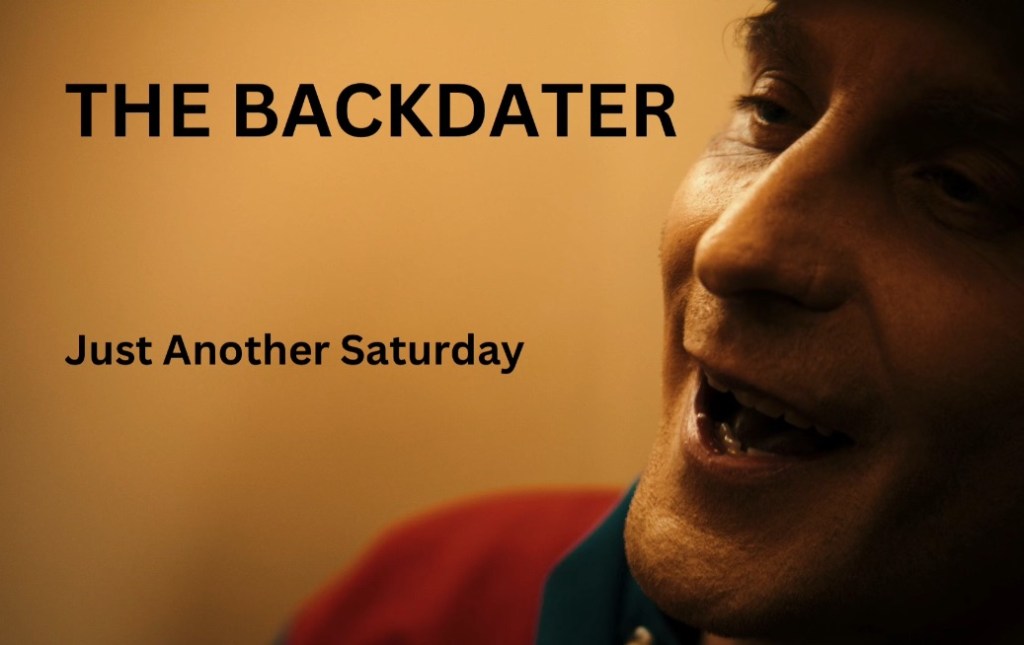
Finally can you tell us about the short movie you are involved with, which is called Backdater?
I am currently making a short film called ‘The Backdater’ set in Saltcoats. The film will follow two days in the life of a pair of local characters caught in addiction (Gydo and Spammy) after Spammy has won big from the DWP in the form of a hefty backdated payment. The film will explore the complexities of addiction, intergenerational trauma through Adverse Childhood Experiences and the power of friendship in a rural community. The film is set in Saltcoats in the mid-nineties when the town had a vibrant nightlife due to the dance scene sweeping the country at the time. Saltcoats was a hotspot due to the success of the Metropolis nightclub. Unfortunately, along with the dance scene came an influx of drug use, which had an adverse effect on the town.
Sounds good mate and we look forward to that. Thanks for dropping by, Eddie; it has been a pleasure.
No worries, mate.
Thanks to Nick at McChuills for looking after us and Derek Monaghan for his input and photos.
 Holywell Street
Leave a comment