Celtic are supposedly in crisis, while Rangers are said to be on the rise. Every summer follows the same script: sections of the Scottish media hand out the pre-season trophies before a competitive ball has even been kicked, and once again they are heading to Ibrox. This year, Derek McInnes is the latest figure to receive that unwavering optimism. To former Rangers players and pundits, he is not merely a solid appointment; he is being cast as the man destined to restore Rangers to glory. Kris Boyd (only in the studio for a carry on) has praised McInnes as a manager with “strong beliefs” who is “confident in his own ability”, speaking of his work at Aberdeen and Hearts as if Rangers have uncovered a managerial mastermind.
Andy Halliday has also talked up the appointment, presenting Rangers as a club making shrewd decisions while questioning Celtic’s direction. He recently described Celtic as “not a well-run club”, a striking claim given they have just won another domestic double. Are there issues at Celtic? Certainly. Recruitment, the speed of transfer business and uncertainty around parts of the backroom staff all deserve scrutiny. But context matters. This is a club that has just completed another double. This is a club that has had Martin O’Neill in place for a year. This is a club that remains the dominant force in Scottish football. Meanwhile, Rangers have won one league title since 2011.
Yet the media narrative casts Celtic as dysfunctional while Rangers are always portrayed as being on the verge of revival. Imagine if Celtic had appointed a manager with a record against Rangers as poor as Derek McInnes’ record against Celtic. Questions would immediately be asked about mentality, ambition and whether he had the credentials to lead the club. Instead, McInnes is being framed as a saviour.
Boydy has also argued that McInnes finishing second with Aberdeen and Hearts was “like winning the league”. It is an extraordinary claim. Finishing second deserves some credit, but when did repeatedly coming up short against Celtic become evidence that a manager is ready to overtake them?
Even more striking is how readily parts of the Scottish media seem to overlook uncomfortable facts. Mr Disgusting McInnes has previously been filmed singing a sectarian song about wading through people’s blood. In almost any other context, involving different clubs or individuals, that would prompt widespread debate and demands for accountability.
This is the wider problem with Scottish football journalism. Too much of the coverage is driven by former Rangers players or individuals with Rangers connections. Their opinions are perfectly entitled to be aired, but when the same voices dominate the conversation year after year, the narratives become predictable.
Before that, Keith “I see billionaires” Jackson had pushed the “missing minute” narrative. For weeks, questions were asked, suspicions raised and conspiracy theories allowed to grow. The implication was clear: something was not right. But when the officials’ audio emerged, the central claim fell apart. The match had been completed, the referee had ended proceedings, and there was no abandoned fixture, hidden scandal or smoking gun. Celtic supporters are entitled to ask why the collapse of the story received nowhere near the same coverage as the allegation itself.
Then came cheeky chappie Coisty on TalkSPORT. Rather than presenting evidence, he cited concerns allegedly raised during a phone call and claimed, “I’m hearing the possibility of corruption”. That is a serious allegation in any sport. Such claims demand evidence, not hearsay left hanging in public. Once corruption is raised, reputations can be damaged whether evidence exists or not, so what justified introducing it into the debate? To date, supporters are still waiting for an answer. Celtic lose a coach or take too long over a transfer, and it is portrayed as institutional decline. Rangers appoint a manager with a modest record against the country’s dominant club and suddenly the revolution has begun. It is pitiful.
If dominating Scottish football and winning doubles now qualifies as a disaster, what standard is success being measured against?
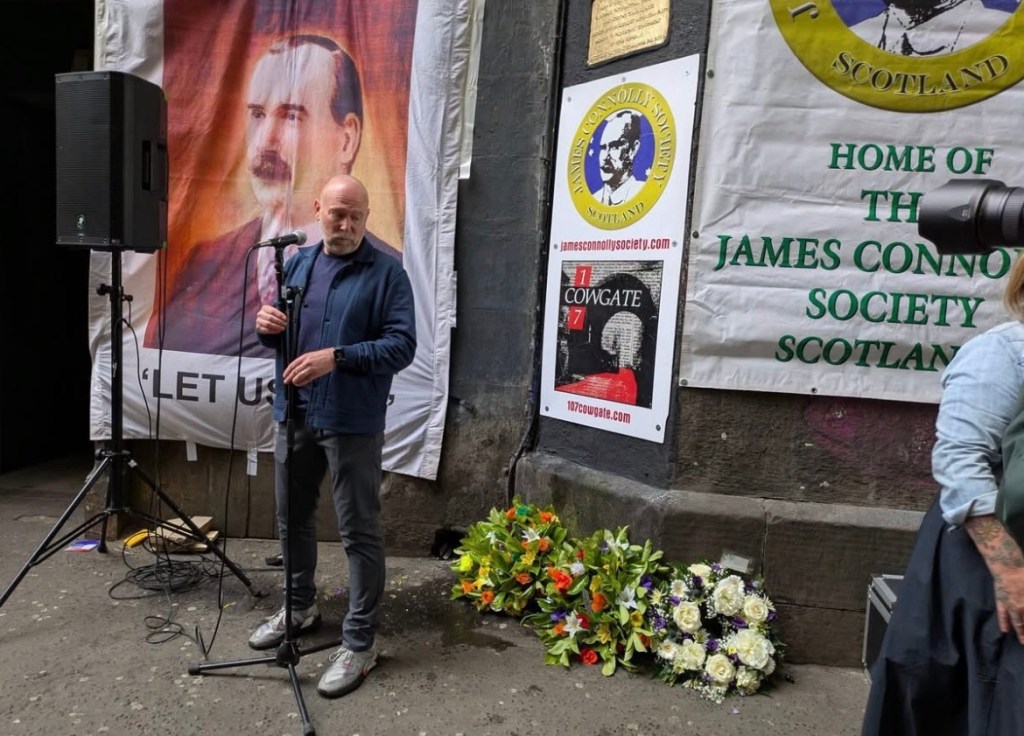
It was a privilege last night to commemorate the birth of James Connolly on its 40 year anniversary since it started in 1986. Over the years it has also been a good chance to meet up with old friends and comrades who are always welcome. I always feel it grounds me in my politics and working class background. It’s a reminder. It is significantly important for folk like myself who don’t feel represented by any political party in Scotland but even more important that the life and work of James Connolly is celebrated.
The assembly point, was at Connolly’s plaque in the Cowgate, after some negotiations with the council the road was closed off last night which helped properly mark the ceremony.
Guest speakers included David Jamieson speaking for Stop The War Scotland and Tracy Miller from Unison Lothian Health Branch. Also, live music from Kevin Gore, Alan Hunter & Gerry Mulvenna.
It is fantastic work again by the James Connolly Society, and Jim Slaven in particular, that Connolly is honoured every year. I am proud to be a member of the society.
Raymond Ballantyne was a curious character. He skilfully ran the Dumfries Bowling Club Bar, treating it with a level of precision that made it feel more like a cherished hobby than a mere job. He took great pride in keeping the bar immaculate, dusting every shelf and polishing every surface until they gleamed. Much like his shiny bald head, which shone brightly, perhaps enhanced by some type of grease or oil he seemed to put on it.
Raymondo’s inflated sense of importance fed his ego, but he had a selective preference for certain club members; he was basically a coward. Just a month earlier, Shaun McSorley and Robert Leicester found themselves banned from the club for reasons that still leave them scratching their heads. Shaun was a kindred spirit, deep and wistful; it would take a lot to get him to react to much. He was also a semi-talented artist and writer. Robert ‘Bobby’ Leicester was another gentle soul, drifting between steady jobs, stints on the dole, and sun-soaked months in Spain or France. In his view, if you’re going to be skint, you might as well do it in the sunshine rather than stuck in Dumfries watching reruns of Emmerdale Farm. Together, Shaun and Bobby shared the same sense of humour and childish playful mischief, always fascinated by the town’s odd characters.
Looking back at this ban from the club, Shaun and Bobby now know they were scapegoats, a distraction from the real agitators lurking within it, but Raymondo would turn a blind eye to it. This did not really faze Shaun and Bobby much, as they had only become members because the drinks were cheap and they could cringe and chuckle at the characters who frequented the place, including Raymondo himself.
Shaun and Bobby were strolling past the local Co-op when Raymondo emerged from the store, his arms laden with bags of shopping. Dressed in his signature rugby shirt—today, it was the white away jersey representing Scotland—with the polished, bald head. The sleeves of his shirt rolled up, revealing his arms, possibly to reveal some kind of toughness. As their eyes met, a wave of shared amusement came over Shaun and Bobby. Raymondo, ever oblivious, interpreted their laughter as both a happy greeting and a yearning for redemption. “Right, lads! I’m glad I bumped into you,” Raymondo declared, with a self-satisfied grin spreading across his face. “Aye, we’ll reinstate both of your memberships, no problem at all! I know this must have weighed heavily on you, so if you swing by tonight, all will be fine.” His tone was optimistic, as if the Bowling Club was some sacred temple of camaraderie, a destination that Shaun and Bobby secretly longed to reclaim. They didn’t.
While Shaun and Bobby exchanged knowing glances, viewing the whole scenario as a rather absurd joke, they played along, insisting that Professor Yaffle and Eric Boland, who were also banished from the club, should be welcomed back too, since they were with them on the day of the so-called “crime”. “Aye, nae bother lads, bring the gents back in”, Raymondo chimed.
The so-called crime was nothing more than a feud with the three bitter little pixies: Whiskey Nose McCulloch, Bruce Campbell, and Arch Thompson, all well into their sixties and the true mischief-makers haunting the club bar daily; they were the real pests stirring up nuisance wherever they perched. They gathered around playing dominoes and would boo certain club members as they strolled into the bar. Truth be told, the feud only went one way. It was the three bitter little pixies who held a grudge against Shaun, Bobby, Yaffle and Eric, fuelled by pure spite for no specific reason. Arch Thompson, a former soldier, with his round football-shaped face like Korky the Cat from the Dandy, seemed to carry the world’s anger, while Whiskey Nose and Campbell just followed him. They rarely left Dumfries and were angry and suspicious of outsiders or any young people enjoying themselves. Whisky Nose McCulloch looked like Sid James from the Carry-On movies, and his cricket-ball nose was from years of drinking Bells Whisky. And there’s Bruce Campbell with his silver-rimmed glasses and a large moustache. Raymondo, the barman with his snooker ball head, felt he had to stay on their good side, partly out of fear of their fierce tempers and probably because they all used to go on the local supporters’ bus to cheer on the Glasgow Rangers. Bobby, Yaffle and Eric were not really into football, although Shaun liked Hibernian and wore a crucifix, or “a f*ckin hang glider,” fitba face Thomson would call it, which Bobby Leicester believed might have been part of their problem.
Raymondo, Mr Sheen Head with an air of patronising pride, mentioned Shaun’s so-called talent for creative drawing. “That drawing you two made. It still hangs above the bar,” he declared. Little did he realise that the drawing was a mocking tribute to himself and the bullies who frequented the bowling club: Whiskey Nose McCulloch, Bruce Campbell, and Arch fitba face Thompson. It also sketched Raymondo Mr Sheen Head, standing to the side of the band, clapping his hands. The drawing mocked these regulars by casting them as a band called “The Firemen” instead of The Police; this was out of boredom, leading to a bit of humour, and it just so happened the song by The Police, “Walking on the Moon”, was playing on the juke box at the time, it was either that or crushing beer mats. Although the sketch was decent, Raymondo didn’t even think to ask what it signified or who it was about.
Shaun and Bobby decided to visit the local bookies, as they knew Eric Boland and Professor Yaffle would be there. There is always a bit of nonsensical banter with these two, well, more so with Eric. Eric sat hunched on one of those orange plastic chairs and studied the form in front of him. He is wearing his weathered deerstalker hat, and Shaun loved the way he tied the ribbon under his chin, with his tweed blazer and a cigarette hanging from the corner of his mouth. Beside him sat Professor Yaffle, named after the wooden woodpecker from the kids’ 1970s programme Bagpuss. He is just sitting there with a gentle smile on his lips, observing those around him with his round glasses like John Lennon’s, and he is wearing a tweed blazer as well, possibly trying to copy Eric’s style. As usual, Yaffle clapped and laughed at everything Eric said, acting like Eric was a star. His laugh was still as contagious as ever, although it seemed to have evolved from that “nyick nyick nyick” sound and was more intense and excitable these days, like a “Kah Kah Kah Kah Kah” who knew what was rattling around in his head? A lot of the time, Eric would tell one of his stories, and he would often jab his thumb at Yaffle and say, “he’ll tell ye,” as if Yaffle were his right-hand man and he was looking for confirmation. Yaffle would just smile or cackle, and Eric would take this as his agreement. Shaun and Bobby shared the exciting news with Eric and Yaffle about their ticket back to the Bowling Club, courtesy of an invitation from Mr Sheen Head Raymondo. With laughter in the air and the promise of a night filled with comedy, disdain and cringe, the four of them planned their return to the club that evening. However, none of them was in any way fussed either way.
That evening, as Shaun, Eric, Yaffle, and Bobby approached the club’s grand entrance, the outside always catches your attention. The building had classic, lasting beauty. The grounds were carefully kept, with thick green lawns and bowling greens in perfect shape. The club’s walls showed signs of past successes, but its present was shaped by unusual regular visitors. Inside the club bar, the walls were decorated with old photographs and framed awards that reminded everyone of the club’s proud history, each telling a story of victory. Cups and trophies shone brightly in their places, polished to a dazzling shine by Raymono, whose shiny head suggested he might have used the same cloth for both. The club is exquisite. However, what always seemed out of place was the clientele, or, more specifically, the three bitter little pixies: Whiskey Nose, Bruce Campbell, and Arch fitba face Thompson. What also intrigued Shaun and Bobby was the presence of a jukebox in the corner, with music from an array of decades. This always seemed out of place, but it kept everyone happy; it was most likely put there to bring in more members.
It was difficult not to consider the club’s blemished reputation, perhaps a remnant of the struggling 1980s, when economic downturns led to a surge in cheap alcohol, attracting a few unsavoury characters. The bar had an afternoon and evening happy hour with drinks at half price. There weren’t many pubs in the Dumfries area, so perhaps it was better to occupy the stylish one. Shaun and Bobby went in out of boredom, for cheap alcohol during the mind-numbing days on the dole. Also, more importantly, to laugh and cringe at red hooter McCulloch et al.
As they pushed open the heavy double doors leading to the bar, with their hard-won certificate of entry, a symbol of their newfound freedom after the ban. However, across the room, the most vocal of the trio, Rudolph’s love child, Mculloch, suddenly caught sight of them. He rose from his seat with an air of misplaced authority, convinced he had the power to enforce our exclusion from the club. The smugness radiated from him as he launched into a rant with poetic rhythm. He stood there, finger jabbing in their direction, his face flushed with self-importance, and bellowed, “Right!!! one, two, three, four, out the door!” You could see how smug he looked at realising his rant had a rhyme to it. The four of them just looked through him and rolled their eyes. Then Eric came away with his comical line once again, which only makes sense in his own mind, “You’ll be oot the door and dan the old Kent Rowd ye coont”, shortly followed by Professor Yaffle’s machine gun cackle. That seemed to hush the three spiteful little pixies for the moment. Over at the bar, the ever-glossy head Raymondo Ballantyne greets them in: “Gentlemen! Welcome back to the club. I trust there will be no quarrels with the other members from now on; with no personal attacks” Clearly, he is just playing the scapegoat to stay in the good graces of McCulloch and his merry followers.
As the evening progresses, the three pixies continue to sip pints and whisky while playing dominoes. Arch Thomson appears to be getting the most obnoxious. As the alcohol takes hold, Thomson begins to hurl insults at anyone nearby, starting with the dependable barman, Raymondo Ballantyne. His tirade consists of a repetitive song that seems more fitting for someone 40 years younger than himself: “Baldy Baldy over there, what’s it like to have no hair?” He repeats this song, clearly seeking a reaction. Raymondo continued his bar duties with a subtle, wry smile. Raymondo then strolls up to the group as a deflection tactic, obviously to keep on the side of these bitter regulars through fear. He smoothly steers the chat toward the Rangers and their much hyped Skol Cup Final showdown with Aberdeen. “Aye, the Bears will breeze through, lads,” he declared. “They’ll lift the trophy; you can count on it.” But Arch Thomson gives Raymondo a sharp glare, probing, “Aye!! But what a watti ken is, why’s that c*nt with the hang glider back in here?” Referring to Shaun McSorley and his crucifix, “A thought this place was just for brers, and that’s no brers.” The three pixies firmly believed that the bowling club should welcome only a certain kind of regular. Raymondo then reassures the three of them that “everyone is a brother in the club, and that it is that camaraderie that makes the place special”. This again confirms that Raymondo’s ego and confusion are well off centre, driving him to control others in a patronising way. He craves the spotlight, seeking validation through his decisions and often portraying himself as the hero, revealing a deep desire to be seen as indispensable, even at others’ expense. However, with that, he is also a coward when it comes to the three bitter little pixies.
So, here it is once more: Shaun McSorley, Professor Yaffle, Eric Boland, and Bobby Leicester, minding their own business, tucked away in their little world of laughter, mostly entertained by the antics of Eric and Yaffle. However, this seems to rile the three bitter little pixies: Whisky Nose McCulloch, Arch Thomson, and Bruce Campbell; this is most likely due to their self-bitter loathing and looking for an outlet for this. In the middle stands Mr Sheen Head Raymondo, playing the peacemaker who turns a blind eye to sectarian, abusive and racial slurs, all while insisting this is a “respectful” members’ club.
As Shaun makes his way to the bar for another round, Professor Yaffle has tagged along to help him. Shaun and Bobby are convinced they have never, ever heard Yaffle talking, so there he is, nodding in acknowledgement with his big vacant grin and John Lennon-type specs. Shaun then orders three pints of lager and a rum and peppermint for Eric, and there’s whisky-nose McCulloch, who shoots them a glare that practically barked for a fight. Then, there it is, that depressing song comes on the jukebox by Opus, “Live is Life” This comes on about three times a day, so the bitter little pixies can sing along in unison whilst stamping their feet and tapping their dominoes on the table.
And it’s life (na-na-na-na-na)
Live is life (na-na-na-na-na)
La ba dab dab dab life (na-na-na-na-na)
Live (na-na-na-na-na)
Apparently, the song is about embracing the exciting energy that happens when people come together in a shared experience, like a moment of shared joy, such as a music gig or gathering. Below the celebration is a strong need for connection and belonging. And there’s Raymondo behind the bar, also singing in unison and clapping with a wee fist pump whilst serving the drinks. Fitba face Thomson is sitting with his head bobbing like a chicken as his eyes focus on Shaun and Yaffle, whilst belting out the chorus: “Live is life (na-na-na-na-na)” as if to imply some kind of one-upmanship. Targeting Yaffle and Shaun for just standing there, and there’s Raymondo, saying to Shaun, “Awfy boys, eh?” with a ridiculous smile on his face as he poured their drinks. Shaun felt no anxiety or offence, only a wave of disdain and a deep, unmistakable cringe.
Back at their table, Eric is telling his stories, the usual drunken made-up tales with a western movie theme. Eric has always been a bit eccentric, and perhaps many years of drinking rum have made him a bit damaged. He was in his late sixties and had a semi-famous rugby career that went pear-shaped, but he wasn’t bitter. He was a pub-to-bookies man most days; he just liked a carry-on, which was often childlike, which suited Shaun and Bobby. Eric boasts, one of his signature crazy one-liners, “So … a rode into town and stopped for caviar and truffles, dan the Old Kent Rowd”, and there’s Yaffle, erupting into his signature cackle. Shaun and Bobby still encourage this, probably out of boredom and the sheer absurdity and ridiculousness of it all. They also enjoy watching the three pixies get upset whenever someone else tries to have fun unless the fun is only theirs. Eric launched into another wild story about riding a camel through Dumfries High Street, prompting Yaffle’s trademark machine-gun laugh to get even louder. And here they are, swept up in a contagious bubble of laughter over absolutely nothing at all. Add scrupulous amounts of alcohol to this vibe, and it’s just mad humour for the sake of it.
The next song that comes on the jukebox is that Van Halen number, “Jump,” and Eric has started to sing along. “A get up, and nothing gets me doon” as he points in a poking motion at Professor Yaffle with his massive sausage fingers and Yaffle responds with his big daft smile. When the song progresses to the chorus, Eric decides to get into motion by lifting himself off the barstool each time to the lyric, “Might as well JUMP! Go ahead and JUMP,” prompting Yaffle to burst into that machine gun cackle and leap up to join him. This infectious hilarity and nonsensical carry-on sparks fitba face Arch Thomson into action as he springs from his seat and marches over to Raymondo at the bar to complain. “See, that’s exactly what am on aboot! That’s against the club standards, Raymond, and you should ken this. That lot are obviously smoking f*uckin drugs”!
Raymond, Mr Sheen Head is then giving it that calm-down gesture towards fitba face Thomson, standing there with the beer towel slung over his shoulder, and today he has the British Lions rugby shirt on with the obligatory sleeves rolled up, hands bobbing, miming invisible basketballs as he tries to deflect Thomson’s rant and nonsensical accusation. And then, here comes snooker ball head Raymondo towards Shaun, Yaffle, Eric and Bobby’s table, and as expected, takes the path of least resistance, and delivers his usual warning: “Now, gents, we can’t have you disturbing or abusing other members, and if anyone is caught smoking drugs in the club, they’ll be asked to leave and banned for life”. By now, the four of them have lost all interest in the farcical situation. Shaun rises, with his voice steady as he tells Raymondo, “We are walking out of here in protest.”
As they head for the club’s exit, Professor Yaffle comes alive and suddenly erupts in an out-of-character fit of rage. He charges at the four scowling, bitter pixies and shouts, “Watch it!” as he lifts the table of drinks over them before dashing for the door.
Peter stood at the bar of his new local pub quietly sipping a pint of Guinness, the Evening Standard folded neatly beneath his arm as part of the ritual he had quickly adopted after another hard day’s graft. London still felt strange to him. Too fast. Too cold. Faces everywhere but very few folk willing to speak.
Still, a man learns to survive.
He noticed a fella further along the bar casting the odd glance his way, listening carefully every time Peter opened his mouth. His rough Glasgow accent travelled through the pub like a foghorn among the polished London tones.
Eventually the stranger nodded towards him. “Yer fae Scotland, mate?” Peter smirked. “That obvious is it?”
The two exchanged a few words over the bar, the kind of cautious conversation working men often have when weighing one another up. Peter had moved south looking for employment after another factory closure back home. Mrs Thatcher’s Britain had torn through the north like a wrecking ball, starving communities of Westminster money and leaving mines, steel works and car plants standing like abandoned gravestones across Scotland and England alike. Tens of thousands thrown on the scrapheap while politicians spoke of progress from comfortable offices.
London had work at least. Or so they said.
The stranger introduced himself as Andy. Friendly enough. Sharp eyes. Bit older than Peter. They spoke about Glasgow, football and the difficulty of starting over in a city that barely noticed ye existed.
“So what part ye fae?” Peter asked. “The Calton,” Andy replied proudly. “Born and bred.” Peter nodded approvingly. “And whit d’ye do then?”
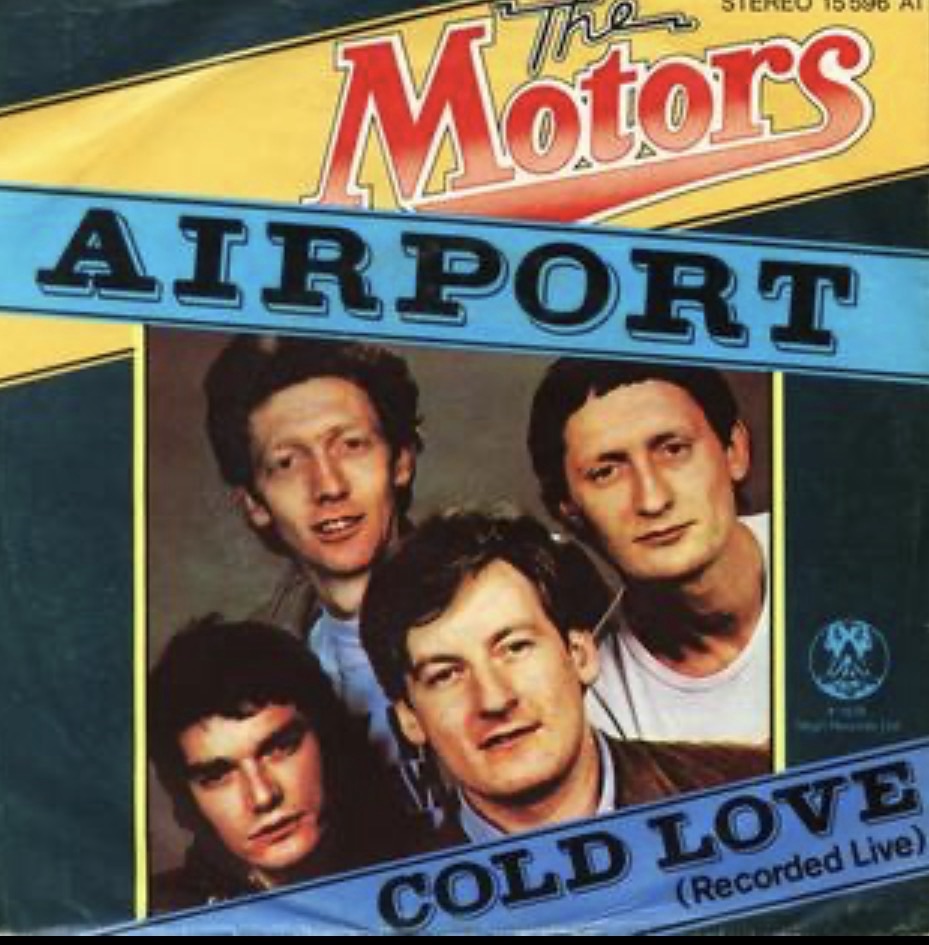
Andy took a sip from his pint before casually replying, “I’m a writer mostly. Songs mainly. Wrote a few hits for some big artists over the years. Had a band anaw. “The Motors.”
Peter raised an eyebrow. “The Motors?”
“Aye,” Andy grinned. “Airport wis oor biggest hit.”
Peter burst out laughing into his Guinness.
“Behave yersel. Next ye’ll be telling me ye know Bowie.”
Andy simply smiled and lifted his glass. “In this city, pal, ye’d be surprised who’s sitting beside ye in the pub.”
Peter could not get the conversation out his head. All through the next day on the building site, while drills screamed and dust filled the air, he kept thinking about the quiet confidence in Andy’s voice. There had been no bragging, no swagger, none of the usual nonsense ye heard from drunks in pubs trying to impress strangers. The man had spoken as if it were the most natural thing in the world.
Still, Peter remained sceptical.
That evening after work he took a walk through the busy London streets and found himself standing outside a small record shop tucked between a tobacconist and a betting office. Posters of bands covered the windows while music drifted softly from inside.
He scanned the racks until he found it.
“The Motors.”
He stared for a moment before lifting the album from the shelf. There it was in black and white the band standing together looking every inch proper musicians. And there, sure enough, was Andy staring back at him with the same knowing half-smile he had worn in the pub.
Peter shook his head and laughed quietly to himself. “Cheeky wee bugger wis telling the truth.”
He bought the album with part of his dwindling wages then wandered further along the road towards the local library. Peter had always enjoyed reading, though he rarely admitted it to the boys back home who thought books were for schoolteachers and politicians. Inside the library he searched through old music papers and magazine archives. Before long he found articles about Andy and The Motors. Reviews. Interviews. Photographs backstage with famous musicians Peter only recognised from television appearances on Top of the Pops.
The more he read, the stranger it all seemed.
Here was a man who had travelled the world, written hit songs, mixed with celebrities, wrote songs for them and lived a life most people only dreamed about yet there he was sitting alone in a quiet London pub talking football and drinking Guinness with a labourer from Glasgow.
Peter sat back in the wooden chair staring at the article in front of him.
One line caught his eye. “Despite success in the music industry, Andy remained fiercely proud of his Glasgow roots and never forgot the working-class streets that shaped him.”
Peter smiled at that. Maybe that was why the conversation had felt normal. No airs. No superiority. Just two Glaswegians trying to survive Thatcher’s Britain in their own different ways.
As he left the library carrying the album beneath his arm, Peter suddenly felt a little less alone in London. The city no longer seemed quite as cold.
Andy received his royalties cheque the last Thursday of the month, a reward for having the sense and stubbornness never to sell away the rights to his songs like so many artists of his generation had done to appease greedy record companies and smooth-talking executives.
“Never gie away what’s yours, Peter,” Andy once told him over a pint. “They make millions aff your words while ye’re left counting pennies.”
Peter listened carefully whenever Andy spoke about the music business. Beneath the humour and stories lay hard lessons learned from years of dealing with sharks wearing expensive suits and fake smiles.
The two men remained friends for many years after that.
Sometimes Peter would finish work and find Andy sitting in the same corner of the pub, Guinness already poured, newspaper folded beside him, as if neither of their lives had changed at all. Other occasions Andy would disappear for weeks away recording, writing or meeting folk from the industry, only to wander back into the pub again as casually as a man returning from the shops.
What always struck Peter most was how little fame had altered him.
Many people changed once money or recognition arrived. Egos inflated. Old pals forgotten. Accents softened to suit television studios and wealthy company. But not Andy.
He remained the same sharp-witted Glaswegian Peter had first met leaning against the bar.
He still spoke about The Calton with pride. Still followed Celtic religiously. Still laughed loudly at bad jokes. Still bought rounds when he did not need to.
And despite brushing shoulders with famous singers, producers and celebrities, Andy never forgot his roots nor the hard streets that had shaped him.
“A man that forgets where he came fae,” Andy would often say, “usually loses himself along the road.”
Peter knew exactly what he meant.
For all the stories Andy carried about hit records, backstage parties and famous names, there was never any arrogance about him. No performance. No looking down on others.
Fame can play strange games with a person’s ego. But somehow it had passed Andy by completely.
He never forgot his own people. Never forgot his auld arse. And that, Peter thought, was worth more than gold records hanging on any wall.
It was late 1984 at Central Station in Glasgow. Celtic was playing away against St Mirren. My friend and I walked onto the concourse, and it was still early, so fellow Celtic fans were acknowledging each other. We noticed a strawberry blonde girl wearing a Celtic flat cap and a green and white scarf adorned with a patch of the Pope. She was also dressed in jeans and white trainers. She nodded at us and initiated a conversation. Accompanied by her young nephew, she began sharing stories about rival fans giving her a hard time.
It had become clear that our Kate did not suffer fools gladly. She had a big heart but you don’t disrespect her or cross her. She had these blue eyes that showed no fear and would back you to the hilt.
She suggests to us: “Let’s go to the Chippie below Central Station” So we go down. We get our food and go back up the escalator but we notice two lads sitting with tracksuit tops on and bleached jeans. We know these to be casuals. One shouts up ‘UVF’ giving us a semi stiff arm. Our new pal Katie turns round and gives the m ‘IRA ya twat’ the two casuals do not respond.
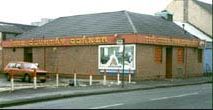
Country Corner Pub
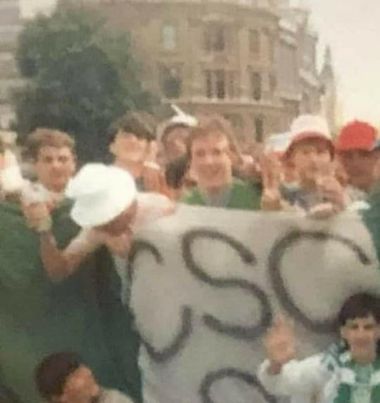
I would see her at a few matches after this and she would always acknowledge you. It was over a year later that Celtic had organised themselves into a a crew of casuals. Firstly Roman Catholic Casuals (RCC) onto Celtic Soccer Trendies (CST). It was settled on Celtic Soccer Crew (CSC).
As we were gathering in town one afternoon at the Country Corner pub around 1985, I recognise a face. She’s wearing a leather patch work top and carrying a black umbrella, it’s Katie. I thought ‘oh no’ but then my thoughts go to how I remember her and why she’s there.
Fearless still she would always stand her ground. Katie became like a big sister to us as our accents were slightly off centre we were initially treated with a bit of suspicion.
I recall Celtic were playing Man United in a testimonial around 1985. About 10 of us were standing in the jungle whist the rest of the crew were standing at the top of the Celtic end. The Celtic support in the jungle decided to turn into their usual song of “Casuals get to fuck” we stayed quiet due to being outnumbered by thousands. However, Kate was not having it and decided to let the fans know! A few liberty takers within the support took a swipe at her. She doesn’t back down and we ended up in a scrap. She doesn’t back down and to this day has the same minerals.
Her strength and spirit continued into later life despite many adversities. I don’t think I’ve ever met anyone stronger. The fear and anxiety she did have she managed to suppress it and used it to her advantage.
Katie was Celtic to the core on and off the pitch.
Whenever Kate was unwell, she would let you know, but her concern always extended to others—family and friends alike. Until the very end, she was reaching out through messages and calls to see how others were doing.
Last night, we mourn the loss of a true Celtic legend.
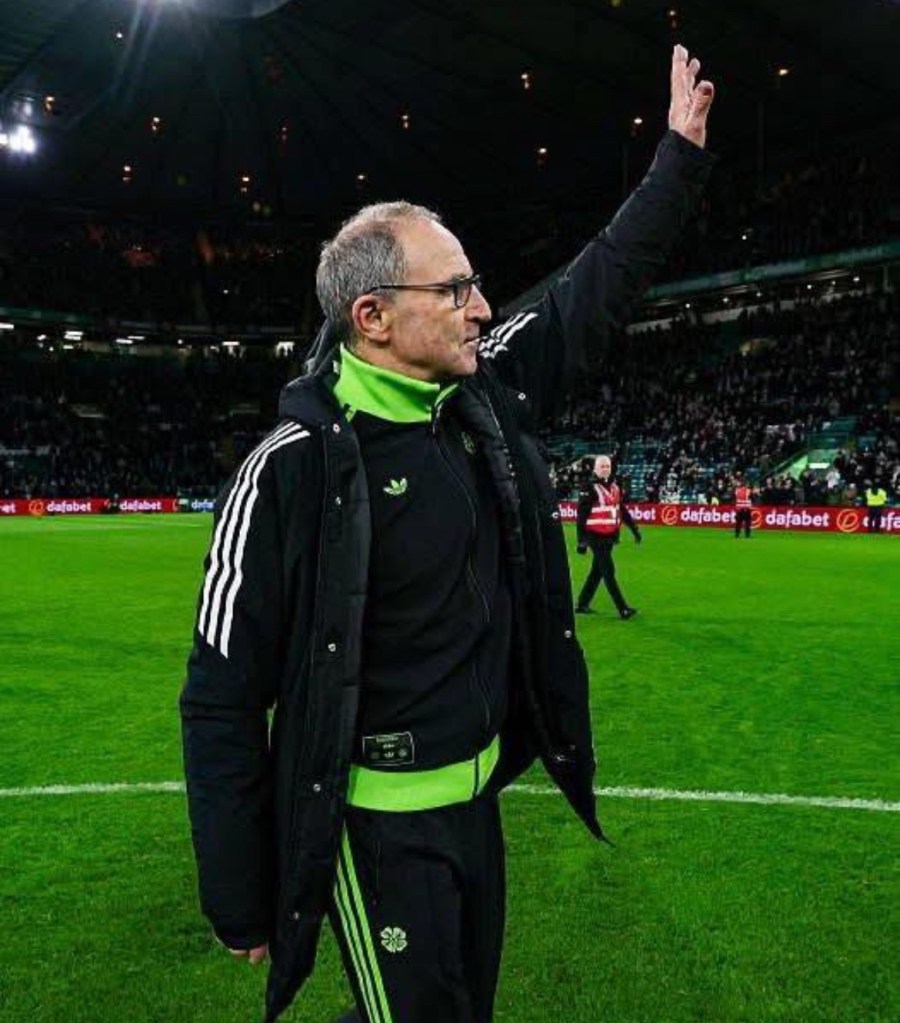
When the suits lost the map and the ship hit the swell, when the club drifted hard under boardroom spells, they didn’t call prophets or kids chasing fame, they called a humble man who remembers the name.
Third time back, no nonsense, no show, just scars on his hands and a fire burning slow.
He knows this club’s built on hunger and fight, not by balance sheets or power and might.
MON and Hoody
Let the storm rage on, let the critics squeal, Celtic fans around the world will march with O’Neill.
Shona arrived in the Glasgow Western A+E (aptly named) with a sprained ankle after losing an argument with a staircase earlier that day. As she limped to the reception desk and gave her details, she glanced up at the triage board.
Estimated waiting time “four hours”.
She sighed, but the ankle had blown up like a balloon animal at a children’s party, so home wasn’t an option. She took a seat and settled in.
The triage area soon turned feral. Ambulances screamed in one after another, trolley wheels rattling like skeleton bones. Nurses barked instructions, as people screamed, while porters weaved through the chaos with grim efficiency. Cuts, breaks, burns every ailment known to man seemed to arrive in bulk.
But this was Glasgow city centre on a Friday night, and the drunks had come out in force like an incoherent army.
There were lads leaking claret from bottle wounds, heroes with stab marks who “didnae feel a thing,” and one man arguing loudly with a vending machine that had clearly wronged him. Blood spattered trainers, ripped shirts, and the unmistakable aroma of cheap wine and lager and regret hung in the air.
Arguments broke out over chairs. A woman screamed that she was bleeding internally while scrolling her phone. Somewhere, a couple were breaking up loudly, complete with tears, accusations, and a crutch cracked over the mans head.
Shona sat back, ankle throbbing, watching it all unfold like a live soap opera. Casualty, but with worse acting and strong Glasgow accents. Every so often, a paramedic would rush past, reminding everyone that beneath the madness, real emergencies were happening.
Still, the night was only beginning.
And Shona, in no particular hurry and mildly medicated on painkillers and people-watching, found herself perversely entertained by the frivolities of other people’s misfortunes knowing fine well that before the night was out, she’d have her own tale to add to the horror show of Fright Night in A+E.
By the time the clock crept past midnight, the waiting room had developed its own ecosystem. Shona’s ankle had reached a new level of swelling, no longer a balloon, more like a novelty beach ball and she’d given up pretending it might deflate.
The army arrived in platoons, chests puffed out despite obvious injuries, each one insisting they were fine. One had a blood-soaked towel pressed to his head and kept announcing to anyone who’d listen that he’d “won the fight,” despite the fact he was swaying like a fiver in the wind.
Another strutted in with a deep gash in his arm, claiming it was “only a scratch,” while leaving a Hansel-and-Gretel trail of blood across the linoleum. He refused to sit down, pacing instead, shadow-boxing an invisible opponent and muttering about respect and the Queensberry Rules.
“Ah’ve been stabbed before,” he told the room proudly, as if listing previous league titles.
Across from Shona sat a wee guy with a split lip who flinched every time someone coughed. He kept glaring at the hard men, clearly desperate to prove he belonged in their ranks but knowing fine well he’d faint if he stood up too fast.
An inebriated woman in leopard print who had went oot awe brammed up trying tae get lucky and ventured back looking like the bride of Chucky. Mascara streaked like war paint and laddered tights, screaming at the receptionist because she’d been waiting twenty minutes and had places to be. A man loudly declared he was allergic to hospitals while drinking from a can of cheap cider he’d smuggled in his jacket. Someone started snoring and farting. Someone else started crying. No one knew why.
The nurses, meanwhile, were operating on pure rage and caffeine.
One marched out from behind the desk, eyes dead, clipboard clutched like a weapon.
“If ye can shout, ye can breathe,” she barked, silencing half the room instantly. “And if ye can breathe, ye can wait.”
A drunk tried flirting with her and was dispatched with a single look that could’ve stopped a heart. Another nurse confiscated a man’s phone mid Facebook Live rant with the efficiency of a prison guard.
Doctors drifted through like ghosts creases etched into their faces, shirts splattered with things best not identified. One young doctor stared at the triage screen, rubbed his temples, and whispered, “It’s only Friday,” as if realising the weekend had barely begun.
At one point, a full-scale argument erupted over a charging socket. Voices rose, insults flew, and a hard man with a bandaged hand offered to “sort it outside,” before being reminded firmly that outside was how he’d ended up here in the first place.
Through it all, Shona watched, ankle pulsing like something from a Tom and Jerry cartoon, pain ebbing and flowing with each fresh wave of madness. She shared a knowing glance with an older woman clutching her ribs, both of them silently agreeing that this was better than telly.
When Shona’s name was finally called, she almost felt disappointed.
She rose, limped forward, and took one last look at the battlefield of broken egos, bloodied pride, and heroic stupidity. Behind her, the waiting room roared on another Friday night in the Western A+E, where everyone had a story, most of them unbelievable, and none of them going home any time soon. How the West was won.
Time in the Western A+E didn’t move forward, it circled and mocked the situations that arose. Simply a case of rinse and repeat every weekend.
Shona was convinced she had landed in the set of One Flew Over The Cuckoo’s Nest, the waiting room had reached peak lunacy. The air was thick with antiseptic, sweat, stale alcohol and regret. Somewhere, a child cried. Somewhere else, a grown man howled because he’d been asked to remove his own sock.
The hard men had evolved.
One now lay flat on the floor, arm in a sling, loudly announcing he was “bleeding oot internally” while eating crisps. Another, shirtless for reasons no one could explain, was giving an emotional talk about loyalty, betrayal, and why he definitely wisnae drunk.
A third tried to smoke a cigarette under the NO SMOKING sign and was stunned, to be told this was frowned upon, to which he pulled out a vape much to the nurses anger, who sternly glared until he returned it to his pocket.
The nurses were no longer human. They had crossed into legends and pacifiers.
One glided past like a battle-hardened general, snapping gloves on with a sound that struck fear into the soul, and you seen the men wince at the thought of where she was going with those gloves. Another nurse, powered entirely by coffee and spite, shut down a near-riot with five words.
“Sit doon. Or go hame.”
Silence fell.
A handsome junior doctor attempted small talk with Shona while examining her ankle, then apologised for existing with a bright red face and disappeared into the chaos, never to be seen again. A consultant swept through, issuing orders like a man extinguishing fires with a teaspoon.
At one point, a stretcher burst through the doors at speed, followed by a parade of professionals accompanied by two policemen who looked like they’d already lived several lifetimes that night. The room sobered instantly just for a moment, before returning to madness as if on cue.
Shona’s ankle was finally X-rayed, prodded, poked, and discussed in hushed tones as though it had committed a crime. She was informed it wasn’t broken, which felt deeply unfair after everything she’d been through.
Then came the boot.
A nurse emerged carrying it like a holy relic. Thick. Black. Industrial. The kind of thing you could kick down a door with.
“This’ll dae ye,” she said, strapping Shona’s left leg in with ruthless efficiency.
Shona stood, wobbling slightly, feeling like a deep sea diver. She was handed discharge papers, painkillers, and a look that said don’t you dare come back tonight.
As she hobbled towards the exit, she passed the same hard men still arguing, still bleeding, still undefeated in their own minds. A new ambulance screeched in blue lights flashing. Fresh chaos poured through the doors.
Outside, the night air hit her like freedom.
She stood for a moment, booted, battered, and utterly exhausted, listening to the sirens fade behind her. Four hours older. One industrial-strength boot wiser.
Shona limped home victorious, strapped up, sent on her way, and grateful to escape Fright Night in A+E alive. An experience Shona will never forget.
Danny was a well-educated lad, the kind folk pointed to and said, he’ll do well, that one.His parents were hard-working, working-class people who had grafted and studied their way into respectable professions, his father a doctor, his mother an accountant. They carried their success lightly though, never letting it turn into airs and graces.
Danny and his sister were raised on good manners and better morals. Their dad, in particular, was fierce on that. No matter how well things went, he’d wag a finger and say, “Never forget yer auld arse.” It was his way of saying remember where you came from,saying remember the schemes, the hand-me-downs, the neighbours who helped when money was tight.
Danny went to private school, but he never quite fitted the mould. He got up to the same daftness any teenage boy did, drinking in parks, sneaking fags, dabbling in whatever was going about at the time, nothing wild, nothing that rang alarm bells. Just enough mischief to prove he wasn’t made of porcelain.
What really grabbed him, though, was cars.
From a young age he was forever in his mates’ dads’ garages, sleeves rolled up, hands black with oil, head buried in an engine bay. While other lads talked football or girls, Danny talked torque, gear ratios, exhaust notes. He didn’t just drive cars, he listened to them, felt them, understood them.
On his eighteenth birthday, after passing his test at seventeen, his parents bought him a Ford Fiesta. Nothing flashy, just sensible and solid. Danny was over the moon. He washed it twice a week, polished it like a prized medal, knew every scratch and rattle as if the car were alive.
Against his parents’ wishes, he chose mechanics as a trade. They wanted university, degrees, letters after his name. Danny wanted spanners, engines, and the smell of petrol. Speed fascinated him, the pull of acceleration, the way the world blurred when you pushed just a little harder.
Speed, unfortunately, didn’t fascinate the law.
Danny and the traffic police never quite saw eye to eye. Points stacked up on his licence like warnings he half-ignored. To Danny, speed wasn’t recklessness it was freedom, control, proof he was good at something. To everyone else, it was a problem waiting to happen.
And like most problems you refuse to look straight at, it wasn’t going away.
Here’s a tightened, flowing continuation, keeping the grit, the love of machinery, and the near-miss with death clear and human, without over-sentimentality.
Danny then bought himself an old Ford Escort Mk2, a rust bucket on the surface, but hiding a Mexico engine that made his heart race the minute he heard it turn over. Most folk would’ve seen scrap. Danny saw potential.
He worked on that car day and night, rebuilding it piece by piece. Weekends were spent tramping scrap yards across Scotland, fingers numb from cold, pockets light but spirits high, hunting down parts like a man on a mission. First came the engine, stripped, rebuilt, tuned until it purred like a contented kitten. Then the bodywork, panels straightened, rust cut out and replaced. The interior followed, stitched and sourced back to original condition. Nothing half-done. Nothing rushed. This wasn’t just a car it was a labour of love.
In the meantime, his daily driver was now a Ford Escort XR3, souped up beyond belief. Lowered, louder, faster than it ever had a right to be. Danny was speed-mad, always chasing that extra edge, that next tweak that shaved seconds and raised pulses.
One night, Danny and two mates from the garage took the XR3 out for a spin. What started as a laugh turned into a high-speed race, engines screaming, bravado thick in the air. Danny pushed too hard, just a fraction too far. The back end went, tyres lost their grip, and the car spun off the road, slamming into a tree with a violence that silenced everything.
His two mates escaped with cuts and bruises, shaken but alive. Danny wasn’t so lucky.
The paramedics worked frantically at the roadside, fighting to bring him back. They lost him twice. Later, Danny would tell the story of what he saw, a white light, calm and warm, and his grandfather standing there, hand outstretched, telling him everything would be alright.
Against the odds, they got him to hospital.
He came round with a few broken bones, a body held together with painkillers and metal pins and an ego badly bruised. The speed that once felt like freedom had nearly cost him everything.
For the first time, Danny had to lie still and think.
Here is a careful, grounded telling, restrained, tragic, and human, without sensationalising the violence, letting the weight sit where it should.
The completion of the Mk2 was nearing, and Danny was buzzing. The car had just come back from the paint shop, gleaming like it had rolled straight out of a showroom floor. Every line was perfect, every panel sat right. It was everything he’d imagined during those cold nights in scrap yards and long hours under strip lights.
It was his pride and joy.
Danny drove about grinning like a Cheshire cat, reving the throttle, blasting the horn at his pals, soaking up the looks and the boost to his ego. For once, the speed wasn’t about recklessness, it was about achievement. I built this,he thought. Every bolt, every inch.
Then came the works Christmas party.
Danny drank that night, properly drank, something that was totally out of character for him. Laughing louder than usual, glass after glass, the sense of invincibility creeping back in. When it came time to leave, he brushed off offers of a lift. He’d driven faster sober, he told himself. He’d be fine.
He wasn’t.
The road was quiet, too quiet, and Danny did what Danny always did he pushed. The engine screamed as he flew through a 30mph zone at more than twice the limit. Then came the thud. Sudden. Sickening. Final.
A man appeared out of the dark and disappeared just as quickly, pulled under the car in a fraction of a second. Danny slammed the brakes, heart hammering, mind screaming. Panic took over. He didn’t stop. He couldn’t. He drove on, shaking, breath ragged, hands slick on the wheel.
He hid the car in his dad’s garage and scrubbed it clean, washing away blood, wiping away guilt he knew wouldn’t lift. By morning, police were everywhere. Blue lights. Tape. Questions. The man had died at the scene from catastrophic head injuries.
They never found the car.
They never knocked Danny’s door.
But Danny was never free.
The guilt ate away at him like a cancer, stealing a piece of him everyday.
Sleep deserted him. The grin vanished. The pride in the Mk2 curdled into something he couldn’t look at. He started drinking to drown the images, to silence the sound of the impact that replayed every night. Drink led to pills. Pills led to more drink. The careful mechanic who rebuilt engines with patience and precision unravelled quietly, behind closed doors.
A year later, Danny was found dead in his flat. Guilt got him in the end no matter what they put on the death certificate.
Overconsumption of alcohol and prescription drugs, the report said. No note. No explanations. Just a room heavy with silence and a life that had burned too fast.
The Mk2 sat unused, dust settling on its flawless paintwork.
A perfect car.
And a man who never learned how to stop gone to the big scrapyard in the sky.
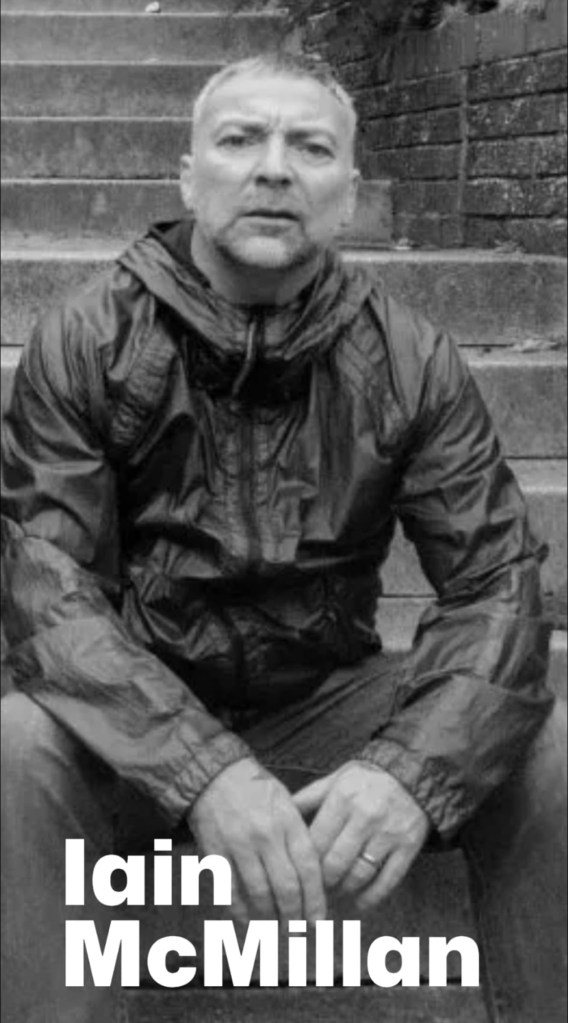
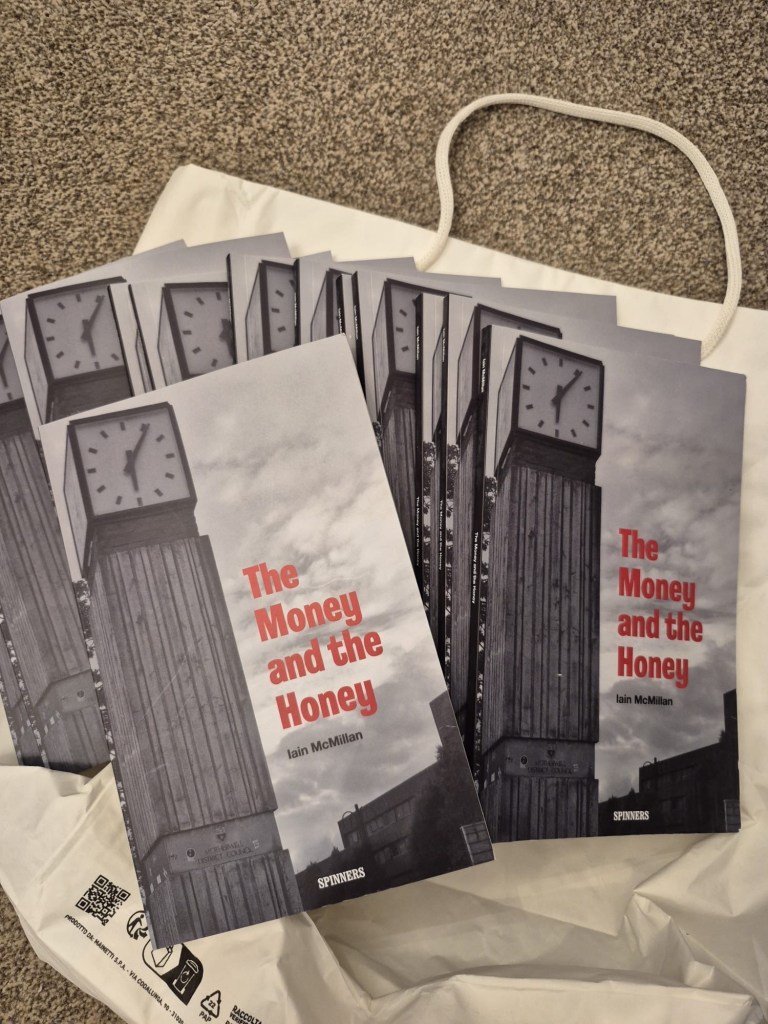
HWS recently caught up again with our good friend Iain McMillan, which is always interesting. Iain has just finished his latest novel, *The Money and the Honey*. This is his second book, and it has piqued our interest once again.
Thanks for meeting us again, mate. How’s things?
I am very well mate, mega busy with the book recently published but it’s all positive stuff.
The first thing I need to ask is where the title of the book came from, and is there a meaning to it?
I’m glad you asked that question! There is a meaning behind the title. Back in 2002, I admitted defeat and made some lifestyle changes, which included knocking the drink on the head. It was the start of a new way of life for me. I was fortunate enough to have met a few guys who had walked the path before me and had many years of walking the path of sobriety under their belt. I was given a bit of strong advice that always stuck with me and that was the two things that will mess up your sobriety is the “Money and the Honey”. With Romance and greed by such a central part to the story I felt the title very fitting.
The character in the book, Chris, is fascinating. I’m sure a few will relate to him. Also, a sign of the times, living in a Northern town during the nineties, where status was more important than anything else.
I think given the age I was during the 90s it was prime time for me. I left school in 1989 with the world at my feet. Your late teens and early twenties are generally a carefree time before any real responsibility comes along. I’m grateful that I grew up in the era I did, as we had great music through the 80s and some great times at football, etc. Then when the 90s come along the rave scene was groundbreaking and gave us some of the best years of our lives. I think like any young man you’re trying to find your place in the world and belonging to your tribe gives you a certain status. That is before you get through your twenties and you need to choose responsibility before anything else and the whole game changes again.
Much the same as in your last book, the central character, Chris, comes across as a street-tough romantic who is also a deep thinker.
It is important for me not to write a character as one dimensional and hopefully I’m able to show a bit of depth in each character I write about. I think with the main characters being in their early twenties it is still a decade in your life where you are shaped by your peers and your upbringing before you work life out a bit. Chris spends a lot of time in his own head navigating his way through the trials of love and friendship. You can hopefully see where he is becoming truer to himself and working out his strengths and weaknesses and becomes more of an individual rather than playing somebody he’s not.
Did you feel the new book was easier to write now that you are an established writer?
I feel I gained a great deal of experience writing the first book and the other bits of work I have had published since. That experience gives you a better idea of where I could have improved in the first book though, so I wanted to write a something that was an improvement on my first effort. I had a much better idea on how to structure the story and develop characters. I had also overcome any self-doubt about publishing my work and I was more comfortable seeing myself as a writer as unfortunately it’s not a title the working classes tend to resonate with.
I admire the way the book touches on the terrace-casual overlap with the clubbing scene. This has always been an interesting topic, with some lads unable to mix the two. How did you see it?
It was definitely a clashing of two completely different worlds. I always compared it to the mods in the sixties becoming hippies and growing their hair long. We had that too from the football terraces to the dance floors. The numbers at football dropped rapidly as the clothes got baggier. Despite the mood enhancers and how big rave culture was in Motherwell the football thing never completely died out. I always simmered away in the background. With Motherwell winning the Scottish Cup in 1991 it gave the town a real boost and we kept the football thing going to a degree. Just on a smaller scale as most couldn’t be bothered with turning up after dancing until 6am and the penalties for getting arrested at the match became to severe.
Motherwell is an interesting town. I have always felt that, even though it suffered a lot of hardship, and it is predominantly a working-class town, it has always had its creative side. I am glad it states that in the book.
In an era where there was no real work about and a generation who wanted designer clothes and four-day weekends it seemed to spark a creativity and entrepreneurship within many. When your days midweek are tough people want to make the most of the weekends. I still see that legacy in Motherwell to this day with a new generation of DJ’s and bands who have been inspired by the older lads they once looked up to as kids. The attitude that anything is possible is still prevalent and Motherwell has always punched well above its weight…..just no on the football field.
I agree that this town was one of the first to embrace certain trends, including the early casual scene. Additionally, Street Rave had a significant impact on the Scottish club scene. Was this just a natural progression?
I think so, yeah. With Motherwell knee-deep in the casual thing throughout the eighties, it created a generation of young people who were very aware of fashion and music and were always hungry for the next big thing. Part of culture when you’re young is about staying ahead of the game, and as football faded onto the dance floor, Motherwell were there when the starting pistol went off.
I know we touched on this in your last Q&A, but was dance music your thing, or did you prefer bands?
I have always been heavily into music, but guitar music has always been my passion. I loved some of the early house music, and you wouldn’t want to listen to anything else when you’re in a club, but for me it’s always been indie, Britpop and sixties type bands. I would never listen to dance music out with a club, and I listen to a lot of music and travel all over to attend gigs. A good guitar riff is what makes the hair on the back of my neck stand on end. I get the same feeling of unity in the barras as a clubber would in the sub club.
I see that you’ve been writing short stories for the Spinners Fanzine. I’m a big admirer of the magazine, and I think there are some talented writers involved. Does contributing to the fanzine help keep your creativity flowing while you work on your next book?
Writing for Spinners has been great for creativity, as it allows me to indulge in a subject I wouldn’t be able to turn into a whole book, but maybe turn an idea into a short story. It gives you a lot more freedom, as a novel can have a section where you’re struggling to find the groove of the story. That doesn’t really happen when you only have three or four thousand words. The Fanzine also gives you a deadline to submit your piece, so it forces you to get typing and stop procrastinating. It’s like anything in life: if you want to get good at something, you need to keep doing it.
Can you give us an IN and an OUT for this week?
IN – Has to be the Stone Roses with the recent passing of Mani. Not very often I’m touched by the death of a celebrity, but Mani was different.
OUT – Moustaches and Mullets. Get a grip lad, this not Australia.
And finally, what are the next steps for Iain McMillan?
I plan on promoting The Money and the Honey as much as I can going into 2026 to try and get a bit of exposure before I move on to my next project. I have quite a few short stories written so I might release a book of short stories before I tackle my next novel. I think when you find a creative spark in you, it gives you a certain drive to do better, so I don’t plan on stopping anytime soon.
Thanks for your time again mate.
No problem.
The Money and the Honey can be purchased here at the links below …
Sandy was never born for kneeling and praying to God. Naw. He came into the world fists first, a stubborn wee Irish/Scotch man with fire in his lungs and trouble always a step behind him. And yet the thing that finally broke him wasn’t a man, or the polis or a judge… It was a bloody bottle of supermarket whisky with a screw cap that clicked like a handcuff and its contents smelt like expensive perfume.
A rebellion killer. A soul thief. A dictator in amber.
And Sandy proud, loud, built like a brick shithouse fell to it like a slave.
Lucy saw it before he ever admitted it. She loved the dafty, aye, but she wasn’t fooled. She saw the lies, the shakes, the late-night creeping about the flat like a burglar hunting his next secret stash. She watched the life drain from his face every time he opened that bottle like it was “mass for sinners”.
Rain battering the windows, Glasgow night howling like a banshee. Sandy barges in, soaked, steaming drunk, half-singing rebel songs, half-crying like a wean who’d lost his ma.
Lucy’s standing there still, cracked, done.
“Pick one,” she says, voice cold as the Clyde. “Me… or that poison controlling your life.”
He tries to laugh it off, swagger, act the big man, but even in his drunken haze he hears the truth in her tone, this is the line, and he’s standing one toe in front.
He stares at the bottle on the table. That familiar amber glare. The devil he danced with more than he ever danced with Lucy.
Whispers rise from it, old pals from pubs, dead relatives, the ghosts of nights he couldn’t remember.
Come on Sandy boy. One last swally. One wee comfort to soften the blow. Don’t listen tae her, John Barleycorn’s got ye. The bottle gently whispers.
His hands are trembling, heart thumping like a bodhrán in a rebel march.
He lifts the bottle.
And for a second, Lucy thinks she’s lost him.
Then CRASH! He smashes it off the edge of the sink, roaring like a man tearing chains off his wrists.
Amber runs down the tiles like spilled sin.
“It’s me and you now,” he gasps. “No more masters. No more surrender.”
Lucy bursts into tears not the weak kind the relief kind.
Day 1. Withdrawals kick in. His body shakes like a battery hen. Sweat pouring off him as if his skin is wringing out the lies. Lucy wraps him in blankets, whispering, “You’re fighting. You’re no’ beaten.”
Day 2. The Heebie Jeebies have kicked in. He clings to her hand like a man lost He’s pacing the hall like rebels before a riot. Peeking through curtains. Jumping at silence. Seeing shadows that don’t exist.
“Lucy… someone’s watching us.” “There’s nobody there, Sandy.” “Aye there is, I saw movement.” “That’s the washing line.” “The washing line disnae walk!”
Day 3. This is where the bottle fights dirty. He sees folk he wronged standing in the doorway. He apologises to thin air. He argues with himself. He sobs into his palms because he’s convinced the walls are closing in.
Lucy holds him, whispering steady like a priest giving last rites.
That night he wakes screaming about spiders on the duvet, flames licking the carpet, and a hooded figure in the hallway.
Lucy checks. Nothing. Only shadows. Only fear.
Day 4. He drops to the floor. Shaking. Pale. Broken. A shattered rebel soldier.
Lucy stays up all night, wiping his brow, whispering his name, daring death itself to try her.
At sunrise… he stirs.
The colour returns. The shaking calms. The demons retreat.
He looks at her, eyes clear for the first time in years.
“I thought I was done, Lucy.” “You’re harder than the drink,” she says. “And twice as stubborn.”
Weeks pass. He eats again. He laughs again. He walks taller, like a man who’s been to hell and spat in the devil’s pint glass.
He joins A.A. meetings. He tells his story not polished, not saintly just truth.
Folk listen. Some cry. Some nod like they’ve walked the same burning road.
Lucy watches him with pride fierce enough to crack stone.
One night, months later, Lucy and him walk past a pub. The old Sandy, the drunk Sandy would’ve drifted toward the door like iron to a magnet.
But this Sandy stops. Looks in. Then smirks.
“Naw,” he mutters. “I’ve served my time for that tyrant.”
Lucy smiles.
“You beat it, Sandy.”
He shakes his head.
“I didn’t beat the bottle… I overthrew it, One Day at a Time”.
Sandy never fancied himself a hero. He wasn’t polished, wasn’t holy, wasn’t the poster boy for recovery. He still swore like a builder, still had scars on his knuckles, still woke up some mornings with ghosts biting at his heels.
But he was alive, and for the first time in his life he’d found a fight he wanted to stay in.
It started with a lad called Wee Jay.
Skinny wee thing, face the colour of cold porridge, shaking like wet washing in the wind. Sandy found him outside the church hall before the AA meeting, smoking a fag like it was the only thing keeping him tethered to earth.
“You going in?” Sandy asked.
“Naw. They’ll judge me.”
“Son… if judging folk was allowed, they’d have thrown me out years ago.”
Jay snorted. It was the first laugh he’d had in days. And that laugh was the first rope thrown down the hole.
Sandy didn’t know it yet, but this was the start.
Sandy didn’t preach. Didn’t quote scripture. Didn’t tell people to “think positive” like some polished guru who’d never smelt the gutter.
He told the truth ugly, raw, hilarious, heartbreaking truth.
His Message Was Simple: You’re no weak You’re no’ deed, you’re wounded The drink’s a liar, not a cure. And if I can crawl back, broken as I was… you can sprint. Folk listened because Sandy spoke like a man who’d walked through fire and still had the scorch marks. He’d say. I’ll no’ lead ye. I’ll just walk beside ye until you can walk ahead of me.”And he meant it. Jay got sober. Then big Archie, tough as nails but drowning inside. Then Dougie, who’d lost his licence, job, and nearly his family. One by one they clung to Sandy’s armour until they built some of their own.
He became the guy people phoned at 3am. The guy who’d answer with a muttered, “Right, stay where yer are I’m coming.” The guy who’d sit on kerbsides, hospital chairs, and cold flat floors talking people back into their own bodies.
Lucy would wake and find the other half of the bed empty, muttering,
“He’s away saving another soul.”
And she wouldn’t complain. She was proud dangerously proud.
But some battles cut deep.
There was Malky brilliant when sober, violent when drunk. Sandy nearly gave up on him until one night Malky sobbed into Sandy’s chest like a wean, choking out, “I don’t want tae die, big man.”
Sandy held him steady.
“You won’t. Not while I’m breathing.”
And Malky rose. Slowly. Painfully. But he rose.
Then there was the wee Irish girl Roisin, beautiful, fiery, lost in a haze of trauma and vodka. Sandy didn’t try to be her saviour just her mirror. When she finally faced herself, she wept. Then she fought. And she won by the help of Clare her sponsor that Sandy had put her on to.
Word spread.
“Sandy helped me.” “Sandy pulled me back.” “Sandy answered the phone.” “Sandy listens.” “Sandy gets it.”
Soon he was sponsoring three, then five, then eight lost souls. Not because he wanted recognition but because he couldn’t watch another person drown the way he had.
One night he passed that same pub the one that once held him like a jail.
A group of drunk lads spilled out, singing rebel songs badly.
One of them pointed at Sandy.
“Fancy a wee haulf big man?”
Sandy smiled a calm, steady, hard-earned smile.
“Naw boys, I’m fighting a different rebellion now.”
And he walked on.
Lucy linked her arm through his.
“You’re becoming a right guardian angel.”
He laughed.
“Angel? Me? Naw. Just a daft Glesga alky wae his faced washed who refuses to let the drink take another bloody soldier.”
He didn’t just save folk he built a wee army of people who now saved others.
A ripple became a wave.
A wave became a tide.
And Sandy? He stayed humble. Stayed sober. Stayed in the fight every day, every hour.
Because he knew the truth.
A man who beats the bottle once is lucky. A man who beats it twice is gifted. But a man who helps others beat it? He becomes unstoppable.